The surprising role of nonprofits, neighbors, and rural communities in rebuilding trust.
Election season has a way of reminding us of everything that divides us.
Different candidates. Different priorities. Different ideas about what our country—and our community—needs most.
But something interesting happens when we bring those differences home to Bonner County.
The person whose political views differ from yours might also be the volunteer helping your neighbor through a crisis. The business owner who sees the world differently might be sponsoring the same youth program you believe in. And the people sitting around a nonprofit boardroom table may have very different opinions about Washington, but share a deep commitment to making life better right here.
Perhaps we have more common ground than our national conversations would lead us to believe.
And new research suggests our nonprofit community may be one of the most important places to find it.
An Unexpected Source of Common Ground
Independent Sector's July 2026 Trust in Nonprofits and Philanthropy report surveyed 3,000
Americans and revealed something worth celebrating.
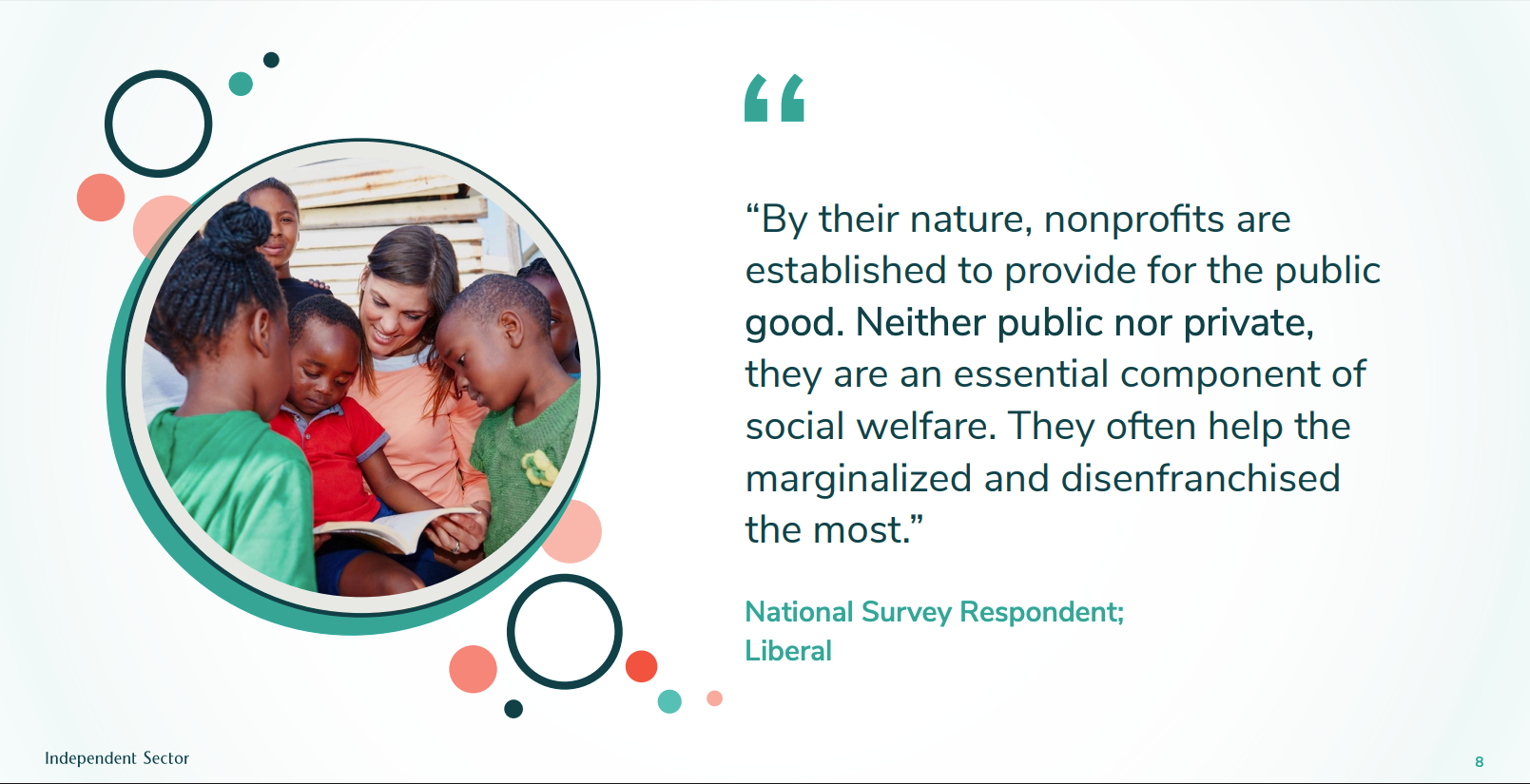
56% of Americans report high trust in nonprofit organizations, significantly higher than trust in many other institutions.
But here's the finding that really caught our attention:
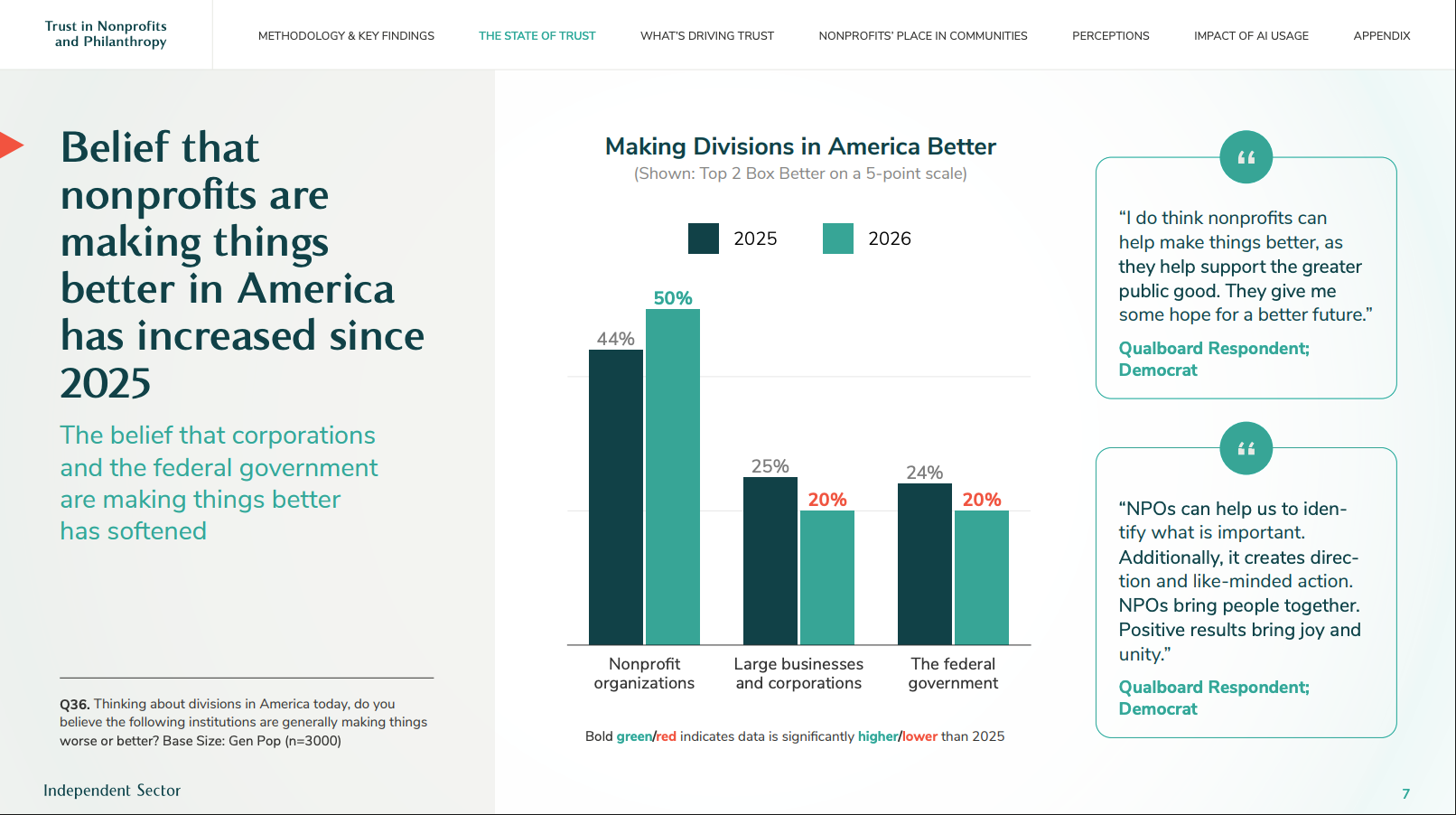
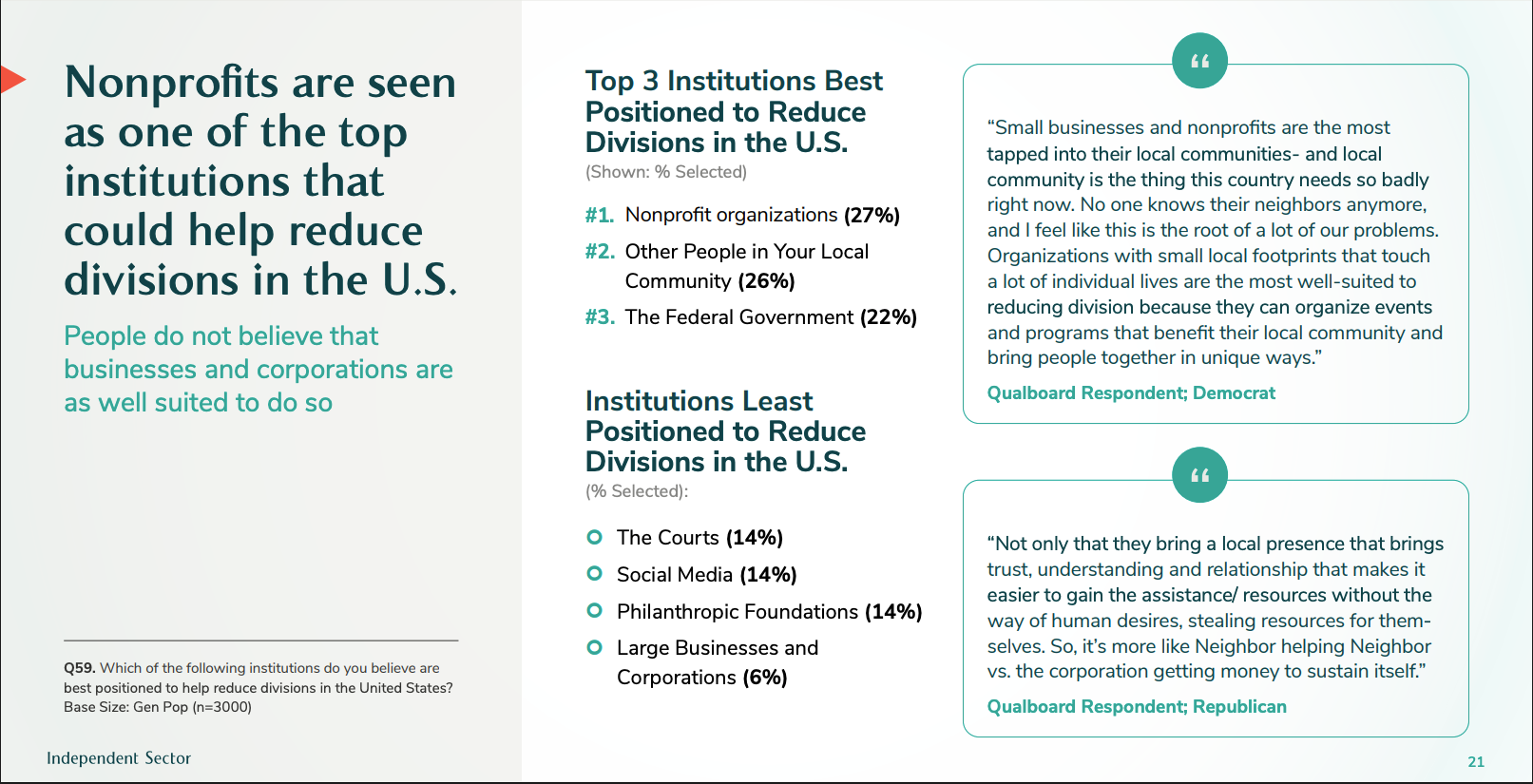
50% of Americans believe nonprofits are helping make divisions in our country better, up from 44% in 2025.
And when asked which institutions are best positioned to reduce those divisions, respondents most frequently pointed to nonprofit organizations and people in their own local communities.
Think about that.
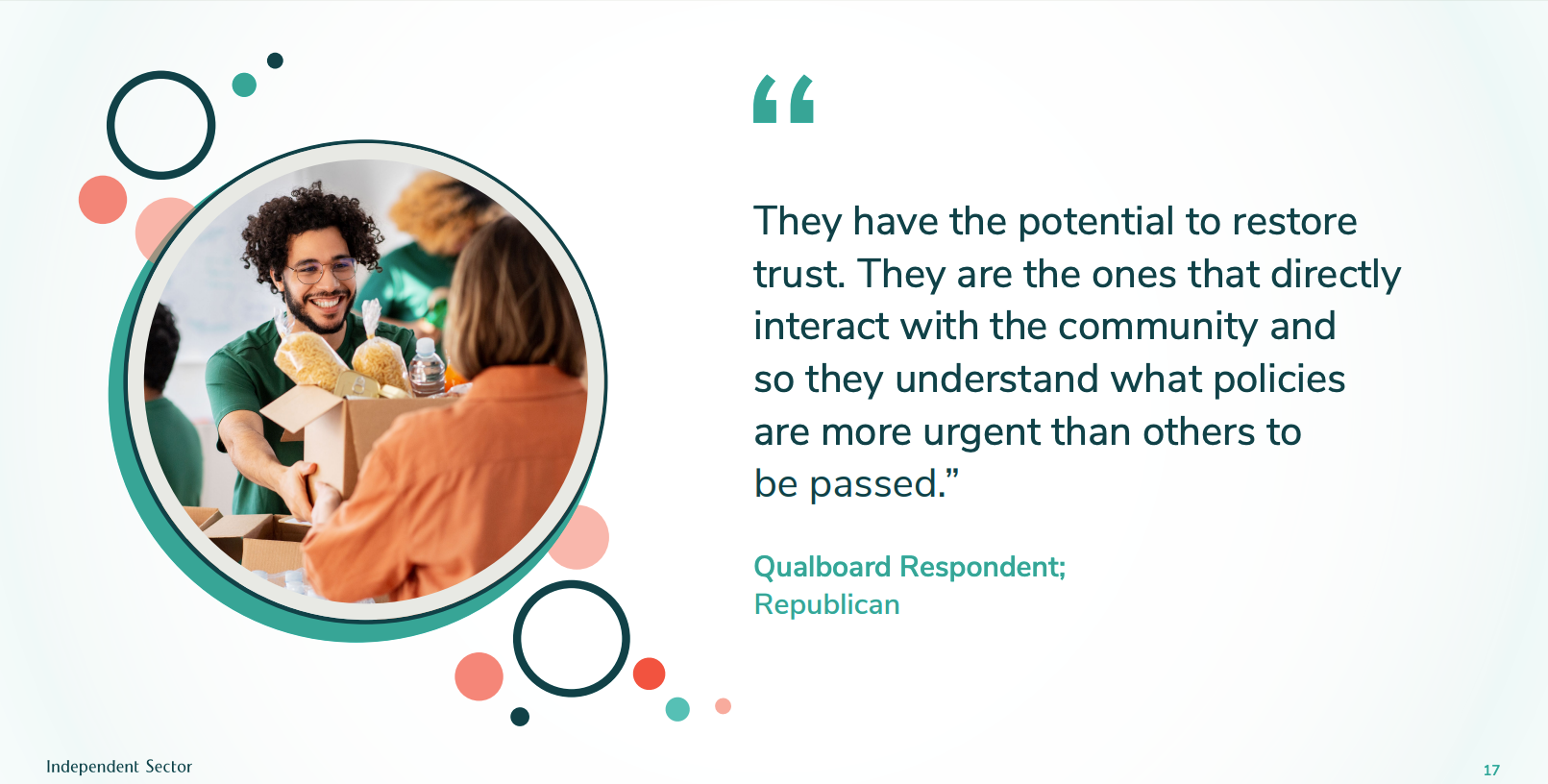
At a time when it can feel increasingly difficult to find common ground, Americans are looking to their neighbors and the organizations serving them to help bring people together.
Not because we all think alike.
But perhaps because we recognize that some things matter more than our differences.
In Rural Communities, Our Lives Are Already Connected
There's something uniquely powerful about living in a place like Bonner County.
Our communities are small enough that our lives naturally overlap.
The person serving your coffee might also coach your child's soccer team. The contractor working on your home might volunteer at the food bank. The person sitting beside you at a community fundraiser might hold entirely different beliefs about the world, but care just as deeply about the family down the road that's fallen on hard times.
We see one another at the grocery store, the farmers' market, community events, and school activities.
And when something happens to one of our neighbors, the ripple effects rarely stop at their front door.
A family facing housing insecurity may also be struggling with transportation, employment, or healthcare. A senior living alone may need more than a meal or a ride. A young person searching for direction may need someone willing to recognize their potential and help open a door.
These aren't isolated problems.
They're interconnected challenges that affect the health and strength of the community we all share.
And they remind us that caring for our community isn't a political position. It's something we do together.
Trust Isn't Built Through Agreement
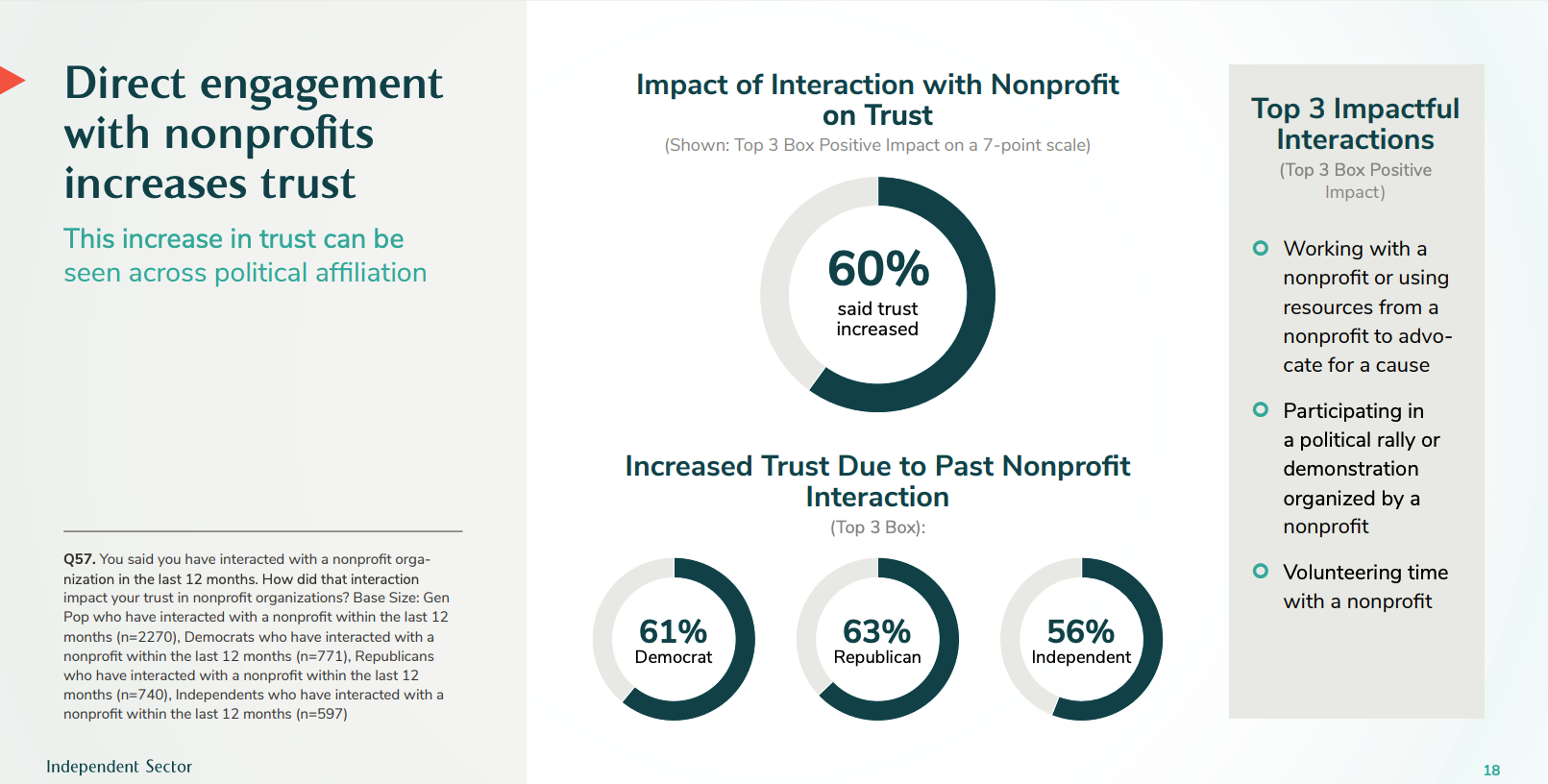
One of the most compelling findings in the Independent Sector report is that 60% of people who interacted with a nonprofit in the previous year said that experience increased their trust.
That tells us something important.
Trust grows through experience.
It grows when someone answers the phone. When a volunteer shows up. When a neighbor receives help without judgment. When an organization follows through on a promise.
It also grows when we invite people to participate, listen to perspectives different from our own, and remain transparent about the work we're doing.
In fact, 74% of respondents indicated that transparency about how nonprofits use their funds would positively influence their trust.
Good intentions matter. But so do accountability, effectiveness, and results.
Trust isn't something nonprofits are automatically entitled to because we have good missions. It's something we must continually earn.
And perhaps one of the greatest opportunities we have in rural communities is the ability to build that trust face-to-face.
What If Connection Is Our Greatest Community Resource?
At the Community Resource EnVision Center, we have the privilege of seeing what happens when people and organizations come together around a shared need.
Every day, we work to connect individuals and families with resources while helping the organizations serving our region connect with one another.
And one thing becomes clearer the longer we do this work:
No single organization has everything our community needs. But together, we have far more than we sometimes realize.
Our nonprofits, businesses, churches, civic groups, volunteers, local governments, and neighbors each bring different resources, experiences, and perspectives to the table.
What if we became even more intentional about connecting them?
What if we created more opportunities for organizations to collaborate instead of working in isolation?
What if we spent less time focusing on what separates us and more time discovering what we can accomplish together?
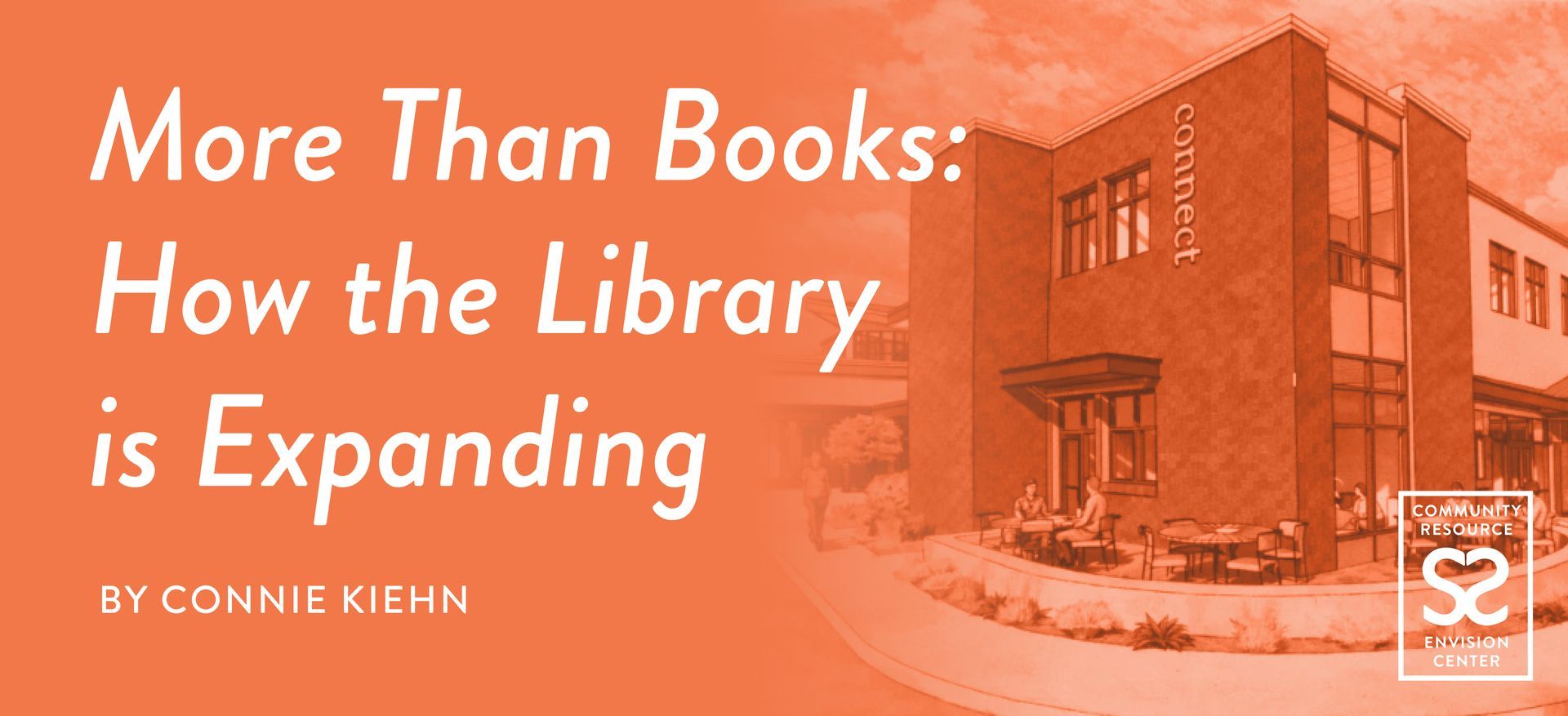
This belief in the power of connection is also what inspires our vision for the HUB—a place where organizations and community partners could share space, resources, and opportunities to work alongside one another.
But the bigger idea extends far beyond any one building or project.
It's about creating a community where people know one another, trust one another, and recognize that they have something meaningful to contribute.
What Happens After the Election?
The Independent Sector findings are national, not a measurement of trust here in Bonner County.
But they offer a hopeful invitation to consider what makes our own community strong—and what we want to strengthen for the future.
We don't have to share the same opinions to share the same concerns.
We can disagree about how to address a problem while still recognizing that the problem matters.
We can hold different beliefs and still show up for the same neighbor.
And we can choose to build relationships that are bigger than the differences between us.
Elections will come and go. Candidates will win and lose. And we'll continue to disagree about plenty of things.
But when the election signs come down, we'll still be neighbors.
We'll still share the same schools, roads, businesses, mountains, and hopes for the place we call home.
And perhaps the most important thing we can do for the future of Bonner County isn't to agree on everything.
It's to remember how to work together anyway.
What brings you together with people who see the world differently? We'd love to hear your thoughts.
Read the research: Independent Sector — Trust in Nonprofits and Philanthropy, July 2026
Want to be part of the hub Conversation?!