What We're Seeing in Our Community
A snapshot of the challenges our neighbors are facing and why coordinated, compassionate support matters now more than ever.
Every day, neighbors walk through our doors carrying more than one challenge. Housing instability often sits at the center of what we see, touching everything from utilities and food access to health and employment. Seniors make up a significant portion of those seeking support, many living on fixed incomes while trying to navigate rising costs and complicated systems without family nearby. At the same time, more working individuals and families are reaching out. They are employed, yet still struggling to keep up as wages fall behind the cost of living.
What makes these situations especially difficult is not just a lack of resources, but the complexity of navigating them. Most people are not facing a single issue. They are juggling multiple, overlapping challenges at once. Phone calls go unanswered. Paperwork is confusing. Eligibility rules change. This is where in-person, relational support matters most. Someone to listen, help untangle systems, and walk alongside a neighbor until solutions are found.
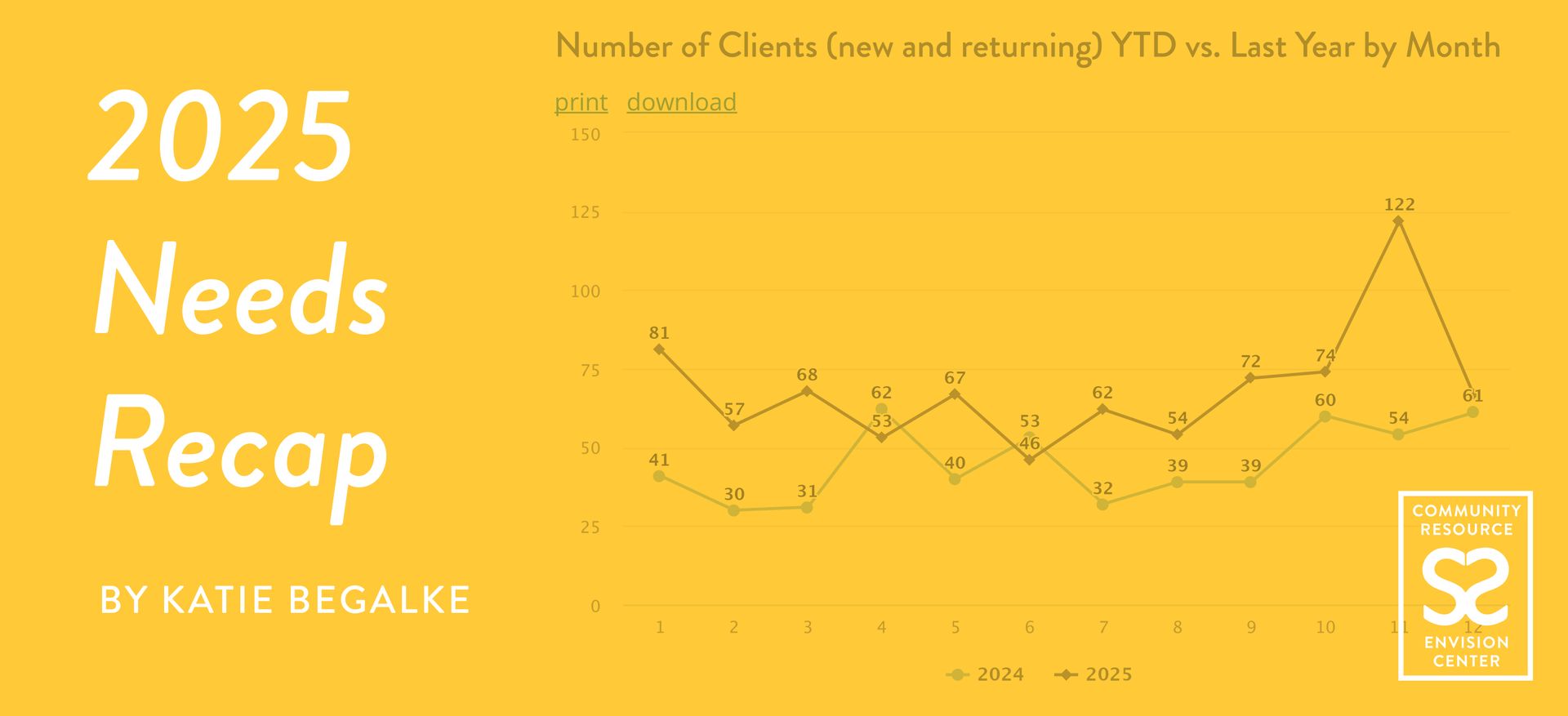
The growing number of people we serve reflects both rising need and growing trust. More neighbors know they can come here and be met with dignity, care, and coordination. These patterns reinforce why shared space, collaboration, and accessible support are essential, and why we are working toward a future where services are easier to find, less fragmented, and more human.
1. Housing Instability Is the Throughline (Even When Housing Isn’t the Ask)
Housing instability continues to be the underlying pressure point for many of the neighbors we serve — impacting everything from utilities and food access to health and employment.
What the data shows
Across our client records:
- A significant portion of clients are renters, living with friends/family, in motels, or in unstable housing
- Housing issues often trigger other needs: utilities, food, transportation, healthcare, benefits
- Many clients are one missed payment or one crisis away from displacement
2. Seniors Are a Core (and Growing) Population in Need
Older adults make up a significant portion of those we serve — many navigating fixed incomes, rising costs, and increasingly complex systems without family support nearby.
What the data shows
- Seniors (65+) consistently make up one of the largest age groups served
- Many are:
- Living on fixed incomes
- Navigating complex benefit systems
- Experiencing isolation
- Managing health + housing simultaneously
3. The “Working But Struggling” Population Is Growing
A growing number of people we serve are working — yet still struggling — caught between rising costs and wages that haven’t kept pace. Need doesn’t always look like unemployment — our services catch people before crisis.
What the data shows
- Many clients are:
- Employed part-time, seasonally, or underemployed
- Just above eligibility thresholds
- Still unable to keep up with housing and utilities
4. Complexity Is the Crisis (Not Just Lack of Resources)
Most neighbors who come through our doors aren’t facing a single challenge — they’re navigating several at once. Our role is to help untangle that complexity and walk alongside them until solutions are found.
What the data shows
- Many clients have multiple, overlapping needs
- One visit often leads to:
- Multiple referrals
- Follow-ups
- Advocacy
- Ongoing support
5. Trust + Awareness Are Driving Growth (Not Just Population Increase)
The increase in people served reflects not only growing need, but growing trust — more neighbors know they can come here and be met with dignity and care.
What the data shows
- 71% new clients in the most recent year
- Rising utilization isn’t random — it signals trust
6. our Biggest Capacity Gap: Space + Coordinated Access
These patterns reinforce the need for coordinated, in-person support — and for shared spaces where services can work together rather than in silos. This is the future we are actively building toward.
What the data + experience together show
- People need:
- In-person help
- Multiple services
- Clear navigation
- We are already acting as a hub, even without formal infrastructure
These realities shape everything we do — and why your support matters.