A new Idaho study reveals a challenge facing nonprofits across our state—and an opportunity for CREC to think differently about impact.
At the Community Resource EnVision Center, we count a lot of things.
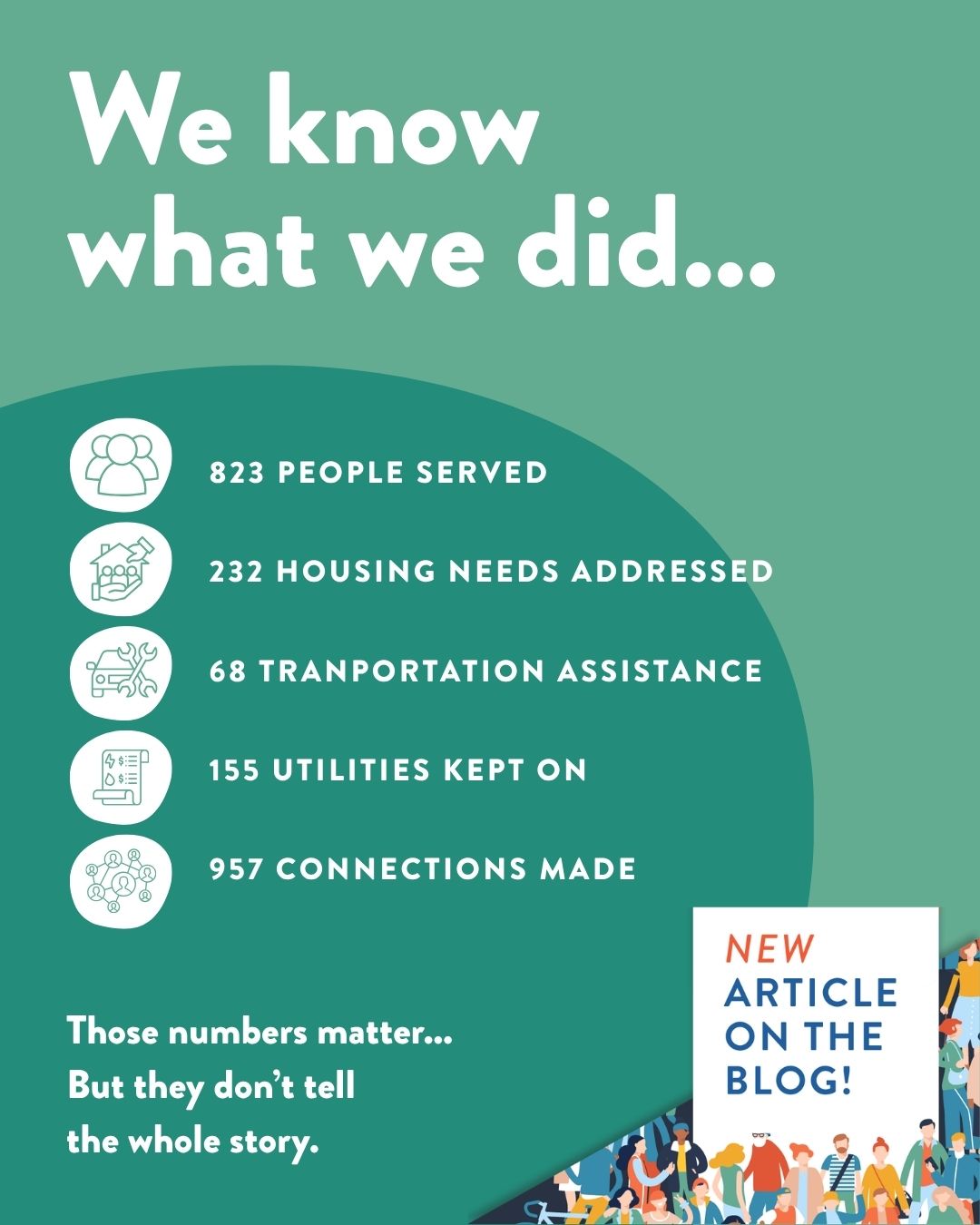
We count how many neighbors walk through our doors. We track the needs they bring with them. We know how many people need help with housing, utilities, transportation, food, medical care and other challenges. We track referrals, resources and connections.
Those numbers matter.
They help us understand what is happening in our community. They help us identify emerging needs. They help us tell funders and donors how their investments are being used.
But lately, we've been asking ourselves a harder question:
Are we counting what we do—or measuring what actually changes because we did it?
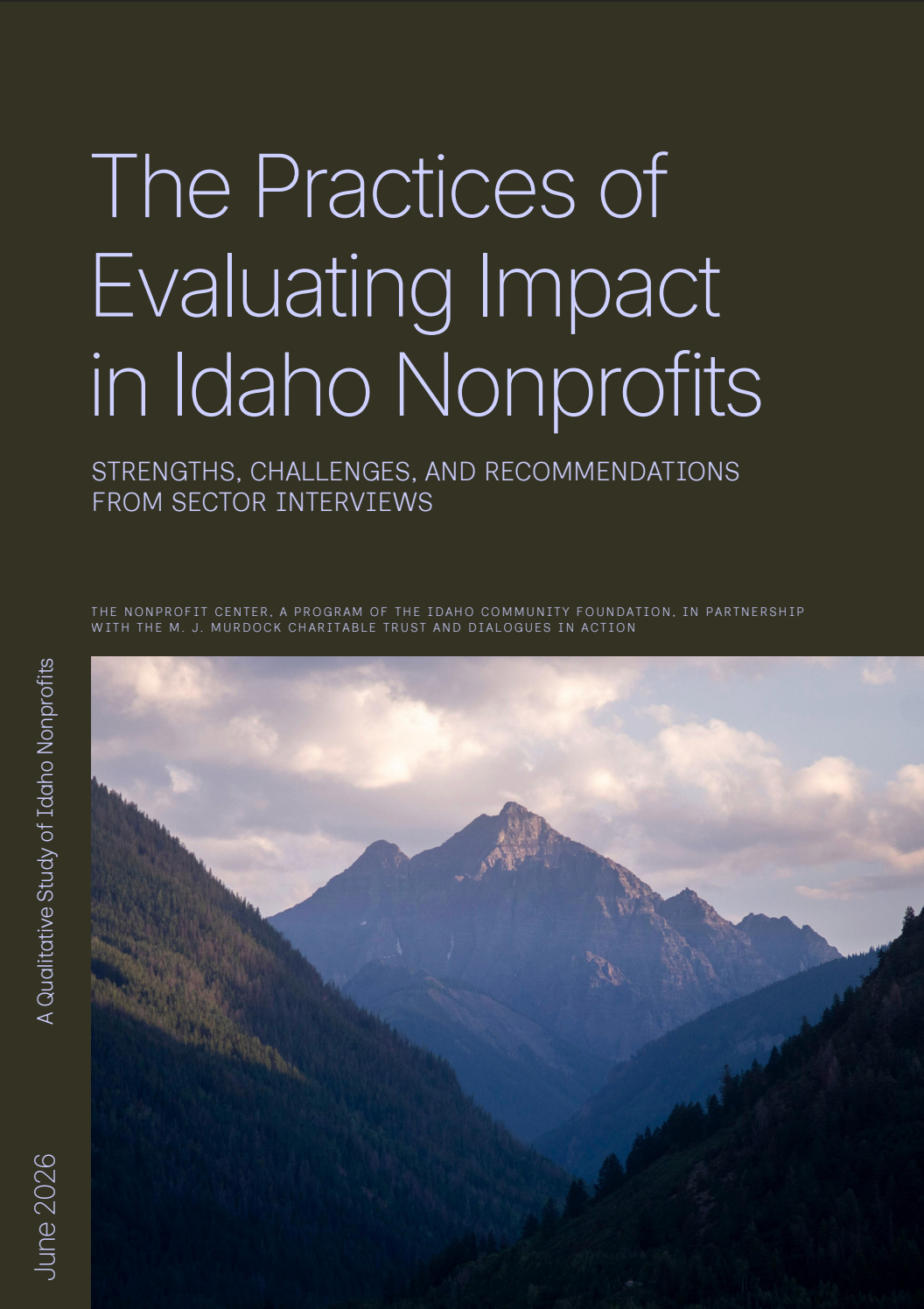
That question came into sharper focus after reading a new report from the Nonprofit Center, a program of the Idaho Community Foundation, developed in partnership with the M.J. Murdock Charitable Trust and Dialogues In Action.
The Practices of Evaluating Impact in Idaho Nonprofits
The study interviewed 20 nonprofit leaders from different regions, organizational sizes and mission areas across Idaho. Its findings felt remarkably familiar.
Idaho nonprofit leaders overwhelmingly believe in evaluating their impact. The problem isn't a lack of desire or commitment. It's capacity: too few people, too little time, insufficient specialized skills and systems, and funding that often supports programs without supporting the infrastructure necessary to determine whether those programs are actually working.
We saw ourselves all over those pages.
We Know What We Did. What Happened Next?
Suppose a neighbor comes to CREC facing eviction.
Our Client Resource Specialist sits with them, listens to what's happening, helps navigate available resources, connects them to another organization, and perhaps helps identify funding that keeps them housed.
We can record that interaction.
Housing need: addressed.
But what we really want to know is:
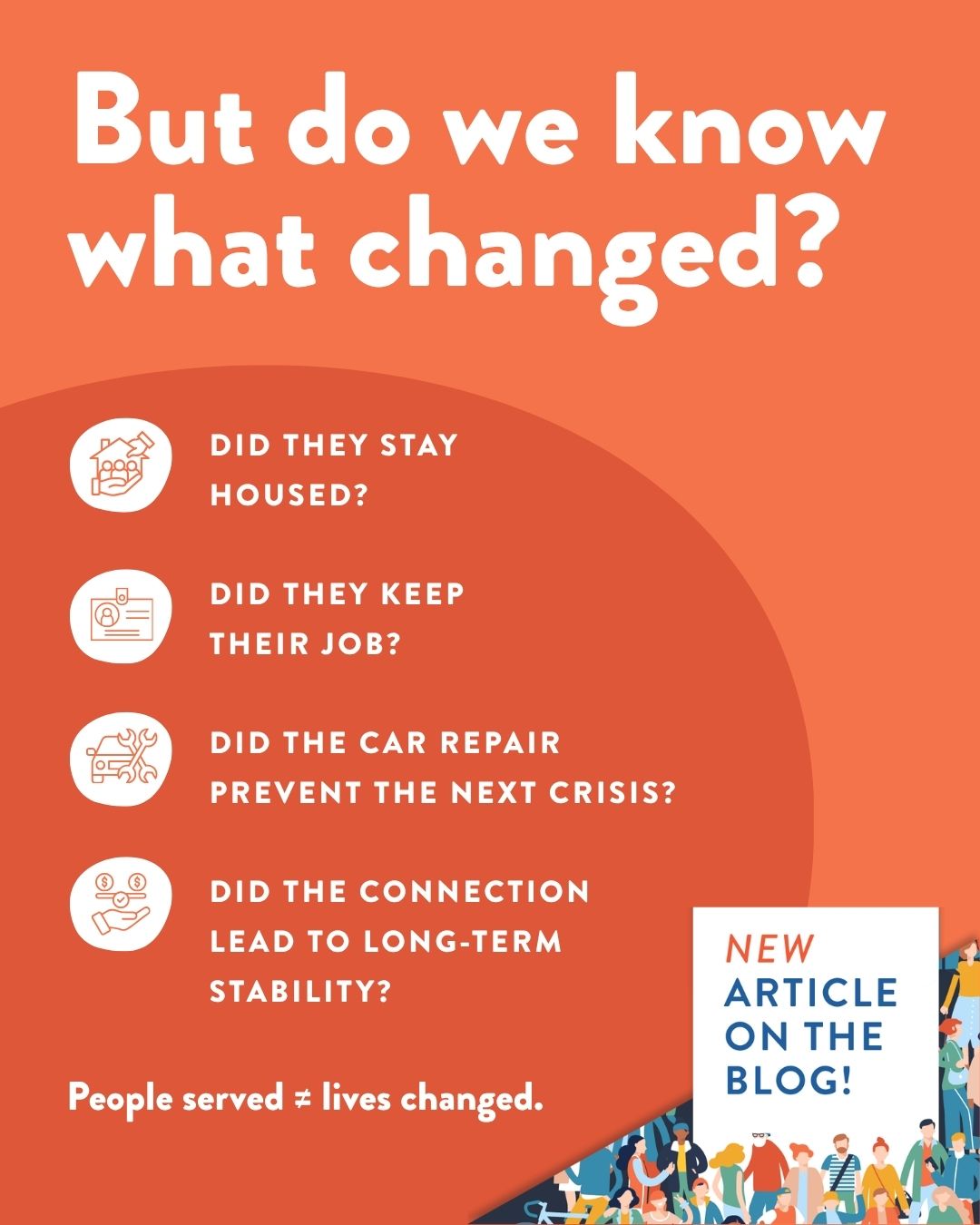
Were they still housed six months later?
If we provide or connect someone with transportation assistance, did that help them keep their job?
If we connect someone to workforce training, did they eventually become employed?
If we help keep someone's electricity on during a crisis, was that enough breathing room for the household to stabilize, or were they back in crisis three months later?
If three organizations collaborate to help one family, did that produce a better outcome than each organization working independently?
Those are much harder questions.
And according to the Idaho study, we're hardly alone in asking them. Leaders specifically reported wanting to understand lasting outcomes a year or even three years later, while often lacking the methods, permissions and resources to follow those outcomes.
That distinction matters.
Because people served is not the same thing as lives changed.
Sometimes We're Measuring What Someone Else Asked Us to Measure
Another finding really struck us.
Nonprofits collect enormous amounts of information because funders, government programs, national organizations and other partners require it. But those required metrics aren't always the things nonprofit leaders themselves believe best demonstrate impact.
The report gives the example of a housing organization that tracks what its grants require while wanting to understand something much more consequential: whether people achieve sustainable housing and what the long-term cost savings might be.
That resonates.
A grant may ask us: How many people did you serve?
That's reasonable.
But we might be more interested in: How many people needed us less six months later?
Those aren't necessarily the same measure.
And sometimes, in our effort to prove how much we're doing, we risk creating an incentive to count activity rather than understand change.
The Answer Isn't Just More Data
Here's where the report gets even more interesting.
Many nonprofits aren't actually suffering from a lack of information. They already have databases, CRMs, surveys, reporting requirements, client stories and other sources of data.
The problem is knowing what to do with all of it.
The study describes a “data-to-narrative gap”: organizations may have strong data but struggle to translate it into something useful for improving programs, or into a compelling explanation that donors, businesses, policymakers and community members can understand.
Again: hello, mirror.
CREC has a CRM.
We have client information.
We have spreadsheets.
We have stories.
We have grant reports.
We have statistics.
We have staff members who know things about our community because they hear them every single day.
But having information and having an evaluation system aren't the same thing.
And building that system takes something nonprofits are perpetually short on:
capacity.
What If We Didn't Each Have to Figure This Out Alone?
This is where the report collided with another conversation we've been having at CREC.
For some time, we've been exploring a much bigger idea for the campus we occupy—something we're calling The HUB.
At its simplest, The HUB asks:
What if Bonner County shared more?
More space.
More resources.
More ideas.
More connection.
But perhaps we should add another word to that list:
More infrastructure.
The Idaho report identifies fragmented data systems, limited evaluation expertise, insufficient staff capacity and lack of protected time as barriers across the nonprofit sector. It also specifically recommends peer-learning communities, practical evaluation training and stronger systems for turning data into narratives people can understand.
That got us thinking.
Why should every small nonprofit in Bonner County have to independently become an expert in impact evaluation?
Or CRM management?
Or data visualization?
Or grant reporting?
Or storytelling?
What if some of that capacity could be shared?
Imagine several organizations being able to access common expertise that helps them determine what they should measure, build better systems for collecting it, understand what the information is telling them and translate it into stories and evidence that make all of us better at serving our community.
That is what we mean when we talk about The HUB being more than shared office space.
The opportunity isn't simply to put organizations under one roof.
It's to build infrastructure that makes those organizations stronger.
Numbers AND Stories
There was another finding in the report that gives us hope.
Idaho nonprofits are getting better at combining quantitative data with human stories. They're listening to more voices, using feedback to change programs, learning from peers and creating regular opportunities for teams to reflect on what's working and what isn't.
We believe strongly in that combination.
Because behind every number at CREC is a person.
A spreadsheet can tell us that someone needed transportation assistance.
The story tells us that the car repair allowed a single mom to continue getting to work while getting her child to school.
The number matters.
The story tells us why.
And good evaluation should help us understand whether the intervention actually created lasting change.
So Where Do We Go From Here?
We don't have a beautiful new impact-measurement system to unveil at the end of this article.
That's actually why we're writing it.
We're learning.
We're asking whether some of the things we've traditionally celebrated are the right things to measure.
We're looking more closely at the information we already collect. We're thinking about how we follow outcomes instead of simply recording interactions.
And we're asking what CREC's role might be in helping build some of this capacity not only for ourselves, but alongside other organizations in our community.
The Idaho study concludes with an important idea: nonprofit leaders don't need to be convinced that measuring impact matters. They already believe it. What needs to change are the conditions that prevent them from doing it well, the funding, time, talent, infrastructure and systems surrounding the work.
We think that's worth paying attention to.
Because Bonner County has no shortage of people doing good.
Perhaps our next opportunity isn't simply to do more.
Perhaps it's to become better at understanding what works, sharing what we learn, and building the
infrastructure that allows all of us to create deeper, longer-lasting change.
At CREC, we'll keep counting.
But we're also going to keep asking the harder question:
What changed?
And maybe that's a question worth asking together.
Want to dig deeper? Read the Idaho Community Foundation Nonprofit Center's full report, The Practices of Evaluating Impact in Idaho Nonprofits, explore the Idaho Community Foundation's broader nonprofit-sector research, or discover The HUB.
Want to be part of the hub Conversation?!