
EnVision Center Blog
A new Idaho study reveals a challenge facing nonprofits across our state—and an opportunity for CREC to think differently about impact. At the Community Resource EnVision Center, we count a lot of things. We count how many neighbors walk through our doors. We track the needs they bring with them. We know how many people need help with housing, utilities, transportation, food, medical care and other challenges. We track referrals, resources and connections. Those numbers matter. They help us understand what is happening in our community. They help us identify emerging needs. They help us tell funders and donors how their investments are being used. But lately, we've been asking ourselves a harder question: Are we counting what we do—or measuring what actually changes because we did it? That question came into sharper focus after reading a new report from the Nonprofit Center, a program of the Idaho Community Foundation, developed in partnership with the M.J. Murdock Charitable Trust and Dialogues In Action. The Practices of Evaluating Impact in Idaho Nonprofits The study interviewed 20 nonprofit leaders from different regions, organizational sizes and mission areas across Idaho. Its findings felt remarkably familiar. Idaho nonprofit leaders overwhelmingly believe in evaluating their impact. The problem isn't a lack of desire or commitment. It's capacity: too few people, too little time, insufficient specialized skills and systems, and funding that often supports programs without supporting the infrastructure necessary to determine whether those programs are actually working. We saw ourselves all over those pages. We Know What We Did. What Happened Next? Suppose a neighbor comes to CREC facing eviction. Our Client Resource Specialist sits with them, listens to what's happening, helps navigate available resources, connects them to another organization, and perhaps helps identify funding that keeps them housed. We can record that interaction. Housing need: addressed. But what we really want to know is: Were they still housed six months later? If we provide or connect someone with transportation assistance, did that help them keep their job? If we connect someone to workforce training, did they eventually become employed? If we help keep someone's electricity on during a crisis, was that enough breathing room for the household to stabilize, or were they back in crisis three months later? If three organizations collaborate to help one family, did that produce a better outcome than each organization working independently? Those are much harder questions. And according to the Idaho study, we're hardly alone in asking them. Leaders specifically reported wanting to understand lasting outcomes a year or even three years later, while often lacking the methods, permissions and resources to follow those outcomes. That distinction matters. Because people served is not the same thing as lives changed. Sometimes We're Measuring What Someone Else Asked Us to Measure Another finding really struck us. Nonprofits collect enormous amounts of information because funders, government programs, national organizations and other partners require it. But those required metrics aren't always the things nonprofit leaders themselves believe best demonstrate impact. The report gives the example of a housing organization that tracks what its grants require while wanting to understand something much more consequential: whether people achieve sustainable housing and what the long-term cost savings might be. That resonates. A grant may ask us: How many people did you serve? That's reasonable. But we might be more interested in: How many people needed us less six months later? Those aren't necessarily the same measure. And sometimes, in our effort to prove how much we're doing, we risk creating an incentive to count activity rather than understand change . The Answer Isn't Just More Data Here's where the report gets even more interesting. Many nonprofits aren't actually suffering from a lack of information. They already have databases, CRMs, surveys, reporting requirements, client stories and other sources of data. The problem is knowing what to do with all of it. The study describes a “data-to-narrative gap”: organizations may have strong data but struggle to translate it into something useful for improving programs, or into a compelling explanation that donors, businesses, policymakers and community members can understand. Again: hello, mirror. CREC has a CRM. We have client information. We have spreadsheets. We have stories. We have grant reports. We have statistics. We have staff members who know things about our community because they hear them every single day. But having information and having an evaluation system aren't the same thing. And building that system takes something nonprofits are perpetually short on: capacity. What If We Didn't Each Have to Figure This Out Alone? This is where the report collided with another conversation we've been having at CREC. For some time, we've been exploring a much bigger idea for the campus we occupy—something we're calling The HUB . At its simplest, The HUB asks: What if Bonner County shared more? More space. More resources. More ideas. More connection. But perhaps we should add another word to that list: More infrastructure. The Idaho report identifies fragmented data systems, limited evaluation expertise, insufficient staff capacity and lack of protected time as barriers across the nonprofit sector. It also specifically recommends peer-learning communities, practical evaluation training and stronger systems for turning data into narratives people can understand. That got us thinking. Why should every small nonprofit in Bonner County have to independently become an expert in impact evaluation? Or CRM management? Or data visualization? Or grant reporting? Or storytelling? What if some of that capacity could be shared? Imagine several organizations being able to access common expertise that helps them determine what they should measure, build better systems for collecting it, understand what the information is telling them and translate it into stories and evidence that make all of us better at serving our community. That is what we mean when we talk about The HUB being more than shared office space. The opportunity isn't simply to put organizations under one roof. It's to build infrastructure that makes those organizations stronger. Numbers AND Stories There was another finding in the report that gives us hope. Idaho nonprofits are getting better at combining quantitative data with human stories. They're listening to more voices, using feedback to change programs, learning from peers and creating regular opportunities for teams to reflect on what's working and what isn't. We believe strongly in that combination. Because behind every number at CREC is a person. A spreadsheet can tell us that someone needed transportation assistance. The story tells us that the car repair allowed a single mom to continue getting to work while getting her child to school. The number matters. The story tells us why. And good evaluation should help us understand whether the intervention actually created lasting change. So Where Do We Go From Here? We don't have a beautiful new impact-measurement system to unveil at the end of this article. That's actually why we're writing it. We're learning. We're asking whether some of the things we've traditionally celebrated are the right things to measure. We're looking more closely at the information we already collect. We're thinking about how we follow outcomes instead of simply recording interactions. And we're asking what CREC's role might be in helping build some of this capacity not only for ourselves, but alongside other organizations in our community. The Idaho study concludes with an important idea: nonprofit leaders don't need to be convinced that measuring impact matters. They already believe it. What needs to change are the conditions that prevent them from doing it well, the funding, time, talent, infrastructure and systems surrounding the work. We think that's worth paying attention to. Because Bonner County has no shortage of people doing good. Perhaps our next opportunity isn't simply to do more . Perhaps it's to become better at understanding what works , sharing what we learn, and building the infrastructure that allows all of us to create deeper, longer-lasting change. At CREC, we'll keep counting. But we're also going to keep asking the harder question: What changed? And maybe that's a question worth asking together. Want to dig deeper? Read the Idaho Community Foundation Nonprofit Center's full report, The Practices of Evaluating Impact in Idaho Nonprofits , explore the Idaho Community Foundation's broader nonprofit-sector research , or discover The HUB .

There's Room at the Table: A Conversation with Innovia Foundation Generosity is most powerful when it stays close to home. That is the philosophy driving the work of Innovia Foundation , and on a recent episode of A Little Birdie Told Me , I sat down with two of the people living it out every day right here in North Idaho. Tonya Sherman is the Regional Engagement Manager for Bonner and Boundary counties, and Britt Towery is the Director of Regional Engagement for North Idaho, covering Kootenai, Shoshone, Benewah, and Latah counties. Between the two of them, they are out in our communities every day, building relationships, listening to local needs, and connecting donors with the organizations and causes that matter most to the people who live here. So what is a community foundation, exactly? Innovia covers a 20-county region across eastern Washington and northern Idaho. Unlike a private foundation, which typically has a single source of funding and a narrow initiative, Innovia draws from a broad base of generous donors and reinvests those dollars directly back into the communities where they were given. As Tonya put it, they are a forever organization. The principal of their funds is invested for the long term, which means Innovia is not just responding to today's needs — they are building capacity for whatever the community needs five, ten, and fifty years from now. That long view is part of what makes this conversation worth having. Innovia started in 1974 when a group of forward-thinking women from the Junior League looked at the upcoming World's Fair in the Inland Northwest and asked a simple but powerful question: what happens after this is over? They started the organization with $10,000. Today the assets are over $300 million. Since 1974, over $6.6 million has been invested right here in Bonner County, often quietly, without fanfare, simply because donors trusted that it would be put to good use. One of the initiatives Tonya and Britt are most excited about right now is the Longest Table . The concept is exactly what it sounds like: long tables set up in public spaces where everyone is welcome to come, share a meal, and have a conversation. Innovia provides small grants to help communities host these gatherings, covering basics like tables, chairs, food, and permits. There is no agenda, no program, no pressure. Just neighbors sitting down together. As Britt put it, in a time when so many of us pull into our driveways, close the garage door, and stay behind our fences, the Longest Table is a simple but meaningful act of community building. Several are already being planned across the region, including one at Sandpoint High School and one downtown in partnership with Leadership Sandpoint alumni and NAMI. Another initiative worth knowing about is the Bonner Boundary Forever Fund , an endowment fund specifically designed to invest in Bonner and Boundary counties in perpetuity. The goal is to reach $500,000, with a generous matching contribution already in place. Grants from this fund have already distributed over $42,000 back into our community, including helping a nonprofit purchase a vehicle. If you are doing any estate planning and want your generosity to continue long after you are gone, even something as simple as a 5% bequest could make an extraordinary difference. Britt shared that if every person in our region left just 5% of their estate, that would translate to roughly $2 billion for local needs over time. Innovia also responded to the recent Spokane wildfires in a way that says a lot about who we are as a region. Donors from across the region and beyond sent contributions, from large gifts to children's penny drives, trusting Innovia to steward those dollars with care and get them to the nonprofits on the front lines as quickly as possible. It is a beautiful picture of what our region is really about — neighbors showing up for neighbors, with Innovia making sure every dollar finds its way to where it is needed most. At the Community Resource EnVision Center, we believe that stronger communities are built through connection, and that the organizations doing the most meaningful work deserve to be seen and supported. Innovia is doing exactly that, investing in the infrastructure of generosity that makes everything else possible. If you would like to get involved, whether as a donor, a leadership council member, a Longest Table host, or simply someone who wants to learn more, visit the Innovia website or give Tonya or Britt a call. They will pick up. This post is based on a recent episode of A Little Birdie Told Me. Listen to the full conversation to hear more from Tonya Sherman and Britt Towery.

From Bookmarks to Chairlifts: Numerica and Schweitzer Team Up for Kids Some of the best ideas come from two organizations asking the same question at the same time: how do we show up for our kids? On a recent episode of A Little Birdie Told Me , I sat down with Jody Azevedo, VP of Market Development at Numerica Credit Union, and Taylor Prather, Marketing and Communications Manager at Schweitzer, to talk about a partnership that is as creative as it is community minded. Together they launched Numerica’s Ski to Read program , an initiative that gives middle school students a simple and genuinely fun incentive to keep reading — a free single day lift ticket or movie package complete with popcorn and soda, earned by logging ten hours of reading time. The idea grew out of a conversation Numerica had with Dr. Meyer at the school district when they first came to Sandpoint. They wanted to do something meaningful for local students and learned that middle schoolers are a group that often needs the most encouragement to keep reading. Schweitzer was the natural partner. As Taylor put it, any opportunity to introduce or reintroduce skiing to kids and families is something Schweitzer is always going to say yes to. The program launched after Labor Day last year, kicking off with a middle school assembly that — by all accounts — was wonderfully, gloriously loud. Students who logged their ten hours of reading turned a form into their teacher and chose their reward. Fifty-six chose lift tickets to Schweitzer. Forty-nine chose movie tickets and a night at Sandpoint Cinemas . When charter schools and homeschool families heard about it, they asked to participate too, and the answer was absolutely yes. What makes this program work is that it meets kids where they are. Not every student skis, and not every family has easy access to the mountain. By offering both options, every child who puts in the reading time has something worth working toward. We can all admit that skiing is expensive — and that is exactly why programs like this one matter.Numerica’s Read to Ski program ensures that local kids get to experience Schweitzer's magic regardless of their family's budget. Taylor also shared something worth sitting with. It is surprising how many families in Sandpoint have never been up to Schweitzer, even those who have lived here for years. Programs like this one quietly close that gap, one lift ticket at a time. The partnership itself is a great example of what becomes possible when two strong community anchors decide to work together rather than separately. Numerica, Schweitzer, and the school district all had a hand in shaping the program, and the result is something none of them could have built alone. Sandpoint Cinemas rounds out the partnership, making the program accessible to every student. All organizations involved bring a deep commitment to youth programming beyond Read to Ski. Numerica's CARES for Kids program directs the majority of their philanthropic giving toward children's programming across all of their markets, contributing over $1 million last year. Schweitzer's donations committee, which Taylor sits on, gives back roughly $300,000 to the greater Sandpoint community. They also partner with Ski Idaho on a fifth and sixth grade passport program that lets kids ski at resorts across the state for around $40, and they bring school groups up throughout the week for rentals, lessons, and lift tickets. Jody also mentioned Numerica's support of Panhandle Alliance for Education, including a first grade reading program called Ready to Read (fka Learning with Lucky), where every first grader receives a stuffed puppy to read to and earns charms and prizes as they hit reading milestones. As Jody put it, you have to learn to read before you read to learn. It is a simple idea with a big heart behind it. At the Community Resource EnVision Center, we love seeing partnerships like this one take root in our community. We are also proud to share that Numerica is the presenting sponsor of this year's Festival of Trees — a relationship that speaks to their deep commitment to showing up for Bonner County in meaningful ways. When local businesses and organizations pool their resources and their reach, the impact goes so much further than any one of them could achieve alone. Numerica’s Read to Ski program is a beautiful example of that, and we cannot wait to see how it grows this year. If you have a middle schooler, keep an eye out for the program launching again after Labor Day. And if you have not been up to Schweitzer lately, maybe this is your sign. This post is based on a recent episode of A Little Birdie Told Me. Listen to the full conversation to hear more from Jody Azevedo and Taylor Prather.
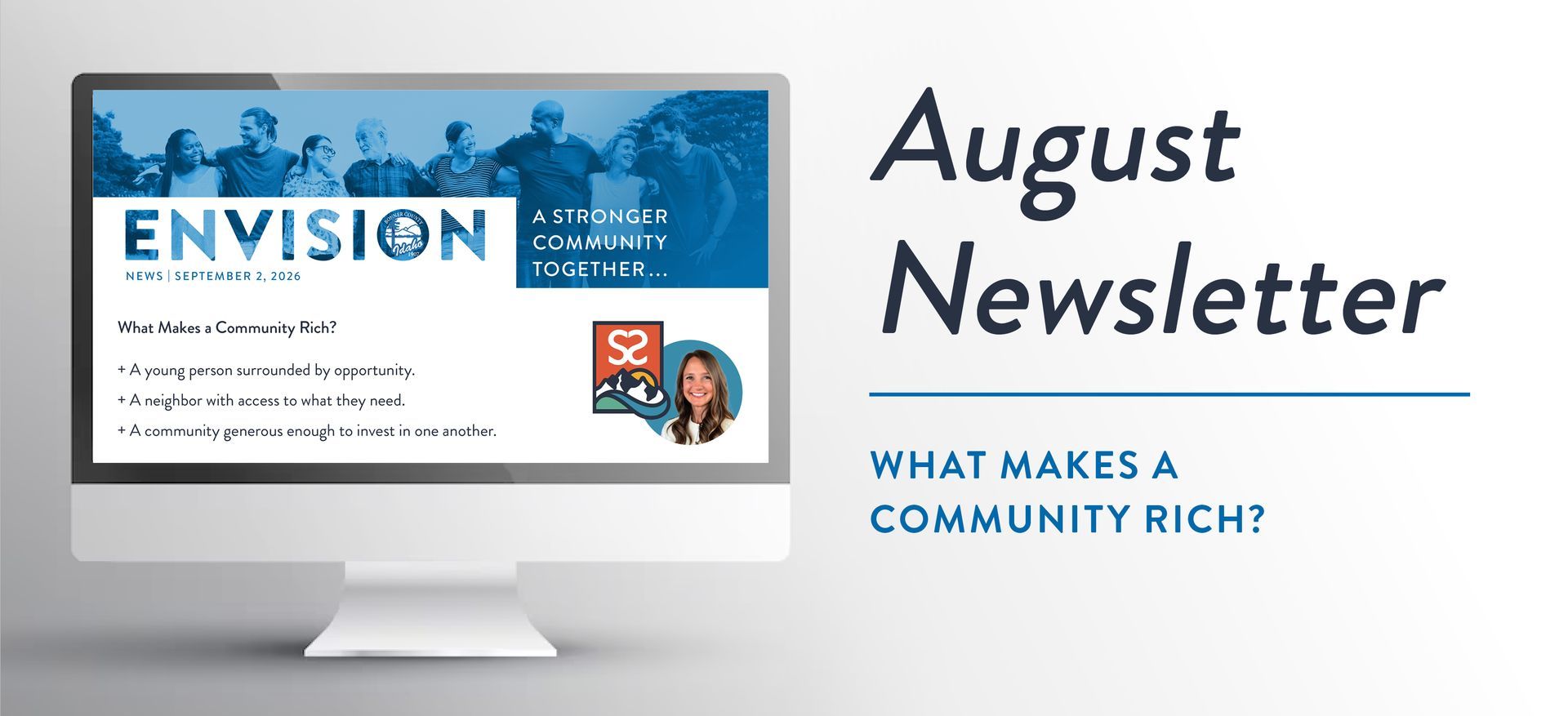
What Makes a Community Rich? When we hear the word rich, it's easy to think about dollars and cents. But some of the greatest measures of a community's wealth have very little to do with money. They're found in the opportunities we create for young people. In whether our neighbors can access the jobs, healthcare and resources available to them. In the people who give their time, talents and resources to make life a little better for someone else. That's the idea we're exploring in this month's edition of A Stronger Community Together. Inside, we visit the Sandpoint Teen Center, where hundreds of local teens are finding far more than a meal—they're finding mentors, experiences and a place to belong. We look at how something as simple as a broken-down car can quickly become a crisis in rural North Idaho, and how our local automotive community is coming together to help keep families moving. And we travel all the way to the mountains of East Tennessee for a little inspiration from Dolly Parton and a reminder that changing the world can start by investing in your own backyard. You'll also find plenty of ways to experience the richness of our community for yourself, with September events and opportunities to connect, plus a look at the work taking shape right now at the EnVision Center. Because perhaps a rich community isn't defined by how much it has. It's defined by how much it makes possible for the people who call it home.
Trading Combat Boots for a New Mission A lot of people find a new hobby or start traveling when they retire. After 30 years of military service, Jason Legler retired and found a new mission. As it turns out, not every veteran knows what resources are available to them when they trade their combat boots for sneakers. And even when they do, knowing where to start can be overwhelming. As a Community Resource Specialist for Veterans Outreach and Community Support with the Idaho Division of Veterans Services , Jason spends his days making sure veterans across North Idaho know they are not alone and that help is closer than they think. On a recent episode of A Little Birdie Told Me , I sat down with Jason to talk about the work he is doing across the northern ten counties of Idaho, from the Panhandle all the way down through north central Idaho to Grangeville. It is a big territory, and Jason covers it the North Idaho way — logging miles on back roads and showing up where he is needed. Jason's background speaks for itself. He served 30 years between active duty and the National Guard, spending the majority of his military career as a Green Beret with Special Forces. He retired in 2021 as the 19th Group Command Sergeant Major. Like so many veterans who find their way into service work after the military, he tried simply being retired for a while and quickly realized that was not going to work for him. He got involved in veteran nonprofits in the Kootenai County area, helped start a Special Forces chapter in North Idaho, and eventually was approached about his current role with the Idaho Division of Veterans Services. He has been in the position since October of 2024 and has hit the ground running. His role is part outreach, part resource navigation, and part relationship building. He goes where veterans are — VFW meetings, American Legion posts, community coffees and breakfasts — because he knows that the most honest conversations happen not at formal events but over a cup of coffee when someone finally lets their guard down. When veterans reach out to him directly, he listens first, helps them figure out what they actually need, and then works to connect them with the right resources. He is clear that his goal is never just to solve the immediate problem, but to help veterans get to a place where they are not back in the same crisis next month. One of the things Jason talked about that is worth highlighting is how overwhelming the landscape of veteran resources can actually be. North Idaho has a high concentration of nonprofits, which is remarkable but can also make it hard to know where to turn when you are already stressed and struggling. Jason serves as that guide, drawing on a wide network of partners including the VFW , American Legion , Idaho Veterans Network , Disabled American Veterans , and many others to find the right fit for each person he works with. He also spoke about something that is gaining real momentum in North Idaho: veteran outreach centers. These are community-based spaces, not government offices, where veterans and their families can access support, find resources, and simply be around people who understand. The Benewah Veteran Outreach Center is one strong example. There are others starting up in Boundary County and here in Bonner County, and Jason sees tremendous potential for this model to grow across the region. That vision lands close to home for us. At the Community Resource EnVision Center, we are actively exploring what it would look like to build a collaborative, intergenerational community hub right here in Bonner County — a place where nonprofits, workforce programs, businesses, and community members operate alongside one another, sharing resources and infrastructure so that the organizations doing the most important work are not constantly rebuilding the wheel on their own. What Jason is describing for veterans, a connected, accessible, community-rooted support system, is exactly the kind of outcome a hub like this could help make possible. Organizations serving the same families, separated by a hallway instead of miles. If that vision resonates with you, we would love to have you in the conversation. From where I sit, this is a conversation our community needs to have, and we hope you will be part of it. When I asked Jason what gives him hope in this work, he told me about a veteran he had been working with over a long period of time. She needed help getting her car repaired, a modest amount that would allow her to drive her disabled granddaughter to appointments and get on with her life. The process took a while. There were communication challenges and delays. But when it finally came together and she realized the help was real, she could not even get the words out. She just cried. Her relief , Jason said, is the win. If you are a veteran in need of support, or if you know one, Jason is reachable directly at (208) 985-6632. If you would like to get involved in supporting veterans in our community, he can also help connect you with the right organizations and opportunities. Do not hesitate to call. This post is based on a recent episode of A Little Birdie Told Me. Listen to the full conversation to hear more from Jason Legler.
A new statewide report puts numbers behind something many of us working in the nonprofit sector have felt for some time: the need is growing, the people doing the work are tired, and the systems supporting them are being stretched. The Idaho Community Foundation's 2026 State of the Sector report opens with a simple statement: "Idaho runs on nonprofits." The numbers make the case. More than 81,000 Idahoans work for nonprofits, making the sector Idaho's fifth-largest private-sector employer. Collectively, nonprofits contribute $8.1 billion to Idaho's Gross State Product. These organizations are not simply charities operating on the sidelines of our economy. They are part of the infrastructure that makes our communities work. But that infrastructure is under strain. More than half of Idaho nonprofits reported serving more people than the year before. Fifty-one percent were unable to fully meet demand, 63% expect demand to continue increasing, and 43% dipped into cash reserves to cover costs. The report describes Idaho's nonprofit workforce as "dedicated (but weary)." Those numbers should make all of us pay attention. What does this look like in Bonner County? We don't have to look very far. Our community has an extraordinary number of organizations working on housing, hunger, seniors, youth, veterans, healthcare, arts, recreation, workforce development, domestic violence, transportation, disability services and countless other needs. That abundance speaks volumes about the generosity and initiative of the people who live here. But it also raises an important question: Are we giving those organizations the infrastructure they need to succeed? Every nonprofit needs more than its mission. It needs internet. Accounting. Insurance. Technology. Meeting space. Marketing. HR support. Grant writing. Janitorial services. Administrative support. Volunteer coordination. Often, it needs office space, conference rooms, kitchens, storage, parking and equipment. Today, many organizations are trying to build and pay for those systems independently. At the same time, they are competing for many of the same employees, volunteers, donors and grants. Perhaps the opportunity isn't simply to raise more money. Perhaps we can make the money we already have work harder. What if we shared more? This is one of the questions driving our exploration of the Nonprofit and Economic HUB in Bonner County. Imagine a collaborative, intergenerational campus where nonprofits, workforce programs, businesses, creatives and community members operate alongside one another. Organizations could maintain their own missions and identities while sharing some of the expensive infrastructure underneath them. A small nonprofit might not be able to employ a full-time bookkeeper, IT professional, grant writer or marketing specialist. But what if ten organizations could share one? What if organizations could access conference rooms, technology, training, volunteer pools and professional expertise without each having to recreate those resources? What if retirees with decades of professional experience could mentor emerging nonprofit leaders? What if internships, volunteer opportunities and community service became pathways into employment? What if organizations serving the same families were separated by a hallway instead of miles? That is when a building becomes more than real estate. It becomes infrastructure for collaboration. This is also a workforce conversation The State of the Sector report makes another important point: nonprofit staffing is often dismissed as "overhead," when in reality the people delivering services are the mission. That distinction matters. The HUB isn't only about making rent more affordable. It is an opportunity to explore whether shared employment, stronger benefits, professional development and common services could help smaller organizations compete for and retain talented people. It could also create new jobs in property management, maintenance, reception, technology, finance, administration and other shared functions. In other words, strengthening nonprofits is also economic development . From scarcity to capacity The statewide report ultimately estimates that an additional $200 million in charitable investment could significantly strengthen Idaho nonprofits' ability to meet growing community needs. It concludes that sustaining the sector will require collective action, shared responsibility and sustained investment. Those investments absolutely matter. But here in Bonner County, I think we have an opportunity to ask another question alongside them: What if we could increase capacity not only by putting more money into the existing system, but by redesigning some of the system itself? That doesn't mean every organization belongs under one roof. It doesn't mean every nonprofit should remain independent forever. In fact, closer proximity and deeper collaboration may reveal places where organizations can share programs, combine operations, or even consolidate when it makes sense. The point isn't to predetermine those outcomes. The point is to create an environment where collaboration becomes easier than isolation. The State of the Sector report says Idaho nonprofits are not lacking commitment. They are lacking resources. Here in Bonner County, we have extraordinary people doing extraordinary work. Maybe our next great investment isn't simply in another program, another campaign, or another individual piece of infrastructure. Maybe it's in the ecosystem underneath all of them. That's the conversation we're hoping to build through the HUB. And if you're a nonprofit leader, business owner, donor, volunteer, retiree, young professional, community partner, or simply someone who believes Bonner County can work better together, we want you in it.
How the Stories We Don't Tell Become the Medicine We Need Storytelling is one of the oldest and most powerful tools we have for building community. It is disarming in a way that debate rarely is. A personal story cannot be refuted. As Jen Jackson Quintano with the Pro-Voice Project put it on a recent episode of A Little Birdie Told Me , when someone shares their experience with vulnerability and honesty, it tends to open doors instead of close them. That is the foundation of the Pro-Voice Project. Jen, its founder and executive director, joined me to talk about the work she has been building right here in Sandpoint. The Pro-Voice Project uses storytelling and community conversation to help people share experiences that have often felt unspeakable, centering reproductive health care, and to build connection and understanding across what can feel like very wide divides. Jen's journey to founding the Pro-Voice Project is one of those stories that reminds you that the most meaningful work often finds us when we least expect it. Her background is in writing and storytelling, and before all of this she was an arborist in Sandpoint, running a chainsaw and feeding trees into a chipper. She is quick to point out that you do not need a special degree or an impressive resume to do this kind of work. What you need is passion, a willingness to be vulnerable, and the belief that listening to one another matters. The organization's first event was held in January of 2023 at the Heartwood Center here in Sandpoint, where 15 community members submitted stories and performers shared them from a stage. Nearly 200 people showed up. People who had held their stories for decades described feeling released. Audience members said they finally felt like they were not alone. And in the weeks that followed, Jen kept running into people at the grocery store who quietly pulled her aside to share their own stories for the first time. Since then the Pro-Voice Project has grown in ways Jen never anticipated. They have now put on 18 stage performances across Idaho, from Boise to Moscow to communities across the state. They run writing workshops called Reproductive Writes , where people are invited to put words to their experiences in a safe and supported space. They created a traveling exhibit called Worth of a Woman , which has been displayed at locations around Sandpoint including the library, Bluebird Bakery, and Matchwood, and has since traveled throughout the state. They have produced short documentary films and host watch parties in living rooms and community spaces. And this fall they are embarking on a statewide tour of a new stage production called Good Faith Medical Judgment , which shares the stories of physicians working on the front lines of reproductive health care in Idaho. What comes through clearly in this conversation is Jen's deep commitment to holding space for all stories and all experiences. She is not interested in curating only the most persuasive narratives or pushing people toward a particular conclusion. She wants people to connect. She has held events where the room was genuinely mixed, and has watched people come away saying things like, I still don't know if I would make the same choice, but I understand why she did. That, Jen says, is a win. She also made a point that speaks to something much broader than any single issue. We have become very good at staying separate from one another, whether online or in real life, surrounding ourselves with people who already think like we do. Storytelling, whatever the topic, is one of the most powerful tools we have for bridging that distance. It adds complexity where we have been taught to expect simple answers. It invites empathy where we have learned to expect conflict. A big part of what we do at the Community Resource EnVision Center is help people find the resources and the community they need, and we know firsthand that people cannot access what they need if they are carrying shame, fear, or isolation. We believe that stronger communities are built through connection and that our organizations are doing meaningful work to make people feel seen and valued. When organizations like the Pro-Voice Project create space for people to be heard and to truly hear one another, they are doing work that ripples out far beyond any single conversation. If you would like to get involved, the Pro-Voice Project welcomes volunteers, story submissions, and donations. You can host a watch party or a community conversation in your own living room. You can submit your own story through the story submission form on their website. And you can attend one of their upcoming events, including the Good Faith Medical Judgment stage production coming to Sandpoint on September 25th and Coeur d'Alene on September 26th. A virtual webinar, Courage in the Face of Fear, is also coming up on August 20th and is open to anyone statewide. To learn more, visit the Pro-Voice Project online and explore their story library. Jen's invitation is a simple one: read through those stories and you will understand how complex and nuanced our human experiences really are. This post is based on a recent episode of A Little Birdie Told Me. Listen to the full conversation to hear more from Jen Jackson Quintano.
More Than Food: How the Sandpoint Teen Center Is Nourishing Our Teens They say it only takes one caring adult to change the trajectory of a young person's life. That saying came up near the end of my conversation with Karen Gibbs, lead mentor at the Sandpoint Teen Center , and it stuck with me, because it pretty much describes everything the Teen Center is doing, every single day. Karen joined me on a recent episode of A Little Birdie Told Me to talk about the work happening at one of Sandpoint's most quietly essential organizations. She came to this role semi-retired, having spent most of her career in the corporate world. Her first interview was with Joan Avery, the Teen Center's founder, who asked her simply: do you like to play games? Karen said yes, and she has not looked back. The Sandpoint Teen Center has been serving local teens for about 20 years, founded by Joan Avery and a gentleman named Mr. Payne on the belief that young people need a safe place to land after school. Today the Teen Center serves seventh through twelfth graders across all school districts, including homeschooled students, at two locations. Their new site is upstairs at 1333 Superior Street, right across from the middle school, generously hosted by Upside Kombucha. Their second location is at First Lutheran Church, where most of the hot meals are prepared. The tagline says it well: nurturing teens through meals, movement and mentorship. The numbers tell part of the story. Of the roughly 1,800 teens enrolled in the local school district, 995 have checked in at the Teen Center. From September through April of this past school year, they logged 14,000 visits. On any given day, Karen and her team feed 80 to 100 teens, with a core group of about 50 who stay and engage in activities, games, homework help, arts and crafts, and career exploration. Some teens come in asking for protein before practice. Some come in because the Teen Center is the only place they ate lunch that day — Karen shared that for some students, eating at school just isn't considered cool, but coming to the Teen Center is a different story. Food insecurity is real among Sandpoint's teen population, and Karen doesn't sugarcoat it. She has heard from teens who are eating one meal a day, whose parents are working long hours, who are surviving on the same meal every night. The Teen Center fills that gap Monday through Friday, 2:30 p.m. to 5:30 p.m., and on Fridays starting at 1:30 p.m. This year they are also bringing a shuttle to the front of the school at bus time, hoping to reach even more teens who might not be able to make it to the center itself. But as Karen made clear, it has never been just about food. The Teen Center is a no-phone zone, which sounds simple but creates something increasingly rare — a space where teenagers actually talk to each other, play games, and make eye contact. Volunteer teens serve as greeters and help run activities. Staff are trained in CPR, first aid, and STEM programming. Career exploration is a growing focus, with plans to launch a weekly career corner featuring videos that show teens the full range of jobs available inside industries they might never have considered. And field trips — paintball, disc golf, bowling, horseback riding, hiking, ice skating, and camping — give teens access to experiences that many of them simply would not have otherwise. As Karen put it, for some of these teens, a Teen Center outing is the only thing they did all summer. One moment Karen shared has stayed with me. A teenager who had been banned from the center multiple times for his behavior came back this past year completely turned around. He followed the rules, focused on his sport, made it to a state championship, and then showed up to help the staff move to their new location. Those are the moments, Karen said, that make this work worth everything. At the Community Resource EnVision Center, we see every day how connection and community are the foundation everything else is built on. The Sandpoint Teen Center is doing exactly that work, one teenager at a time. If you would like to get involved, the Teen Center is actively looking for mentors and a cook for both locations, and they welcome volunteers who want to come in and just play ping pong or help with an activity. They are also running a logo design contest open to the public through September 1st. Submit your design to sandpointteencenter@yahoo.com. And keep an eye out for their annual car wash fundraiser in August and Breakfast with Santa later this year. To learn more or register a teen, visit sandpointteencenter.com. This post is based on a recent episode of A Little Birdie Told Me. Listen to the full conversation to hear more from Karen Gibbs.
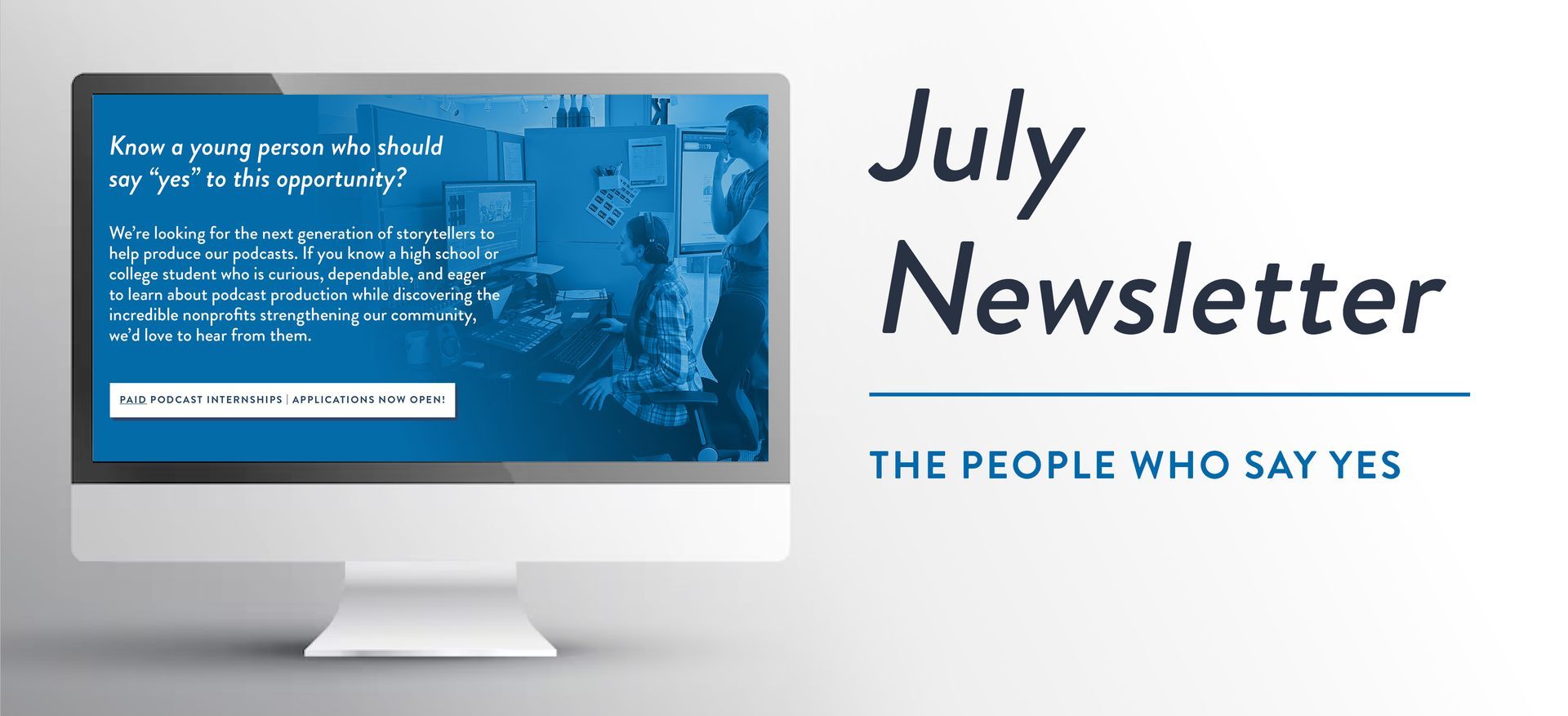
JULY Newsletter: The People Who Say Yes Every thriving community has people who quietly make it stronger. They're the students willing to try something new. The volunteers who raise their hand to serve. The mentors who pass their knowledge to the next generation. They're ordinary people whose simple decision to say "yes" creates extraordinary ripple effects. That's the inspiration behind this month's issue of A Stronger Community Together. Inside, you'll find stories about courage, leadership, service, and the small decisions that help shape the future of Bonner County. You'll also find updates on what's next at the EnVision Center as we continue investing in the people, partnerships, and ideas that strengthen our community. We hope these stories leave you asking one simple question: Where is my next "yes"?
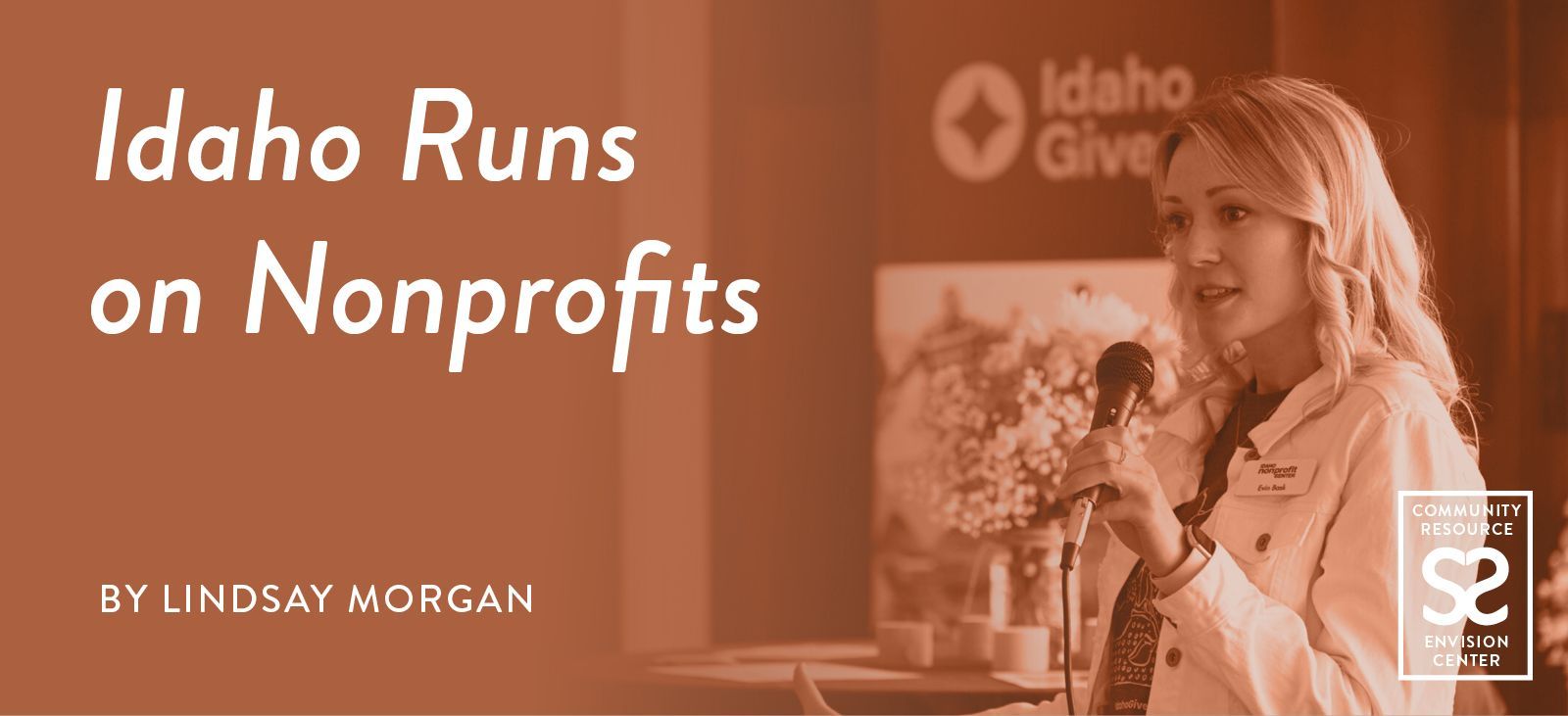
Idaho Runs on Nonprofits: A Conversation with the Idaho Community Foundation If you have ever wondered whether the nonprofit sector really matters to Idaho's economy, Bill Pfinsgraff has some numbers that might surprise you. On a recent episode of A Little Birdie Told Me , I sat down with Bill, the Philanthropic Advisor for the northern region of the Idaho Community Foundation , covering the northern ten counties of our state. He is one of those people who is just genuinely fun to talk to, and what he shared about the state of philanthropy in Idaho, who is giving, who is moving here, and what it all means for organizations like ours, was both eye-opening and encouraging. First, the numbers. According to the Idaho Community Foundation's State of the Sector report , nonprofits in Idaho are the fifth largest sector in the state, just behind construction. They employ over 81,000 people and contribute $13.1 billion to Idaho's economy. Let that sink in for a moment. The nonprofit sector is not a side note to Idaho's story. It is a central chapter. The Idaho Community Foundation, or ICF, was founded in 1988 and exists for one purpose: to support the nonprofit sector across the state of Idaho. Unlike a private foundation, which typically has a single source of funding and a single initiative, ICF draws from a broad base of donors and supports a wide variety of organizations and causes. They manage endowment funds, create charitable giving vehicles for individuals and families, and work to build the long-term capacity of nonprofits throughout Idaho. One of his favorite phrases says it well: Idaho runs on nonprofits. One of the most interesting parts of our conversation was about the difference between restricted and unrestricted giving. Bill made the case, gently but clearly, that unrestricted gifts are the most powerful kind of donation a nonprofit can receive. Restricted funding, while well intentioned, can sometimes create real problems. He shared an example of an organization that received a grant to renovate a building and then found themselves unable to use that building for anything beyond a very narrow set of purposes specified by the grant. The building sits there, maintained but underutilized, while the organization's actual needs go unmet. Unrestricted gifts, on the other hand, allow organizations to respond to what is actually happening on the ground and to evolve their mission as the community's needs change. Bill also shared some fascinating findings from ICF's New Idahoans Study, a research project that looked at who is moving to Idaho, where they are coming from, and how to connect them with local nonprofits. The majority of new residents are coming from California, with Washington state a close second. And contrary to what many people assume, it is not primarily retirees making the move. It is young families who could not afford to raise children where they came from and see Idaho as a place where they can build a life. These newcomers tend to be community minded and genuinely want to get involved. The challenge is connecting them with local organizations rather than defaulting to the national nonprofits they already know. The study also surfaced something worth noting. Idaho is third in the nation in volunteerism, which speaks to something real and good about who we are as a state. But we rank 47th in philanthropic giving. Bill believes a number of factors contribute to that gap, including the large percentage of new residents still finding their footing, the lack of large private foundations in our state compared to others, and the simple reality that Idaho is becoming increasingly unaffordable. When housing costs are climbing toward twice the ratio seen during the 2007 housing bubble, people have less margin to give financially, even when they genuinely want to. The solution, Bill says, is not to give up on those donors but to meet them where they are. Low barriers of entry. Family friendly volunteer opportunities. Community events that introduce people to organizations without immediately asking for a major commitment. Build the relationship first, and the giving will follow. What stayed with me most from our conversation was Bill's answer when I asked him what his favorite part of the job is. He said this work has restored his faith in humanity. Every day he meets people whose only goal is to support their community and give back to people they have never met. In a world where the loudest voices online are often the most discouraging, he gets to see people at their best. That is something worth holding onto. At the Community Resource EnVision Center, we believe that a strong community depends on a strong nonprofit sector, and a strong nonprofit sector depends on donors, volunteers, and organizations working together with trust and intention. The Idaho Community Foundation is doing important work to make that possible across our entire state. To learn more about the Idaho Community Foundation, their grant programs, or how to create a charitable fund, visit idahocf.org. This post is based on a recent episode of A Little Birdie Told Me. Listen to the full conversation to hear more from Bill Pfinsgraff.
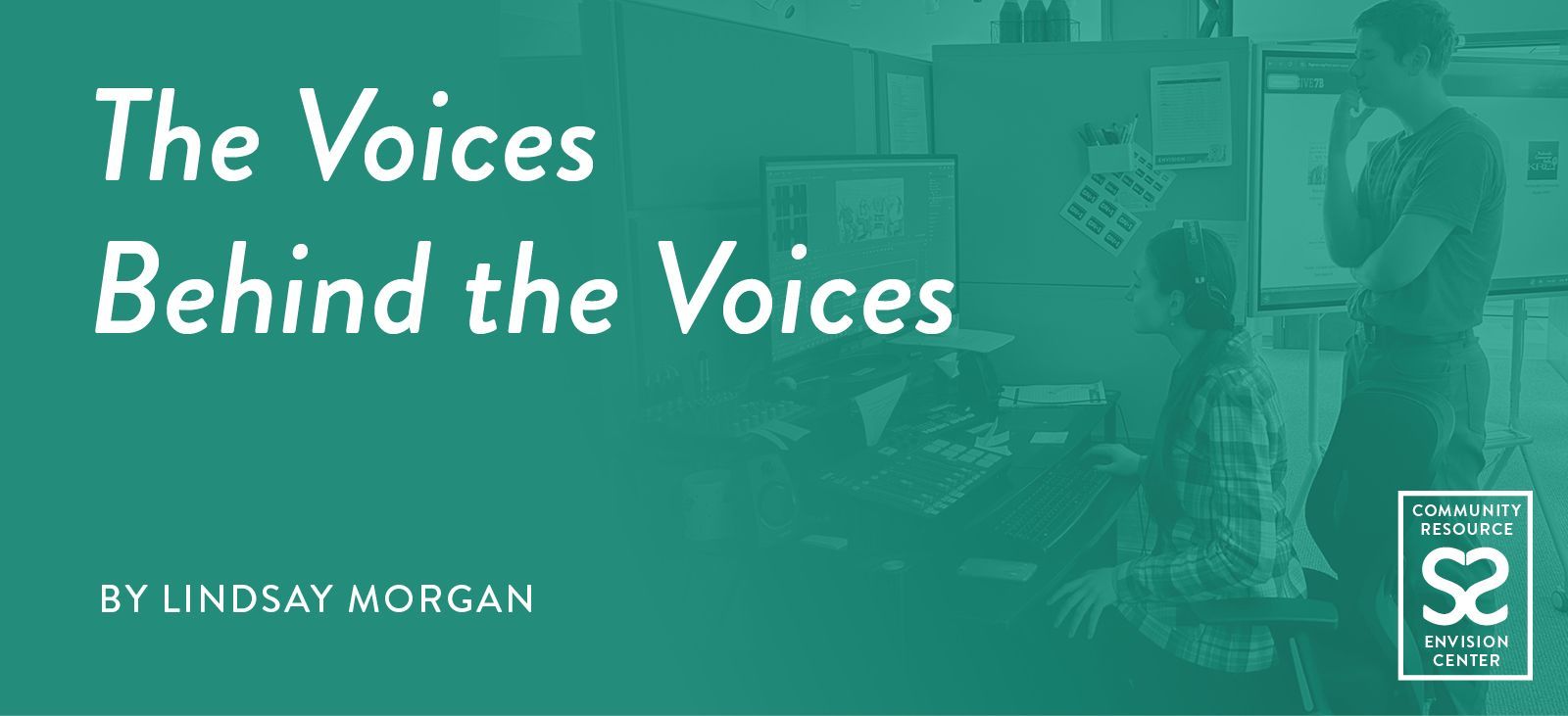
The Voices Behind the Voices Every episode of A Little Birdie Told Me features a guest sharing their story, their mission, and their passion for this community. What most listeners don't know is that behind so many of those episodes, there have been two teenagers from Priest River who drove over, set up the equipment, managed the sound, and made sure it all came together. This one is for them — and hopefully future interns too. On a recent and very special episode, our Executive Director Katie Begalke turned the microphone around and interviewed our very own podcast interns, Audrey McKinney and Hunter Patterson. Audrey is 17 and just finished her junior year. Hunter is 18 and heading off to college to study law. Both found their way to us through their homeschool community, Classical Conversations, and both have been showing up faithfully each week for the past two years to do work that most adults would find intimidating. When Audrey first heard about the opportunity, she wasn't sure what she was getting into. She had no idea she'd be trusted to actually edit the episodes. As she put it, she didn't even know how to put something on a thumb drive. Hunter was similarly unsure, but decided that if he never went after an opportunity like this, he never would. So he wrote up his application, sent it in, and the rest is history. What they learned goes well beyond the technical. Yes, they can now talk about lighting, camera angles, the rule of thirds, and why you point a light at the ceiling instead of directly at your subject. Hunter even brought knowledge from his 3D animation work in Blender and found that the principles translated beautifully to physical filmmaking. But the bigger lessons were the ones that sneak up on you. Audrey talked about how simply listening to the interviews over two years gave her a front row seat to the depth and breadth of nonprofit work happening in Bonner County. The needs, the people, the passion. It opened her eyes in ways she didn't expect. Hunter talked about responsibility, about learning to manage a schedule, to show up, to communicate, to troubleshoot when things don't go perfectly, which in podcasting, they never do. Before wrapping up their time with us, the two of them created a standard operating procedure document, a step-by-step guide with photos walking through the entire production process from start to finish, so whoever comes next has a roadmap. That is not a small thing. That is the kind of thoughtfulness that says everything about who these two young people are. Audrey is heading to Taiwan at the end of August for a full academic year abroad through the Rotary Youth Exchange program, living with three different host families, attending a local high school, and learning Mandarin along the way. Hunter is heading to college to study law, with video production and technology staying close as passions he plans to carry forward. We could not be more proud of both of them. When Katie asked what advice they would give to future interns, Audrey said it simply: come with an open heart and open ears. Just listen. Hunter said: if you're nervous, just do it. The work environment here is forgiving, and there is so much room to learn. At the Community Resource EnVision Center, we talk a lot about community and connection and the power of showing up. Audrey and Hunter have embodied all of that, each week, for two years. They have helped amplify the voices of dozens of nonprofits and community leaders across North Idaho, and in doing so, they have grown into two remarkably thoughtful, capable, and generous young people. We are going to miss them so much. But we have a feeling we haven't heard the last from either of them. This post is based on a recent episode of A Little Birdie Told Me, hosted by Community Resource EnVision Center Executive Director Katie Begalke. Listen to the full conversation to hear more from Audrey and Hunter.
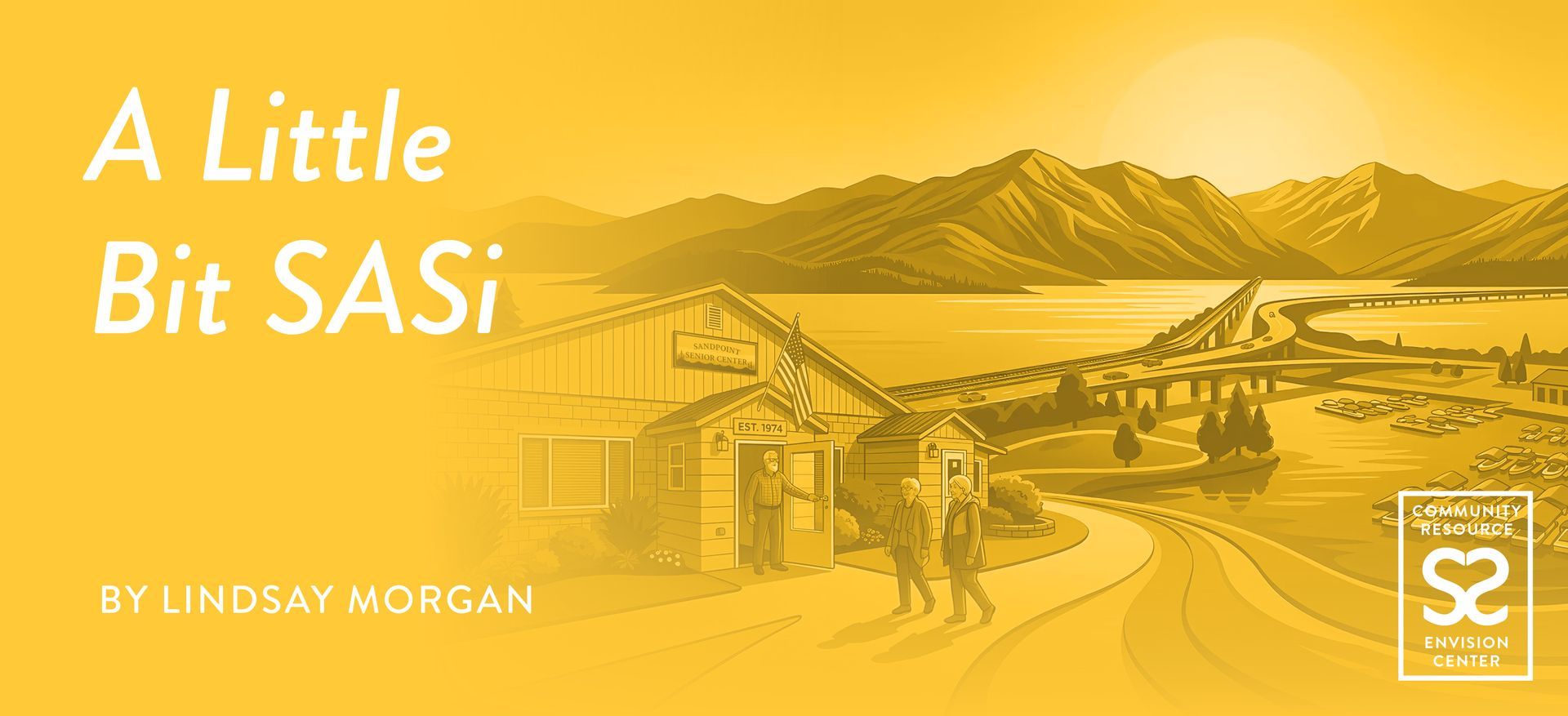
A Little Bit SASi: The Organization Serving Sandpoint Seniors for Over 50 Years If you haven't heard of Sandpoint Area Seniors Inc. , you might know them better by their nickname: SASi. On a recent episode of A Little Birdie Told Me , I sat down with William Brasch, their new development director, to talk about the work they're doing and why it matters so much to the health of our community. William is about as new to Sandpoint as it gets. He had only been here four weeks when we recorded this conversation, having relocated from Washington after landing the role at SASi. His background is a fun one — he started out thinking he wanted to be a chef, earned degrees in culinary arts and nutrition, and later got his MBA before finding his way into nonprofit development work at a Washington nonprofit serving at-risk and homeless youth. When the role at SASi came open, the fit was clear on both sides. His background in food and nutrition pairs naturally with one of SASi's most important programs, and the organization had been looking for the right person for quite some time. So what does SASi actually do? More than most people realize. The organization started over 50 years ago as a simple gathering space for seniors, and William told me the story of how it began with two wives who wanted to create a place where they could keep an eye on their husbands while doing crafts. It's a founding story that feels very Sandpoint to me, practical, community minded, and a little bit clever. From those humble beginnings, SASi has grown into a full service senior support organization tackling two of the most pressing issues facing older adults in our community: food insecurity and social isolation. Their home delivered meals program is one of the most meaningful things happening in Bonner County. Monday through Friday, staff prepare hot and cold meals and volunteers deliver them directly to seniors across all of Bonner County, including our rural areas where isolation can be especially acute. William told me about going on a ride along where he met volunteers ranging from age 80 down to five years old — five year olds who go out with their parents each week, deliver meals, and write little notes to the seniors they serve. As a father of five, that really touched him. It touched me too. SASi also loans out medical equipment at no cost, offers a full calendar of activities and shared lunches at their center, and recently hosted an AI presentation for seniors that drew a big crowd. They have a volunteer who provides regular tech support, which matters more than it might sound when so much of daily life now happens online. One of the things William said that has stayed with me is his observation about aging and stigma. SASi serves anyone 50 and older, but reaching that younger generation of seniors requires getting past the idea that walking through their doors means admitting you're old. As William put it, we're all aging and there's nothing we can do about it. There is no shame in finding community and support along the way. His perspective on why all of this matters is worth sharing. The people coming through SASi's doors are the people who built this community — the farmers, teachers, government workers, and Rotary members who have already given so much. They deserve to be served in return. That idea connects with what we believe at the EnVision Center every day. A strong community takes care of all of its members across every stage of life. If you would like to get involved, reach out to SASi's office administrator Arie, who can connect you with volunteer opportunities, meal delivery routes, or information about upcoming programs. Two events worth putting on your calendar: SASi Uncorked, a wine tasting fundraiser on August 15th, and SASi's Art Alive, a live art event and auction at Little Panida on September 12th. Welcome to Sandpoint, William. We are really glad you're here. And something tells us the SASi community is too. This post is based on a recent episode of A Little Birdie Told Me. Listen to the full conversation to hear more from William Brasch.
