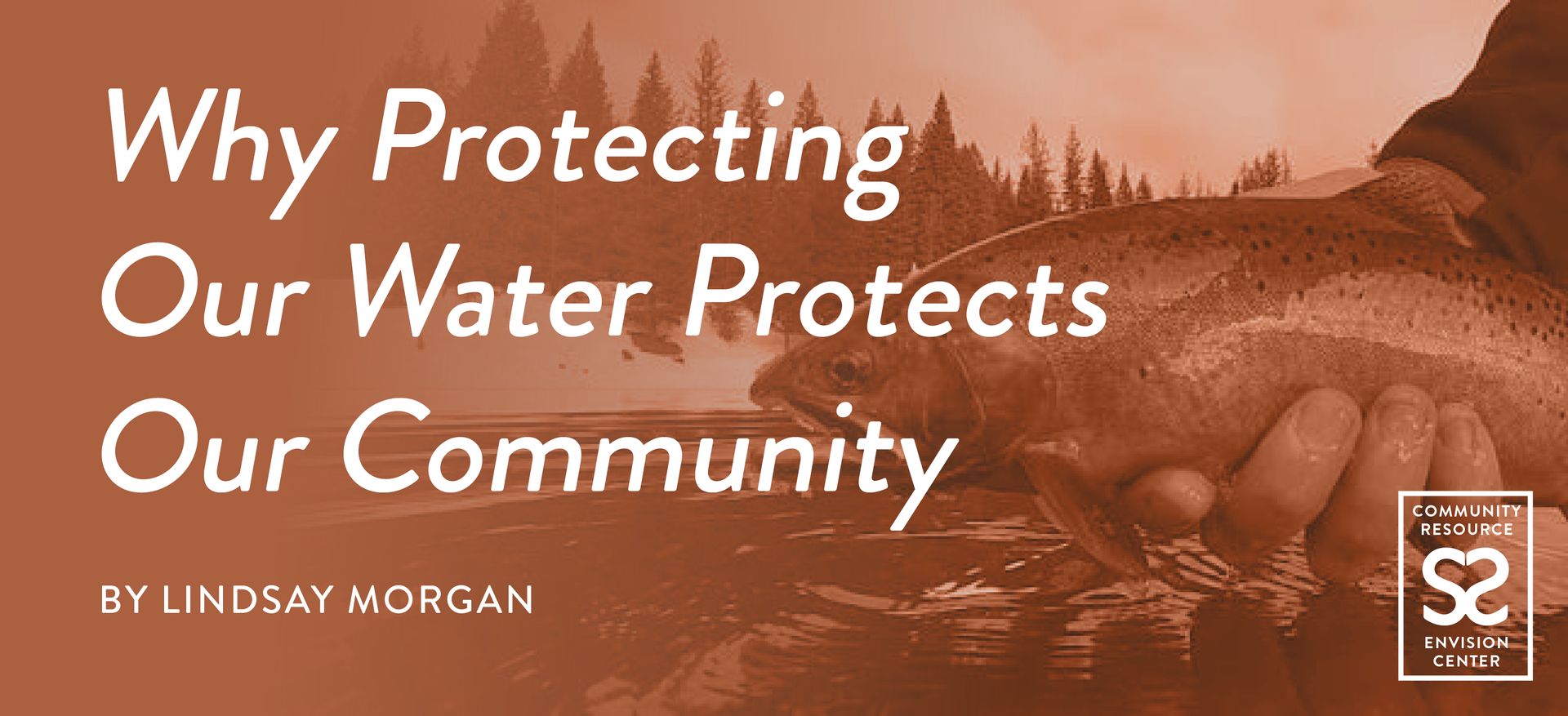
More Than Fish: Why Protecting Our Water Protects Our Community

More Than Fish: Why Protecting Our Water Protects Our Community


When most people hear the name Trout Unlimited, they assume it's an organization focused on fishing.


And while fishing is certainly part of the story, a recent conversation with Cathy Gidley and Chip Corsi revealed something much broader: Trout Unlimited is really in the business of protecting one of our community's most valuable resources—clean water.


Founded in 1959 by a group of anglers who wanted to protect trout habitat, Trout Unlimited has grown into a national conservation organization with more than 300,000 members and over 300 staff working across the country. Their mission is simple but impactful: bring people together to conserve, protect, and restore the cold-water fisheries and watersheds that future generations will depend on.


In North Idaho, that mission is especially important.


Although the five northern counties make up only a small portion of Idaho's landmass, they contain more than one-third of the state's surface water. From Lake Pend Oreille and the Kootenai River to the St. Joe and Moyie Rivers, our region is home to some of Idaho's most treasured waterways and fisheries.


But protecting those resources isn't just about fish.


As Cathy explained, water quality impacts all of us. The same healthy rivers and streams that support trout also provide recreation opportunities, drinking water, wildlife habitat, and economic benefits for our communities. As weather patterns shift and water becomes an increasingly valuable resource, conservation efforts today will have lasting impacts tomorrow.


The organization's work spans everything from restoring streams and wetlands to removing barriers that prevent fish from migrating naturally. They partner with landowners, tribes, government agencies, businesses, and volunteers to improve habitat and strengthen watersheds across the region.


One thing that stood out during the conversation was Trout Unlimited's commitment to collaboration.


Whether they're working with private landowners to restore wetlands, helping improve fish passage at stream crossings, or participating in large-scale conservation agreements involving multiple states, tribes, and agencies, the organization believes lasting solutions happen when diverse groups come together around a shared goal.


That philosophy should sound familiar.


At the Community Resource EnVision Center, we often talk about the importance of collaboration in addressing community challenges. The same principle applies whether we're talking about affordable housing, transportation, workforce development, or environmental stewardship: the best solutions are rarely created in isolation.


The conversation also highlighted a reality many North Idaho residents have noticed firsthand—our region is changing. Population growth, increased development, and changing weather patterns all create new pressures on our natural resources. At the same time, those challenges create opportunities to do things better, whether that's designing infrastructure that supports fish passage, educating homeowners about shoreline stewardship, or helping the next generation understand the value of healthy ecosystems.


Perhaps the most encouraging takeaway was the reminder that conservation isn't reserved for scientists or avid anglers.


It's something everyone can participate in.


Whether it's planting native vegetation along a shoreline, supporting local restoration projects, teaching children about the outdoors, volunteering for a cleanup effort, or simply learning more about the waterways that surround us, each of us has a role to play in protecting the places we love.

Because in the end, clean water isn't just a fisheries issue.

It's a community issue.


And ensuring that future generations can enjoy the rivers, lakes, and landscapes that define North Idaho is something worth working toward together.


To learn more about Trout Unlimited's work in North Idaho, volunteer opportunities, or upcoming projects, visit northidahotu.org or tu.org.


LEARN MORE
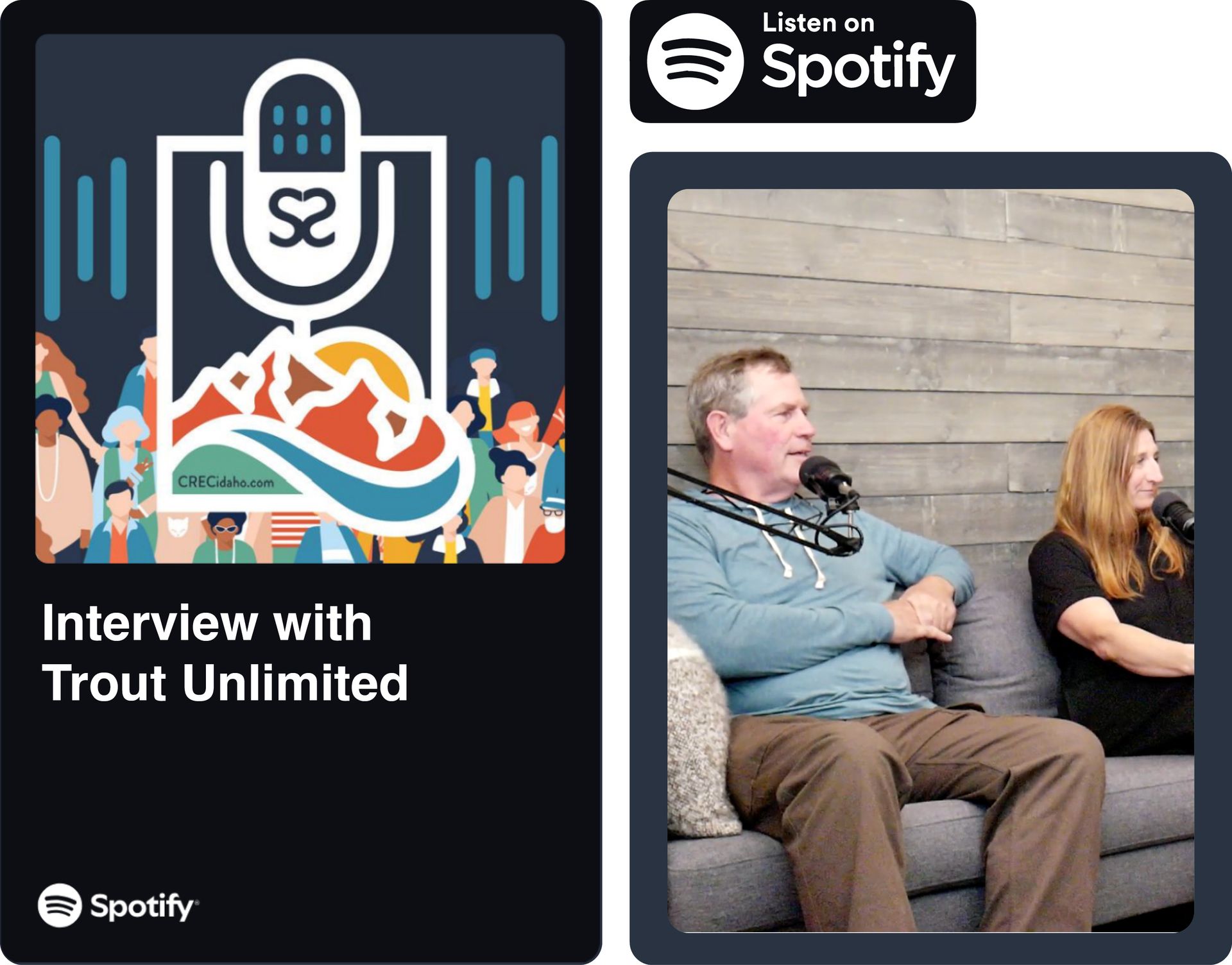
Spotify episode of A Little Birdie Told Me with Trout Unlimited


"If you recreate and enjoy these places, you're more likely to care about them. And with that comes caring for clean water—which benefits all of us."
Email Lindsay!
EMAIL THE AUTHOR
By Linnis Jellinek June 25, 2026
More Alike Than Different: A Conversation About Belonging in North Idaho What does it mean to belong? It's a simple question, but one that sits at the heart of many of the challenges facing our communities today. Whether we're talking about seniors experiencing isolation, veterans navigating civilian life, young people searching for their place in the world, or families new to the area, the desire to feel seen, valued, and connected is something we all share. On a recent episode of A Little Birdie Told Me , host Lindsay Morgan sat down with Dr. Sarah Lynch, Executive Director of the North Idaho Pride Alliance (NIPA) , to discuss the organization's work and the role community plays in helping people thrive. Founded on a vision of creating a North Idaho where LGBTQ+ individuals can connect, belong, and be empowered to thrive, NIPA works year-round through education, advocacy, and networking opportunities. While many people associate Pride organizations with a single annual event, Dr. Lynch shared that their work extends far beyond Pride Month. Through social gatherings, educational forums, community partnerships, and resource referrals, the organization seeks to reduce isolation and create opportunities for meaningful connection. One of the themes that surfaced repeatedly throughout the conversation was the impact of social isolation. North Idaho is a beautiful place to live, but its rural nature can make it difficult for people to find community, access resources, or connect with others who share similar experiences. Dr. Lynch described one of NIPA's greatest goals as creating spaces where people realize they are not alone. For many, simply finding a room full of people who understand their experiences can be life-changing. That idea resonates deeply with the work we see every day at the Community Resource EnVision Center. While the populations we serve may be different, the underlying need is often the same. People are looking for connection. They want to know where to turn for help. They want to feel welcomed, understood, and valued. Whether someone is seeking housing assistance, employment resources, healthcare navigation, or a supportive community, belonging matters. When asked what the greatest need facing the community is today, Dr. Lynch offered a simple but powerful answer: hope. Hope that people can find support. Hope that they can build meaningful relationships. Hope that they can become the best version of themselves in an environment that encourages them to thrive. Perhaps the most encouraging part of the conversation came when discussing this year's Pride in the Park event. What began ten years ago as a small gathering of approximately 150 people has grown into a major community event featuring more than 100 vendors and thousands of attendees. The growth reflects not only the work of one organization but the willingness of community members, businesses, volunteers, and local leaders to come together around the idea that everyone deserves to feel welcome. At the EnVision Center, we often say that stronger communities are built through connection. Conversations like this remind us that while people may come from different backgrounds and experiences, we often share many of the same hopes: to be seen, to belong, to contribute, and to thrive. Those are goals worth working toward together.
By Linnis Jellinek June 25, 2026
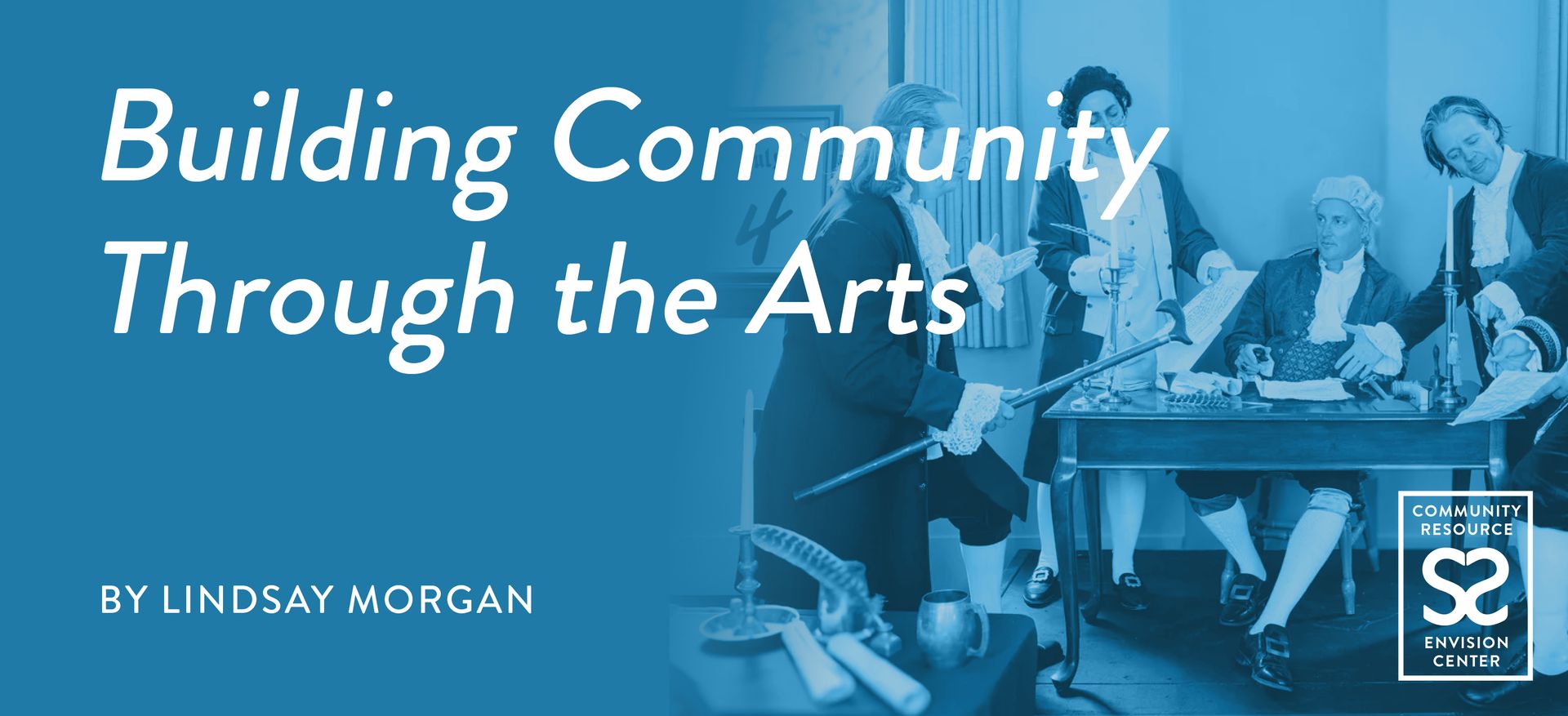
More Than a Show: How Honey Pearl Productions is Building Community Through the Arts What happens when a lifelong dream meets a community willing to embrace it? For Connie Kiehn, co-founder of Honey Pearl Productions , the answer has been something much bigger than theater. It's become a way to strengthen community, create opportunities for people to grow, and bring neighbors together through the shared experience of storytelling. Connie's journey to community theater wasn't exactly a straight line. As a child, she loved theater and dreamed of directing productions one day. But like many people, life took her in a different direction. She studied economics, served in the military, built a career, married, and started a family. When she and her husband moved to Sandpoint in 2022, she thought her theater days were largely behind her. Then came an audition for Legally Blonde. To her surprise, Connie landed the lead role of Elle Woods. Her husband, Stephen, was cast opposite her as Emmett Forrest. What began as a fun community experience quickly reignited a passion that had been waiting quietly in the wings for years. That experience ultimately led the couple to launch Honey Pearl Productions. Together, Connie's background in theater and Stephen's experience as an artist and graphic designer created a unique partnership. What started as a dream evolved into a shared family mission: using the performing arts to enrich lives and strengthen the community they now call home. Their first production, The Lion, the Witch and the Wardrobe , was met with overwhelming enthusiasm. Soon followed Cheaper by the Dozen , and now Honey Pearl Productions is preparing for its first musical, 1776 , opening over the Fourth of July holiday. But the organization's impact extends far beyond the stage. Connie believes theater creates a rare environment where people from vastly different backgrounds, personalities, and skill sets work together toward a common goal. Actors, artists, musicians, builders, technicians, designers, introverts, extroverts, students, retirees, and first-time performers all find a place within a production. In a world where people often stay within their familiar circles, theater invites them to collaborate with individuals they might never otherwise meet. That experience can be transformative. Participants discover talents they didn't know they possessed. They build confidence. They learn leadership, communication, teamwork, and problem-solving. Some even find themselves stepping into roles they never imagined for themselves. As Connie shared, one of their behind-the-scenes volunteers recently decided to audition for a stage role after previously insisting she would never perform in front of an audience. Perhaps most importantly, Honey Pearl Productions is committed to making participation accessible. The organization operates entirely through volunteers, and performers are not charged to participate. Their goal is to ensure that financial barriers do not prevent someone from experiencing the joy and personal growth that the performing arts can provide. This year's production of 1776 also marks a new chapter for the organization. On July 4th, Honey Pearl Productions will host a special dinner and performance event benefiting local veterans through Thin Line Community Support. The event combines live music, community gathering, and charitable giving before audiences enjoy the musical itself. Connie hopes it will become the first of many productions that intentionally give back to local causes. At the heart of it all is a belief that art has the power to bring people together. Whether through music, storytelling, costumes, set design, or performance, creative expression allows people to connect in meaningful ways. It creates space for confidence to grow, friendships to form, and community to flourish. At the Community Resource EnVision Center, we often talk about the importance of connection. Honey Pearl Productions is a wonderful reminder that some of those connections happen not in boardrooms or meeting halls, but under stage lights, behind the curtain, and through the shared experience of creating something beautiful together. Because sometimes the greatest impact isn't measured by the number of tickets sold. It's measured by the lives changed along the way. For tickets to the show visit 1776: Honey Pearl Productions
By Linnis Jellinek June 25, 2026
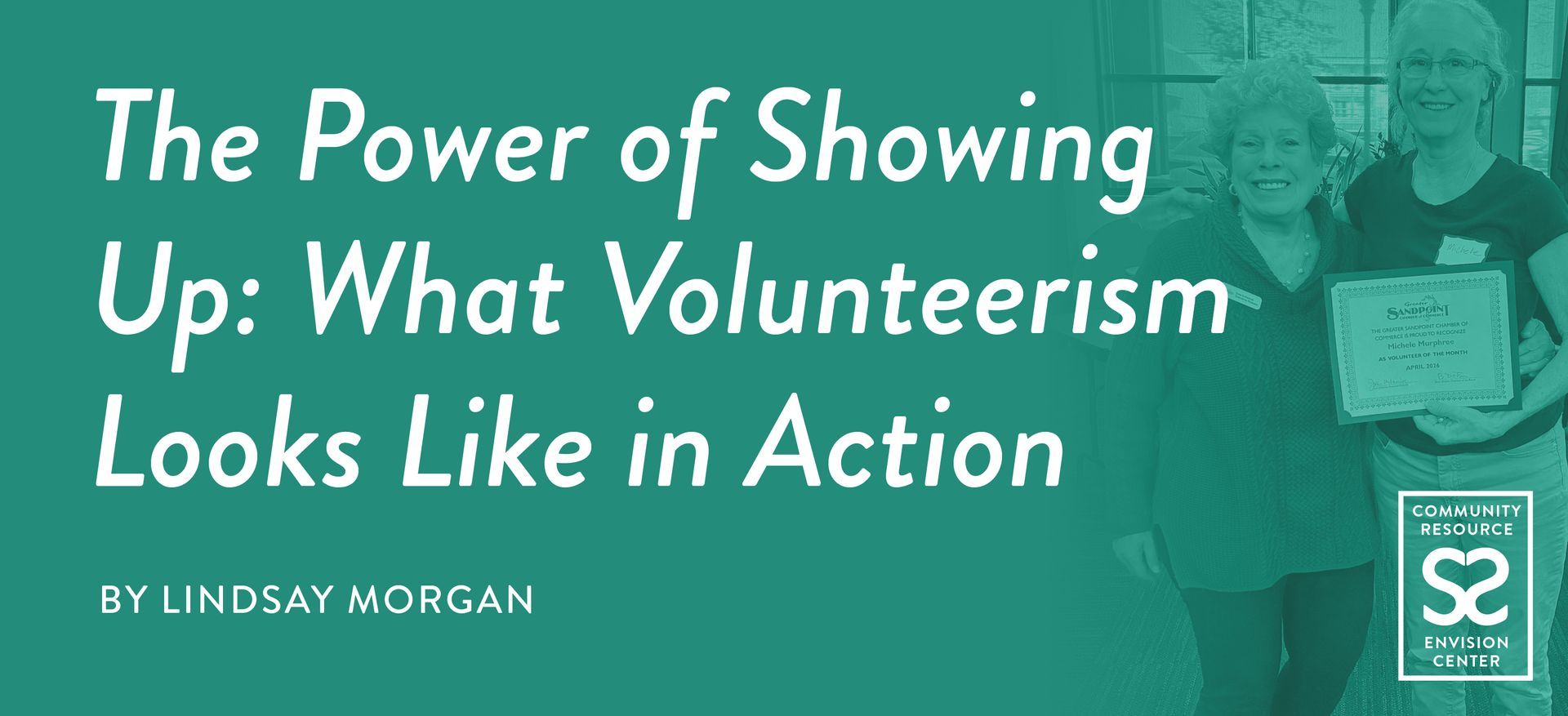
The Power of Showing Up: What Volunteerism Looks Like in Action What does a volunteer look like? For some, it's someone serving meals, mentoring youth, or helping at community events. For others, it's someone quietly making connections behind the scenes, bringing people together, and helping good ideas become reality. If you've spent any time volunteering in Bonner County, chances are you've crossed paths with Michele Murphree. Recently recognized as Volunteer of the Month by the Sandpoint Chamber of Commerce, Michele has spent the last 25 years investing her time, energy, and heart into the community she now calls home. Yet if you ask her about her accomplishments, she'll likely redirect the conversation to the organizations, volunteers, and community members who make the work possible. Originally from Southern California, Michele and her husband made the leap to North Idaho after falling in love with the area's natural beauty and strong sense of community. What started as a desire to get involved quickly evolved into decades of service supporting everything from environmental conservation and school gardens to veterans, youth programs, food security initiatives, and community improvement projects. One of the first lessons she learned was that meaningful volunteerism often begins with a simple question: "How can I help?" That mindset eventually led Michele to help launch school garden programs, support Food for Our Children, partner with Habitat for Humanity, coordinate veteran wood-cutting projects, and organize large-scale volunteer initiatives throughout Sandpoint. Along the way, she discovered something important: many people want to help, but they don't always know where to start. That's where Michele has found her niche. Rather than focusing on a single organization, she often serves as a bridge between nonprofits and community members who want to get involved. She understands that nonprofits are often stretched thin, and that volunteers need meaningful opportunities where they can make a difference. Her gift is bringing those two groups together. Perhaps nowhere is that more evident than through Serve Sandpoint, a community-wide volunteer initiative that connects hundreds of volunteers with local projects ranging from food banks and animal shelters to senior services, youth organizations, and housing programs. What began as a request to find service opportunities for a church group has grown into a community effort involving dozens of projects and hundreds of volunteers. For Michele, the work isn't just about completing tasks. It's about connection. One of her favorite emerging ideas is the concept of the "long table"—bringing people together after a day of service to share a meal, tell stories, and build relationships. Because while volunteer projects can improve buildings, gardens, or community spaces, it's often the conversations that happen afterward that leave the greatest impact. That theme surfaced throughout the conversation. Whether discussing school gardens, teen programs, Habitat for Humanity neighborhoods, or veteran support efforts, Michele repeatedly returned to the same idea: people want to belong. They want to contribute. They want to know they are part of something larger than themselves. And that's exactly what volunteerism provides. It helps people discover the needs that exist right in their own backyard. It creates opportunities to build relationships across generations and backgrounds. It reminds us that community isn't something we inherit—it's something we actively create together. At the Community Resource EnVision Center, we see that truth every day. The strongest communities aren't built by a handful of organizations working alone. They're built by neighbors showing up for one another, lending a hand, sharing their talents, and investing in the places they call home. Michele Murphy is a wonderful example of what that looks like in practice. Not because she has all the answers. But because she keeps asking one simple question: "How can I help?" And then she does. "I think people really want to be a part of something and want to contribute—they just don't always know how." Community Connection Interested in volunteering? Michele encourages community members to explore local opportunities through organizations like Habitat for Humanity, the Food Bank, Bonner Homeless Transitions, the Senior Center, the Animal Shelter, and the annual Serve Sandpoint initiative. Every act of service—big or small—helps strengthen our community. I think this one may actually be my favorite so far because it captures something that is central to both Michele's story and CREC's mission: community happens when ordinary people decide to get involved. 
June 25, 2026
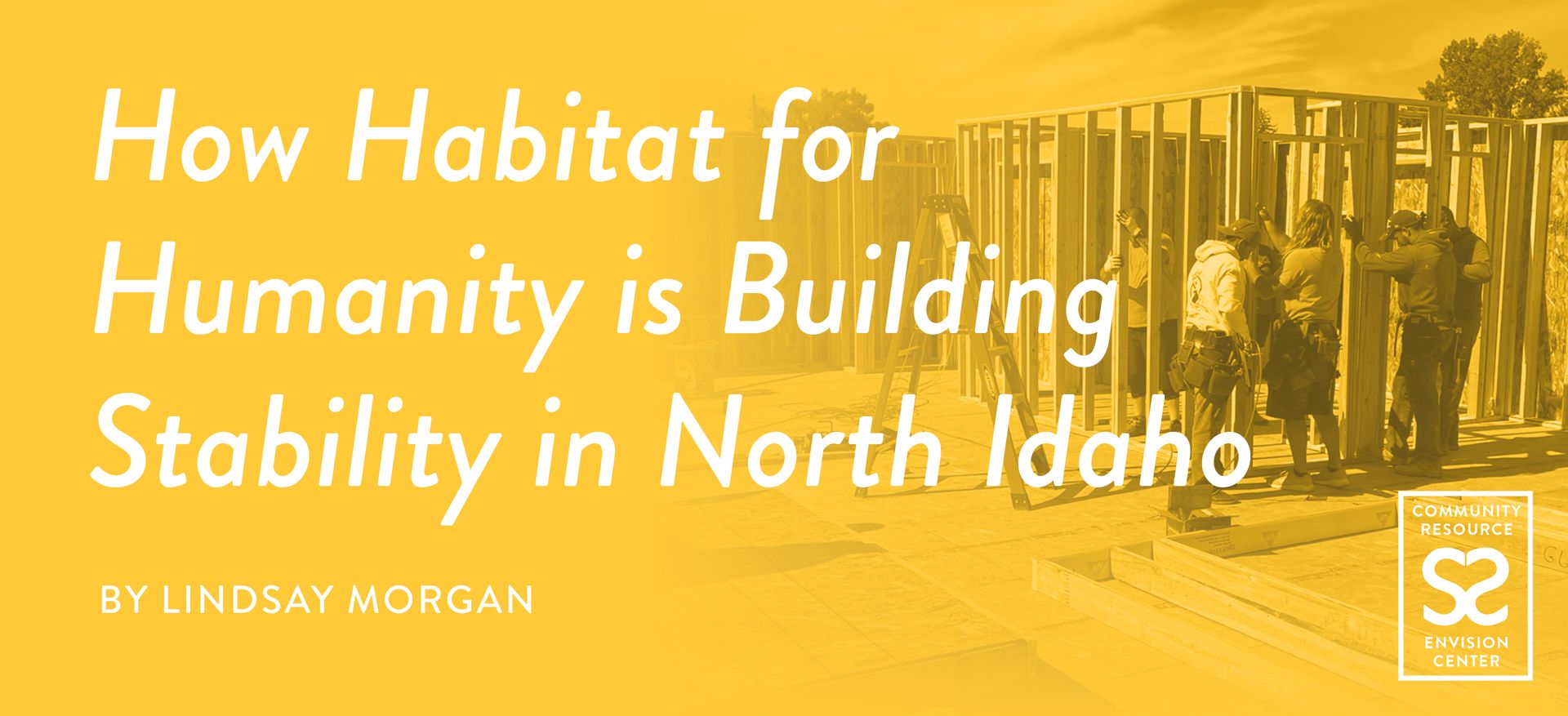
More Than a House: How Habitat for Humanity is Building Stability in North Idaho What happens when a family no longer has to wonder where they'll live next year? For many of us, home is something we take for granted. It's the place where children do their homework, families gather around the dinner table, and neighbors become friends. But for families struggling to find affordable housing, home can feel just out of reach. On a recent episode of A Little Birdie Told Me , Lindsay Morgan sat down with Robin Rawlings, Executive Director of Idaho Panhandle Habitat for Humanity , to discuss how the organization is helping local families build more than houses—they're building stability, self-reliance, and opportunity. Habitat for Humanity is often misunderstood as an organization that gives away homes. Robin was quick to dispel that myth. "It's not a handout, it's a hand up," she explained. Families go through an extensive application process, must demonstrate the ability to repay a mortgage, complete financial education courses, and contribute hundreds of volunteer hours before ever receiving the keys to a home. The goal isn't simply homeownership. The goal is creating lasting stability. Through Habitat's program, families learn budgeting skills, home maintenance, financial planning, and the responsibilities that come with owning a home. They invest sweat equity into the process and become active participants in building their future. That stability has ripple effects far beyond a mortgage payment. As Lindsay noted during the conversation, when one of our most basic human needs is uncertain, everything else becomes more difficult. Housing insecurity impacts health, education, food security, employment, and overall well-being. Robin shared that children who grow up in stable housing often have greater opportunities to succeed because they aren't carrying the constant stress and uncertainty that comes with unstable living situations. This year marks a significant milestone for the organization: 30 years of service in the Idaho Panhandle. Since its founding, Habitat has completed 26 homes throughout the region and is currently preparing to build two additional homes in Sandpoint. For an organization that historically completed one home every few years, it's a sign of renewed momentum and growth. Robin describes the organization as entering a "new season"—one focused on growth, stronger community partnerships, and expanding impact throughout Bonner and Boundary Counties. That growth extends beyond new home construction. Last year, Habitat launched a Veteran Repair Program that provides critical home repairs for local veterans. Partnering with Home Depot, the program helps veterans address safety concerns and maintenance issues that may otherwise go unresolved. More importantly, it does so with dignity and gratitude for their service. The organization is also finding creative ways to strengthen community connections. This summer, Habitat is partnering with Cedar Hills Church to host a neighborhood cleanup and community meal, bringing residents together to improve their surroundings and build relationships with one another. At its core, Habitat for Humanity is about more than construction. It's about creating a foundation upon which families can build their lives. A stable home creates space for children to learn, parents to plan for the future, and families to invest in their communities. It turns uncertainty into opportunity and housing into hope. And in a region where affordable housing continues to be one of the greatest challenges facing working families, that work matters more than ever. To learn more about Idaho Panhandle Habitat for Humanity, volunteer opportunities, or the Veteran Repair Program, visit panhandlehabitat.org .
June 25, 2026
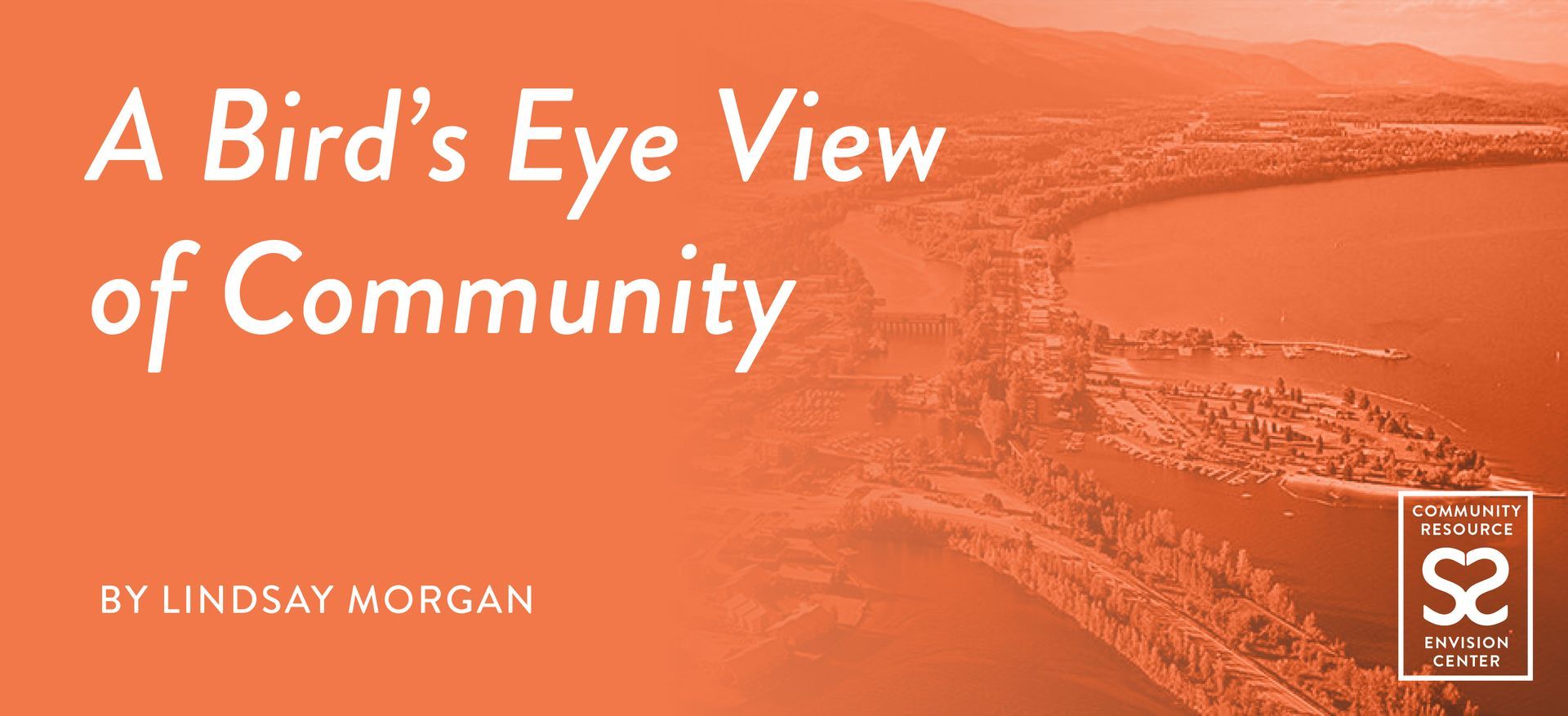
A Bird’s Eye View of Community At the Community Resource EnVision Center , our work is rooted in connection—but in practice, it looks like something more layered: listening closely, linking people to resources, and watching how a community becomes stronger when it is intentionally brought together. That idea came through clearly in a recent episode of A Little Birdie Told Me , featuring CREC Executive Director Katie Begalke during our 100th episode conversation. What emerged was not just a podcast milestone, but a reflection on how community systems actually function—and what it takes to hold them together. Because at its core, this work is about access, dignity, and ensuring people do not have to navigate life’s hardest moments alone. “We are a navigation system for people in crisis or in need and who are navigating life’s difficult moments.” Connection as the starting point CREC’s mission is to “empower the community through connection, service, and support.” While broad in language, it becomes very tangible in practice—especially for individuals reaching out for help for the first time. Many are navigating housing instability, transportation barriers, caregiving needs, or simply the uncertainty of where to begin. And that first step is often the hardest. As Katie shared: “We’re building this beautiful community puzzle, and pieces are just being dumped in our laps every day. Some pieces fit quickly. Others take time. But over time, patterns emerge and so does clarity." Why relationships matter As demand for services grows, so does the complexity of need. CREC has seen a significant rise in first-time clients—people who are often hesitant or overwhelmed when seeking help for the first time. In that space, connection becomes more than referral—it becomes trust-building. Because most people want to help, they just don’t always know where. “Most people want to help and they don’t know where they can help.” This is where CREC plays a unique role: not only connecting people to services, but connecting people to each other across nonprofits, businesses, and community systems working toward shared outcomes. “We see how one does affect the other. We’re all trying to make the community stronger and provide services.” A vision for shared space Much of the conversation also focused on what could be possible if community services were more intentionally co-located—reducing barriers and creating more seamless access to care. What if support didn’t require multiple stops across town? What if dignity was built into the experience of seeking help? Katie described that vision simply: “What would it look like if someone experiencing one of the hardest moments of their life didn't have to drive all over town searching for help? What if they could come to one place, have their needs met, and experience the dignity and support of an entire community?" While still evolving, pieces of this model already exist within CREC’s shared space, where more than 35 partners operate under one roof. The role of curiosity At the center of it all is relationship-building—not as a supporting function, but as the foundation of the work itself. Katie reflected on the idea that she doesn’t feel the pressure to actually have to have all the answers, but finds it more important to be brave enough to keep asking the questions, and inviting the right people to the table. That curiosity—staying open, listening closely, and following where connection leads—is what allows the work to grow beyond any single plan. Closing As A Little Birdie Told Me reaches its 100th episode, it continues to serve as more than a podcast. It is a reflection of the community it represents—one that is still evolving, still asking questions, and still building systems that make support more accessible. Because at the end of the day, this work is not about having everything figured out. It is about building something strong enough to hold people while the answers are still forming.
June 1, 2026
Beyond the Sale: Inside the Selkirk Association of REALTORS® Real estate in North Idaho is often viewed through listings, prices, and market trends—but behind every transaction is a network of professionals supporting buyers, sellers, and the broader community. Recently, Stephanie Rief, Dyno Wahl, and Fabiola Ferris, leaders from the Selkirk Association of REALTORS® shared insight into their work during our podcast in our studio, the local housing market, and the impact of their organization well beyond real estate. A Professional Network with Community Roots The Selkirk Association of REALTORS® is a member-based organization supporting real estate professionals through education, standards, and industry resources, including oversight of the Multiple Listing Service (MLS). Members include realtors, brokerages, and affiliate partners such as lenders, inspectors, and title companies—creating a connected system that helps transactions move more efficiently. Stephanie Rief, Executive Director of the Association explained, the MLS used to be books realtors used to physically carry around town. Now it’s all at their fingertips. A Shifting North Idaho Market North Idaho continues to see steady demand, shaped by both in-state movement and relocation from other states. The Association representatives noted that a significant share of buyers come from within Idaho (about 70%), while many others are arriving from out of state. Affordability remains a challenge for first-time buyers, even as conditions have shifted away from the peak pandemic market. “The market isn’t as intense as it was—it’s more of a conversation now between buyers and sellers,” Dyno Wahl, this year’s association president shared. Homes that are well-priced and well-prepared continue to move quickly, while overpriced or outdated homes tend to sit longer. Interest rates continue to play a major role in pacing and buyer confidence. What Buyers and Sellers Need to Know Preparation is critical on both sides of a transaction. Fabiola Ferris, realtor and Association President Elect emphasized that buyers who are pre-qualified makes all the difference. Without that, buyers riskShe also working outside their budget creates frustration for everyone involved. On the seller side, pricing strategy is just as important. Well-priced homes often attract immediate attention, while overpricing can extend time on market even in active conditions. The Work Behind the Commission The conversation also highlighted common misconceptions about realtors and their work. “There’s a misconception that realtors just make money hand over fit on every deal,” Rief said. “…but what they don’t understand is when a deal doesn’t close, they don’t get paid. They are taking a risk as well.” Agents often invest significantly upfront in marketing, photography, and listing preparation—without guaranteed return. Many also operate as independent contractors, managing unpredictable schedules and long client timelines. “We’re self-employed just like small business owners,” Wahl added. Realtors don’t get a regular paycheck, and invest in building everything from the ground up. And while the flexibility can be a benefit, it often comes with after-hours work, urgent negotiations, and constant availability. The group joked about the reality of the profession, noting that the day-to-day work is far more likely to involve hiking boots or Birkenstocks than stilettos, despite outside perceptions. More Than Real Estate: Community Impact Beyond transactions, the Association plays an active role in community support through grants, volunteer work, and fundraising. Funds raised through events like the annual golf tournament are reinvested into local nonprofits, emergency services, youth programs, and community infrastructure projects across North Idaho. The team spoke about what makes the Sandpoint area so special and livable, pointing to the many nonprofits, events, and community efforts that shape life in the region. “We live in this community, and we love this community and we are selling that it’s a great community. We want to put our money where our mouth is.” Wahl explained. Members also participate in community events, financial literacy programs for students, and local service initiatives that extend far beyond real estate. Ambassadors for North Idaho A recurring theme in the conversation was the role realtors play as community ambassadors and trusted advisors. The Association shared that it’s not just about selling a home—it’s about helping people understand where they’re choosing to live. Sometimes that means helping clients realize a community is the right fit. Other times, it means helping them recognize when it isn’t. Fabiola Ferris added, “Selling where you’re going to live is as important as selling the home.” That level of honesty, they noted, is central to building long-term trust with clients and strengthening the region as a whole. Looking Ahead As the Association continues its work, its focus remains on professionalism, community engagement, and supporting both members and the region they serve. While the market continues to evolve, their role remains steady: helping people navigate one of life’s biggest financial decisions with clarity, care, and integrity.
By Katie Begalke June 1, 2026
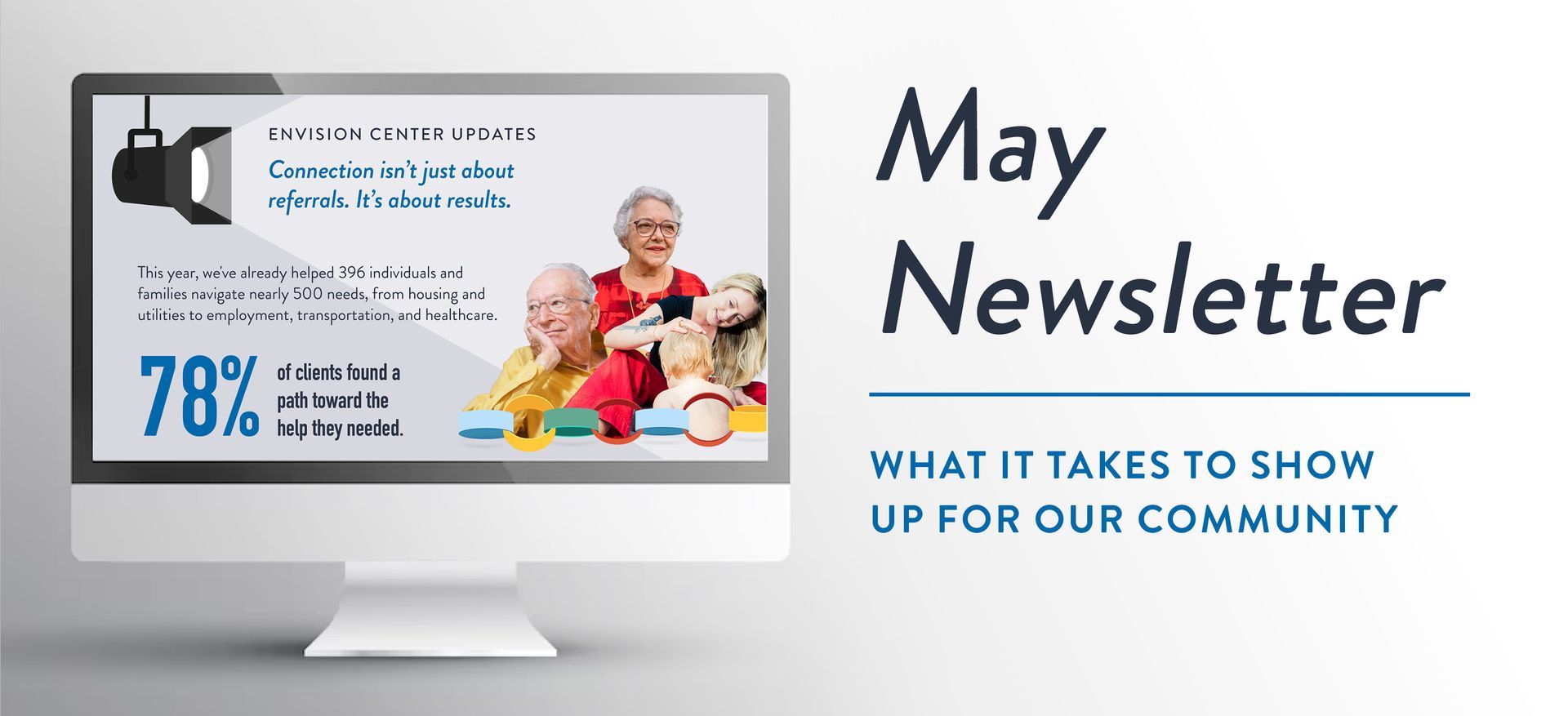
The Connections That Make a Community Communities are often measured by their population, their economy, or the projects taking shape around them. But the true strength of a community is harder to measure. It's found in the relationships between neighbors. The partnerships between organizations. The conversations that bring people together. And the shared belief that when challenges arise, no one should have to face them alone. Looking back on May, one theme emerged again and again across Bonner County: connection. We saw it through Live Give 7B , where hundreds of donors, businesses, volunteers, and nonprofit organizations came together to raise more than $318,000 for local causes. While the dollars will support important work throughout the year, the greatest impact may be the reminder that generosity is strongest when a community acts together. We saw it in conversations about wildfire preparedness . Long before the first evacuation notice is issued or the first emergency shelter opens, communities begin building resilience through planning, partnerships, and preparation. The ability to respond during a crisis is often determined by the connections that exist before one occurs. We saw it in the growing conversation around community spaces. From the library expansion and the Cedar Street Bridge to the Aquatic Center, Historical Society, CTE Center, and Community Hub, these projects share a common purpose. At their best, they create opportunities for people to gather, learn, collaborate, and belong. They become places where connection happens. At the Community Resource EnVision Center, we see this every day. Behind every successful referral, every housing placement, every job connection, and every solved problem is a network of people and organizations working together to help someone move forward. Progress rarely happens in isolation. Neither does community. As Bonner County continues to grow, the opportunity before us is not simply to build more programs, services, or buildings. It is to strengthen the connections between them. Because the strongest communities aren't defined by any one organization, project, or initiative. They are defined by how well those pieces work together. And that may be the most important investment we can make in our future.
May 15, 2026
For children experiencing abuse or neglect, one caring adult can change everything. That’s the mission behind North Idaho CASA, an organization that trains volunteer advocates to stand beside children navigating some of the hardest moments of their lives. CASA advocates provide stability, support, and hope for children caught in the foster care and child welfare systems. Director of Development for North Idaho CASA, Kristin Linville Ludwig, emphasizes that when it comes to serving underprivileged children, community awareness and community action matter now more than ever. What Is CASA? CASA stands for Court Appointed Special Advocates . These volunteers are appointed by judges to represent the best interests of children involved in abuse and neglect cases. When children are removed from their homes and enter the court system, CASA advocates become a consistent voice focused entirely on the child’s wellbeing. Parents often have attorneys. Agencies have caseworkers. CASA exists to make sure the child has someone advocating specifically for them. And unlike many professionals involved in the system, CASA advocates are volunteers. That distinction matters deeply. For many children, especially teenagers, trust is hard-earned. CASA volunteers often become one of the few dependable adults in a child’s life, someone who consistently shows up simply because they care. “A lot of our teens really love the relationship they have with their advocates because they’re showing up,” she says. “They’re volunteering to show up. They’re not a caseworker. They’re not showing up just because they have to.” That consistency can be life-changing. Many of the children CASA serves have experienced instability, trauma, addiction within the home, or generations of neglect. Some have never experienced a healthy adult relationship modeled for them. Advocates help change that. Some volunteers focus heavily on investigation and court advocacy. Others naturally become mentors, encouragers, or “grandparent figures” for children who desperately need emotional support. CASA intentionally tries to match volunteers with cases where their personality and strengths fit the needs of the child. And when a relationship forms, it often lasts years. One of the biggest misconceptions about CASA is that advocates need a professional background in law, counseling, or social work. Kristin says they don’t. “There is no specific perfect advocate,” she explains. “Our advocates are ordinary people that do extraordinary things.” CASA volunteers come from all walks of life: retirees, younger professionals, teachers, foster parents, and community members who simply want to help. Some stay involved for a few years. Others become what CASA affectionately calls “lifers.” Several advocates in North Idaho have volunteered for more than 25 years. The work can be emotionally heavy, but CASA creates strong support systems among volunteers because many cases involve difficult realities that advocates cannot publicly discuss. “These kids and these cases affect you,” Kristin explains. “You definitely have the support.” Why Reporting Matters One of CASA’s newest initiatives is an “Educate to Advocate” campaign focused on helping community members recognize and report possible abuse or neglect. Many abuse investigations reveal a troubling pattern: people suspected something was wrong, but nobody spoke up. Sometimes neighbors noticed concerning behavior. Sometimes family members had a bad feeling. Sometimes teachers or community members saw warning signs but hesitated because they didn’t want to interfere. That hesitation can have devastating consequences. “We always encourage people to call on even the slightest suspicion,” Kristin says. “If everything’s fine, then everything’s fine. There’s no harm.” The organization emphasizes that reporting suspected abuse does not automatically mean children will be removed from a home. Instead, reports allow law enforcement and child welfare professionals to identify patterns, investigate concerns, and ensure children are safe. “The more reporting that happens on the same kid or the same family or the same address,” Kristin explains, “law enforcement’s going to have that flagged, and they’re going to have eyes on that family.” Kristin also acknowledges that child neglect can be more complicated than many people realize. Clear physical abuse is easier for most people to identify. Neglect, however, often exists in gray areas shaped by poverty, family instability, mental health, or addiction. A child wearing dirty clothes or arriving late to school repeatedly may not necessarily be neglected. There may be transportation struggles, financial hardship, or other circumstances outsiders don’t fully understand. That’s why CASA encourages people not to investigate situations themselves or make assumptions. Instead, they urge people to trust their instincts and allow trained professionals to assess concerns appropriately. “It’s not for us to decide,” Kristin says. “It’s for law enforcement to get it on the record, to investigate, and then to have eyes on those kids.” One of the most powerful parts of the conversation centered around generational trauma. Many abuse and neglect cases are not isolated situations. Often, parents experienced similar trauma growing up, creating cycles that repeat across generations. But CASA believes those cycles can be interrupted. With proper support, advocacy, counseling, and stable adult relationships, children can recognize unhealthy patterns and build different futures for themselves. “These kids have a chance to really recognize their trauma, to change their patterns, and to stop that cycle of abuse,” Kristin says. For volunteers, being part of that transformation can be incredibly rewarding. “Knowing what that child has come from and where they can end up, where their whole life trajectory has changed by the involvement of one person, wouldn’t it just be awesome if you were that person?” asks Kristin. How the Community Can Help Not everyone has the capacity to become a CASA advocate, and Kristin understands that. But there are many ways to support the mission. The organization hosts multiple fundraisers throughout the year, including: A fall gala and auction event A long-running “Purses for a Purpose” fundraiser Golf tournaments Community awareness campaigns Volunteers also help with event planning, outreach, donor engagement, and public education efforts. At its core, CASA’s message is simple: protecting children is everyone’s responsibility. “Kids are our future,” Kristin says. And for children navigating trauma, abuse, and instability, the presence of one trusted adult can alter the course of an entire life. Whether through volunteering, donating, attending an event, or simply speaking up when something feels wrong, CASA believes every community member has a role to play. Sometimes, changing a child’s future starts with something as simple and as difficult as trusting your gut.
By Linnis Jellinek May 13, 2026
When Gabe Custodio first set out on his career path, he envisioned working with athletes as a sports psychologist. But life, and one pivotal internship, had other plans. Today, he is helping lead one of Idaho’s most innovative mental health initiatives, a community-driven clubhouse model that is changing how people experience recovery. Gabe’s early academic focus was sports psychology, with ambitions of supporting athletes. That trajectory shifted during graduate school, when he interned with underserved youth facing significant mental health challenges. “That experience opened up a new path for me,” Gabe says. One experience completely shifted Gabe’s mindset and his ideas for what his career should look like. Eventually, Gabe and his wife made a major life change. They left the fast-paced San Francisco Bay Area for North Idaho in search of a slower, more family-centered lifestyle. Without a job lined up, they took a leap, and it paid off. Gabe found himself once again supporting young adults with mental health issues, specifically those transitioning back into school, employment, and stability. A First-of-Its-Kind Program in Idaho Today, Gabe serves as Program Director of Sand Creek Connections , a program under NAMI Far North , which is part of the National Alliance on Mental Illness. Sand Creek Connections operates using the internationally recognized clubhouse model and is the first of its kind in Idaho. This model dates back to the 1950s and is built on a simple but powerful belief: recovery is possible, and it happens through community. Traditional mental health care often centers around clinical appointments. A therapist visit here, a medication check there. But what about the time in between? “That’s where isolation can creep in,” Gabe explains. Sand Creek Connections exists to fill that gap. It is not a clinical program. There are no therapists or treatment sessions on site. Instead, it offers a structured, stigma-free environment where members can build purpose, routine, and connection. At the heart of the clubhouse model is something called the work-ordered day. From 10 a.m. to 4 p.m., Monday through Friday, members and staff work side by side to run the clubhouse. And run is meant literally. Members contribute to: Cooking and serving meals Cleaning and maintaining the space Managing finances Running social media Planning events Even interviewing potential staff “It’s meaningful work,” Gabe says. “Not busywork. The clubhouse depends on it.” That sense of ownership is key. Members are not passive participants. They are co-creators of the environment. Structure is a major component to this model and seemingly simple moments still have a big impact. Shared meals, for example, are a cornerstone of the day. For individuals who may feel isolated or disconnected, cooking for someone or being served by someone can be deeply meaningful. “It builds connection in a very real way,” Gabe says. Growth, Momentum, and Real Results Since opening in November 2024, Sand Creek Connections has seen rapid growth: 73 total members and growing. About 12 in attendance per day. A steadily increasing presence in the community. The space can get a little tight at times, but that reflects strong engagement. One of the biggest challenges is funding. Currently, 100% of the program’s funding comes from grants and private donations, thanks to the work of its board and grant writers. Government funding has been limited, which makes community support even more important. Research shows that supporting someone through a clubhouse program for an entire year can cost roughly the same as just one week in an emergency room setting. The clubhouse model is backed by decades of research. Some key outcomes include: Higher employment rates. Around 40% of clubhouse members return to work, compared to roughly 20% among those with mental health challenges. Reduced recidivism. Participants are less likely to re-enter the criminal justice system. Improved long-term stability and independence. “We’re already seeing those results in our own community,” Gabe notes. Breaking Down Misconceptions Despite its success, misconceptions still exist. Some people worry about safety or assume members are difficult to engage with. The clubhouse is not a crisis center. Instead, it serves individuals who are stable but still need support, structure, and direction. “Our members are talented, capable, and resilient,” Gabe says. “You often cannot tell who is staff and who is a member, and that is by design.” While financial contributions are always needed, community involvement is just as valuable. There are many ways to support Sand Creek Connections: Volunteer your time Lead a workshop or class Provide a meal Join an advisory board Stop by for a tour Local artists, therapists, and businesses have already contributed in creative ways, from teaching college workshops to offering wellness sessions. “We want our members to feel seen not just inside the clubhouse, but in the broader community,” Gabe says. Sand Creek Connections is a trailblazing organization we are lucky to have in our community. 
By Linnis Jellinek May 4, 2026
Originally from Florida, Virginia always felt pulled toward something. She just didn’t know what that something was. This desire led her to make a move to New Hampshire in her late twenties, a decision that would shape everything that followed. For the first time, she was fully on her own. Instead of living by others’ expectations, she focused on a bigger question: what does Virginia want? “It was one of the best things I did for myself,” she says. “And also the scariest.” While living in New Hampshire, Virginia met her future husband in an unexpected way, on Instagram. Her marriage brought her here. Virginia had dreamed of living by mountains since childhood, North Idaho immediately felt like home. But with her dream location came new challenges. Marriage, step-parenting, and building a life with someone else pushed her to confront parts of herself she had not fully explored. “My relationship became a mirror,” she says. “It showed me the things I was avoiding.” With a new marriage she was learning to navigate, Virginia dove deeper into personal development. She explored inner child healing, listened to podcasts, and began working with life coaches. Through hiring a life coach, she not only processed her past, she gained clarity on how to move forward. Eventually, that experience inspired her to become a life coach herself. Today, she helps women navigate relationships, identity, and personal growth, guiding them back to themselves while building a path forward. What Is Life Coaching, Really? Life coaching can feel vague to many people, and Virginia acknowledges that it is a broad field. “It’s kind of the Wild West,” she jokes. At its core, coaching is about forward momentum. While therapy often focuses on understanding the past, coaching emphasizes building the future. It focuses on creating actionable plans and aligning your life with what you truly want. Virginia sees coaching as a complement to therapy, not a replacement. “It’s like a next step,” she explains. “You’ve done some healing, and now you’re ready to build.” You Don’t Need All the Answers A common misconception about coaching is that you need to have a clear goal before you start. Virginia says that’s not true. In fact, some of the most powerful transformations begin with uncertainty. “I don’t know what I want, but I know this isn’t it. That’s enough,” she says. That space of not knowing can become an opportunity to create something entirely new. So how does someone know if coaching is right for them? Virginia points to one simple starting point: curiosity. “It really begins with genuine curiosity,” she explains, “and being in a season of life where you are open to trying something new.” Many coaches offer free consultations, giving people a chance to explore what they want and whether the fit feels right. And fit matters. “It’s about finding someone you connect with,” she adds. “Someone you feel comfortable opening up to.” Building “Talking Blondes” After becoming a life coach, the idea of starting a podcast struck Virginia. But the vision didn’t become clear until she found her perfect partner in her now bestie, Caitlin. Though they were friends beforehand, interestingly, Caitlin was one of her first coaching clients. Their conversations were so engaging and natural that starting a podcast felt like the obvious next step. After about a year of planning, Talking Blondes launched. The show blends mental health, personal growth, and everyday life with a tone that feels like two friends talking over coffee. Some episodes tackle heavier topics like narcissistic relationships, while others explore lighter themes like pop culture. Episodes are long-form, often one to two hours, designed for listeners who want to really sit with a conversation. “It’s like being at a table with us,” Virginia says. The podcast releases every other week, with each host taking turns leading discussions and bringing their own perspective. What started as a creative project is now becoming something bigger. Virginia and Caitlin are building a community, both through their listeners and by planning to feature guests, including women entrepreneurs and voices from their local networks. Even without heavy promotion, the podcast has gained steady traction, with hundreds of streams and a growing audience. But what matters most is not the numbers. It is the impact. “When someone messages us and says an episode meant something to them,” Virginia says, “that’s everything.” Virginia’s story is a reminder that growth takes time, and it does not happen by accident. Whether through coaching, self-reflection, or simply being open to change, the path forward often begins with a simple question:  What do I actually want, and am I ready to go after it? Find the Talking Blondes on Social Media: Talking Blondes Instagram: talkingblondespod T alking Blondes YouTube: Talking Blondes Podcast Virginia Herb Coaching: www.virginiaherbcoaching.com
By Linnis Jellinek May 4, 2026
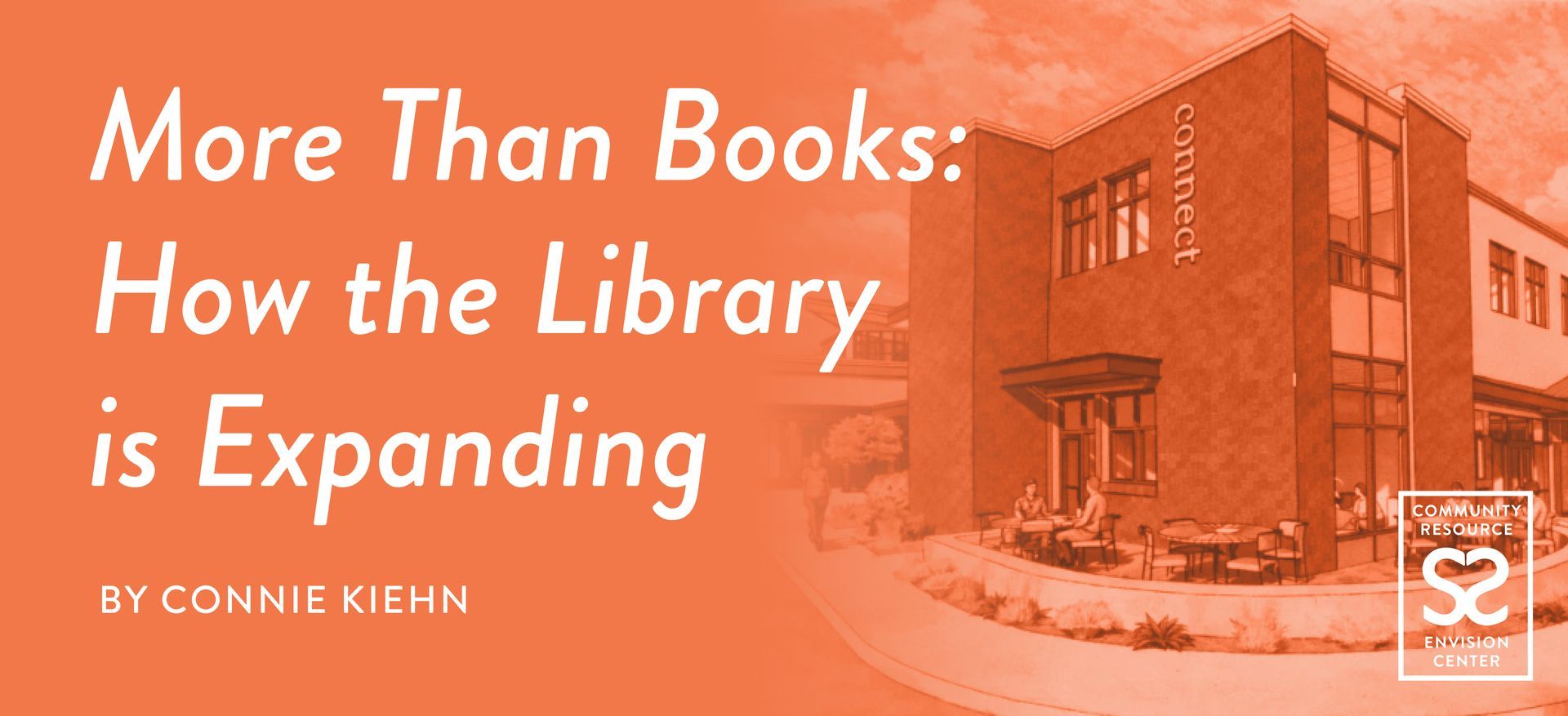
When many people think of a library, they picture shelves of books and quiet reading spaces. But today’s libraries are something much more dynamic. They are hubs of education, creativity, and human connection. In a recent conversation with East Bonner County Library Director Vanessa Velez and Lifelong Learning Coordinator Frank Foderaro, one thing became clear: “We try to provide something for everyone,” Vanessa says. With a major expansion on the horizon, the library is preparing to do even more. Lifelong Learning for Everyone A heavily utilized but still somewhat unknown resource at the library is the Lifelong Learning Center. The center helps proctor exams and offers tutoring to adults as well as children. Learning opportunities include one-on-one tutoring, technology help, GED and citizenship support, English as a Second Language instruction, and even niche topics. “We’ve had authors come in asking how to promote themselves,” Frank says. “We’ve had people ask for social media help. We try to meet those needs.” The program relies on a diverse group of volunteer tutors. These volunteers range from engineers to retired teachers to healthcare professionals to high school computer geeks. And when a request falls outside the usual scope, the library adapts. When a request comes to the learning center that the center isn’t able to serve, a call goes out to the roster of tutors asking if any of them can meet the need. Most of the time, one of the tutors has the skills needed to support the niche educational request. The program is built around individual needs. “We ask what their learning goals are,” Frank says. “Then we try to match that up with the right tutor.” That matching process goes beyond subject matter. It’s not just about matching the math expert with the student struggling with math. Personalities must fit and Frank puts a lot of effort into matching not just skill set but mindset. “Some tutors are very calm and patient. Some are more energetic,” Frank explains. “I try to match that with what the learner needs.” The goal of the learning center is not to create a lifelong crutch. Vanessa emphasizes that the goal is progress, not permanence. “We don’t want to make the Lifelong Learning Center someone’s permanent tutor,” she says. “We want them to reach their goal and then make room for someone else.” The program depends heavily on volunteers, and that is part of what makes it unique. There are over 100 volunteers at the library; 37 of those are on the tutor roster. They get vetted. They get trained. The center is designed to be flexible. Zoom tutoring for those who are physically unable to come into the library. The program has attracted many participants, so many that now it is time for the library to expand in order to meet the demand. A Major Expansion To address the growing need, the library is launching a 4,500-square-foot, two-story expansion. “It’s really a continuation of our previous expansion,” Vanessa explains. “This is phase two.” The project will include more tutoring rooms, a larger meeting space, additional study areas, and a multimedia room. For the learning center, the impact will be immediate. The number of rooms they will have to utilize doubles. The expansion will also include a small café. The expansion is funded through saved donations and county sales tax revenue. “We can’t use levy money for new construction,” Vanessa explains. “So this is coming from other sources we’ve built up over time.” Construction could begin as early as this summer, though timelines may shift. The library plans to remain open, though there will be some temporary inconveniences. Expect some noise, fewer parking spaces, and fewer community meeting rooms while some staff offices are temporarily relocated. Patience and understanding are appreciated during this transition. The Next Chapter As the library expands, so does its role in the community. From tutoring and digital learning to hands-on programs and shared spaces, it continues to grow into something much larger than a traditional library. With new spaces, new opportunities, and continued community support, the next chapter is already taking shape. Follow the library on social media for updates on the expansion process.
By Linnis Jellinek April 16, 2026
Berit Ollestad is working to bring a Tunnel to Towers event to the region, an effort shaped by years of personal experience, a growing desire to create something meaningful for her community, and a life-changing experience with Tunnel to Towers. By day, Berit runs a cleaning business, but much of her energy has shifted toward community involvement and honoring first responders and veterans. That sense of purpose was shaped in part by her experiences surrounding September 11th. At the time she was traveling in Italy and later spent time in New York and New Jersey during the recovery period. While living on the East Coast, she also worked in local journalism, covering police, fire departments, and civic life during a time when public service and community response were especially visible in daily life. The local response to the tragedy touched Berit, but she didn’t know how much the experience would come to mean to her. Her connection to Tunnel to Towers came years later when she participated in one of the organization’s signature events in New York, which includes a 5K run through the Brooklyn Battery Tunnel and a stair climb at One World Trade Center. “I remember standing there with thousands of people and realizing this was not just a race. It was something completely different. Everybody was there for a reason and you could feel it,” she says. “I just felt like I needed to do something more with this.” That experience stayed with her for a long time. While training locally in Sandpoint at War Memorial Stadium, she spent early mornings running stadium stairs in preparation for another climb event. What began as training gradually became something more reflective. “I would be out there early in the morning with the sun coming up over the stadium and I kept thinking how beautiful it was,” she says. “Then it hit me that this needs to be shared. This could be something meaningful here.” From that moment, the idea began to take shape: bringing a Tunnel to Towers-style 5K and climb event to Sandpoint on July 4th. The proposed route would cross the Long Bridge, move through town, and finish at Memorial Field. For Ollestad, the bridge quickly became central to the vision. “The bridge is really what makes it special,” she says. “When you run across it you are looking at the water and the mountains. It just feels like home. That became the hook for me.” The event is still in early planning stages, but its mission is rooted in supporting veterans, first responders, and their families. Tunnel to Towers is widely known for paying off mortgages for families of fallen first responders, building smart homes for catastrophically injured veterans, and providing long-term support for families left behind. Berit also points to the foundation’s broader efforts supporting homeless veterans through housing programs, case management, and wraparound services aimed at long-term stability. “They try to take care of the whole veteran,” she says. “It is not just housing, it is everything around it, making sure people actually have a chance to rebuild their lives.” As planning continues, Ollestad says the focus is now on building community participation. Volunteers, sponsors, and local partners will all play an important role, but she emphasizes that showing up is what matters most. “I think people underestimate how much just showing up matters,” she says. “Whether you are running, walking, volunteering, or cheering on the bridge, it all matters.” She is also hoping for a strong turnout on race day, while acknowledging the ambition of the goal. “I would love to see a thousand people out there,” she says. “I know that is a big number, but I also do not think it is impossible. This community shows up when it matters.” More than anything, she hopes the event captures the emotional meaning she experienced in New York, where participants were running and climbing in honor of loved ones lost. “Everyone was climbing for someone,” she says. “People had pictures on their shirts, names written on their hands. You get to the top and it is quiet for a moment and you realize everybody in that room is carrying a story.” As she continues preparing for another climb in New York while organizing the Sandpoint event, Ollestad says the experience has deepened her sense of purpose. “I am really grateful I get to do it again,” she says. Her hope is that the Sandpoint Tunnel to Towers becomes more than a race by creating a shared moment of remembrance, service, and community connection.
By Katie Begalke April 5, 2026
What Support Really Looks Like When people think about helping a neighbor in need, they often picture a simple solution. A referral. A resource. A phone number. A helping hand. And sometimes, that's enough. But more often, the challenges people face are far more complicated than they appear on the surface. A housing issue may also involve missing identification, transportation barriers, healthcare needs, childcare challenges, or lost income. A job search may uncover literacy obstacles, documentation problems, or a lack of access to training opportunities. What looks like a single problem is often a web of interconnected challenges that can be overwhelming to navigate alone. Throughout March, the Community Resource EnVision Center worked with more than 100 individuals and families, each with their own story and their own path forward. Some needed assistance securing housing. Others were pursuing education and employment opportunities. Some were working to regain independence after illness or injury. While their circumstances differed, one thing remained consistent: meaningful progress required more than a quick answer. It required someone willing to walk alongside them. This is the reality many community organizations face today. The work is no longer simply about connecting people to resources. It is about helping them navigate increasingly complex systems and ensuring they don't have to do it alone. That work happens through relationships. It happens through partnerships between organizations, businesses, volunteers, and community members who share a common goal. It happens because someone answers the phone, follows up after the appointment, helps complete the paperwork, makes the introduction, or stays engaged long enough to see a solution through. Most people will never see those moments. They won't see the hours spent coordinating services, the conversations happening behind the scenes, or the network of people working together to support a single individual or family. But that is often where the real work happens. Community isn't built through programs alone. It is built through people who care enough to invest their time, talents, and resources in one another. And when that support comes together, something powerful happens. Challenges become manageable. Barriers begin to fall. And hope becomes possible. That's what support really looks like.
By Linnis Jellinek April 3, 2026
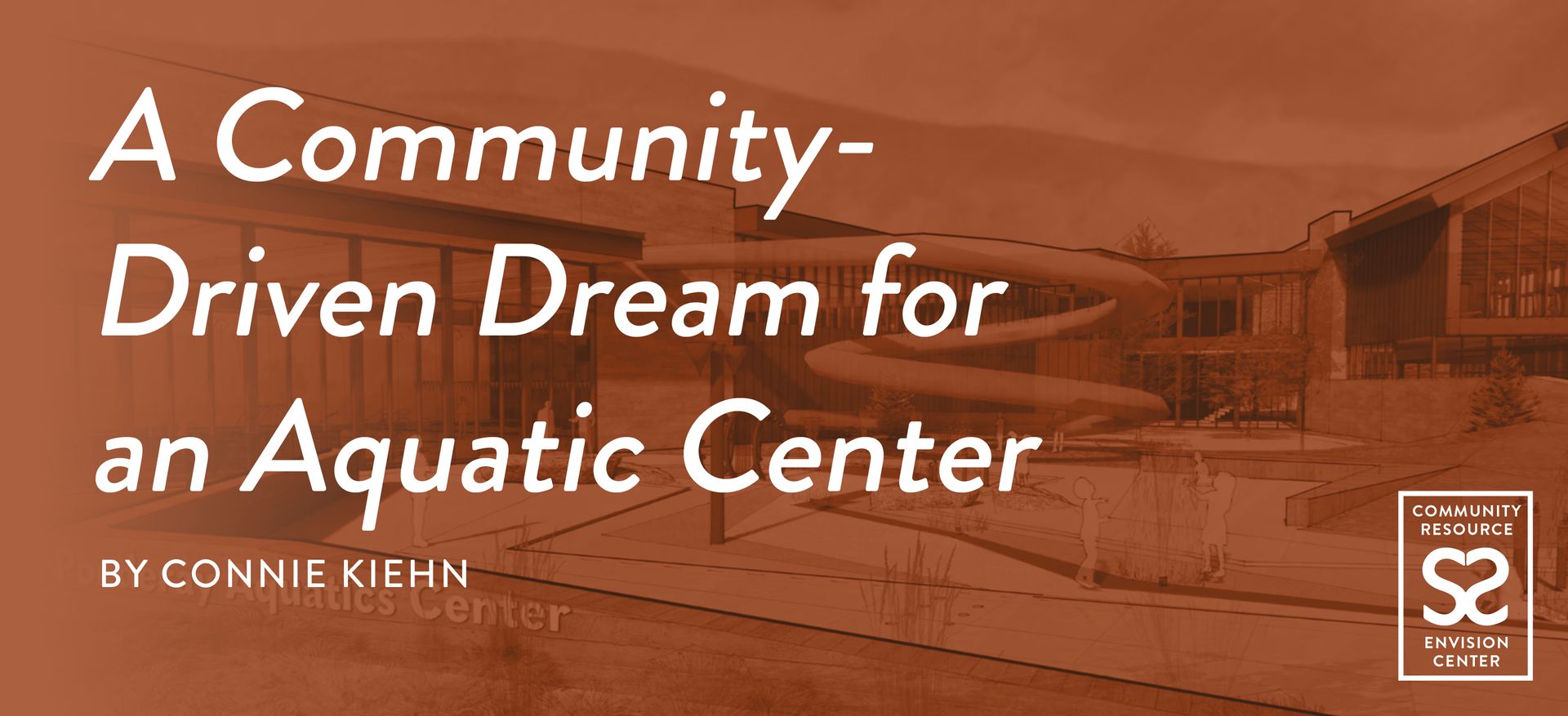
Greg Jackson has called Sandpoint home for more than 30 years. A graduate of Sandpoint High School, he grew up as a competitive swimmer before transitioning into coaching, a role he has held for nearly two decades. As head coach for the past eight years, he has led his teams to multiple state championships. Reflecting on his work, Greg simply says, “I enjoy what I do,” a statement that captures both his humility and his commitment. Outside of coaching, Greg is a husband, father of three, and co-owner of a restoration business specializing in fire, flood, and mold recovery. From Spark to Movement The idea for a new aquatic center began with a push from local leaders Mike DiBenedetto and Joan Bloom. Greg explains, “Dr. DiBenedetto ordered a feasibility study, got that done, and then he put a bunch of us together. Ask who wants to be involved in this, and then put a board together.” That initial step turned an idea into action. With early planning, nonprofit formation, and community conversations underway, the project quickly gained momentum. Despite the success of the local swim program, the YMCA cannot meet the region’s needs. “Other teams refuse to come to our facility to compete because it’s so shallow,” Greg points out. The limitations extend beyond competition. The region is surrounded by water, yet lacks a safe and controlled environment for training. Greg explains, “Our sheriffs and our EMTs really have no way to train in any body of water that’s actually safe.” A feasibility study confirmed the gap. Within a 100-mile radius, the region is short at least four aquatic facilities. A Vision That Keeps Growing What started as a plan for a pool has grown into a much larger vision. Today, the concept includes aquatics, ice facilities, and a flexible community space. Greg describes the evolving mindset clearly. “There are opportunities, and until this thing’s actually built, we want to put whatever we can in it.” The plan now includes two pools, an indoor ice rink, an outdoor skating area, and a fieldhouse that could serve multiple purposes including sports, events, and even emergency shelter. At the same time, the team is thinking strategically about how to build it. “We are trying to plan this so that this can be done in chunks,” Greg says. Each component can be developed in phases, allowing progress even if funding comes in stages. Smart Design, Real Impact The aquatic center itself is being designed to serve a wide range of users. The plan includes two separate pools to meet different needs. “We have designed two separate pools,” Greg explains. “You have your zero-level entry, your walking area for rehab or elderly people, and then we have our large competition pool with spectator seating, diving wells, and deep water.” This approach ensures that families, seniors, athletes, and first responders all have access to appropriate spaces. There is also a financial strategy behind the design. “A pool doesn’t make money,” Greg says. “Ice does.” By pairing aquatics with an ice facility, the project creates a more sustainable model. Even the energy systems work together, with heat generated from ice operations helping to warm the pools. A project of this scale requires significant funding, and the team is realistic about the challenge. “We’re talking millions and millions of dollars,” Greg says. Their approach focuses on visibility and community support. “Our attack right now is publicity. Get the word out there. This is what we’re doing.” They are also pursuing grants and planning future fundraising efforts, including a golf tournament. At the same time, they are inviting everyday community members to get involved. “Definitely getting the word out,” Greg says. “If somebody wants to go hand out flyers, just drive around and put flyers in people’s offices, we would take that help today.” One of the most important aspects of the project is its community focus. Greg emphasizes that input is not only welcome but necessary. “If there is something that you think is needed in this facility, we want to know that,” he says. “We want to make sure that we can accommodate the community’s needs. That’s why we’re doing this.” This mindset ensures that the final result reflects the people it serves. From accessibility features to programming ideas, every voice helps shape the outcome. There is no fixed timeline yet, and Greg is honest about the uncertainty. “It is hard to tell,” he says. Still, the project is gaining traction through meetings, partnerships, and growing awareness. The long-term plan is to build the facility and ensure it is financially sustainable, then pass operations to an organization equipped to manage it. “Our goal is not to run a facility,” Greg explains. “We want to get it constructed and then hand it off to somebody else to run.” A Shared Vision for the Future At its core, this project is about more than buildings. It is about creating a space where people can gather, grow, and support one another. Greg sums it up best. “The big thing is the dream is for the community.” That vision continues to grow with every conversation, every idea, and every person who chooses to be part of it.
By Linnis Jellinek March 14, 2026
When people imagine senior living communities, many still picture the outdated image of a “nursing home.” For Jennifer Whitmyer, that stereotype couldn’t be further from the reality of modern senior living. As the Executive Director of Luther Park in Sandpoint, Jennifer is passionate about reshaping how people think about assisted living. With more than 15 years of experience in senior care, she has dedicated her career to creating communities that feel vibrant, welcoming, and most importantly, like home. “It’s not sterile. It’s not hospital-like. It’s a way of life,” Jennifer says.  A Career Rooted in Compassion Jennifer’s path into senior living was somewhat happenstance. She originally came from a law enforcement family and spent time working in corrections. This exposed her to some of society’s most difficult realities. That experience made her eventual transition into senior living even more meaningful. “When I got into the senior care field, I thought, ‘Holy cow, this is beautiful,’” she says. “You get to hear incredible life stories and spend time with people who have lived through so much.” Jennifer’s career change was sparked by a deeply personal experience: caring for her uncle after he was diagnosed with Alzheimer’s disease in 2010. As his condition worsened, Jennifer’s family began searching for memory care facilities. After visiting nine different communities, they finally found a place where he could receive the care he needed. But Jennifer struggled with being away from him. At the time, she was preparing to work at a prison in Spokane. Instead, she walked into her uncle’s care community and asked for a job. “I told them I’d never done caregiving before,” Jennifer recalls. “But I had taken care of my uncle, and I wanted to try.” That decision changed the course of her life. “The writing was on the wall,” she says. “I fell in love with the work.” A Community Built on Relationships Today, Jennifer leads Luther Park, a nonprofit senior living community that emphasizes connection both within the residence and with the surrounding town. The organization has deep ties to First Lutheran Church, which helped bring the community into nonprofit ownership in 2008. The church remains closely connected to the residence, even sharing an indoor hallway that allows residents to attend services and activities without leaving the building. “It’s wonderful for our residents,” Jennifer says. “They can just stroll down the hallway to church.” Luther Park currently serves more than 90 residents and can accommodate up to 110. The community provides a wide range of assisted living services, allowing residents to remain in one place as their care needs change over time . Some residents require minimal assistance, such as housekeeping or occasional reminders. Others need more involved support, including medication management or mobility assistance. The goal is continuity of care, ensuring residents can remain in a familiar environment rather than moving between facilities. Jennifer believes that stability becomes especially important near the end of life. “If someone is on hospice and nearing the end, we want to be the place that cares for them,” she says. “We want them to pass in a home-like setting where they feel comfortable and loved.” Community involvement plays a vital role in making Luther Park feel vibrant and welcoming. Volunteers regularly visit to spend time with residents in many different ways. Some bring music, like a local pianist who performs twice a week. Schools sometimes visit to sing or interact with residents. Other volunteers simply come to sit and talk. Veterans from the community occasionally stop by to serve coffee in the mornings and chat with resident veterans. Many volunteers enjoy listening to life stories, doing puzzles, or sharing quiet conversations by the fire. “You don’t need a special skill,” Jennifer says. “Just spending time with someone can make a huge difference.” One-on-one visits are especially meaningful for residents who prefer quieter activities or don’t often attend larger group events. Changing the Conversation Around Senior Living One of Jennifer’s biggest goals is helping people understand how much senior living has evolved. For many families, outdated perceptions still shape their expectations. The term “nursing home” often brings up images of sterile environments and impersonal care. But today’s assisted living communities are designed to be lively, social, and comfortable. “We want it to feel like home,” Jennifer says. “People don’t heal in a hospital-like environment.” Modern senior communities focus on quality of life, creating spaces where residents can form friendships, participate in activities, and maintain their independence while receiving support. Jennifer even compares the atmosphere to something like a college campus for seniors: a place full of activity, conversation, and shared experiences. After more than a decade and a half in senior living, Jennifer says the most rewarding part of her work remains the same: the residents themselves. Every person who walks through the doors carries a lifetime of experiences and stories. “These generations are incredible,” she says. “We’re lucky to hear their stories.” For Jennifer, helping preserve those stories and creating a community where seniors feel valued is what makes the work worthwhile. Because at Luther Park, senior living isn’t about institutions or facilities. It’s about creating a place where people belong. A place that feels like home.
By Linnis Jellinek March 11, 2026
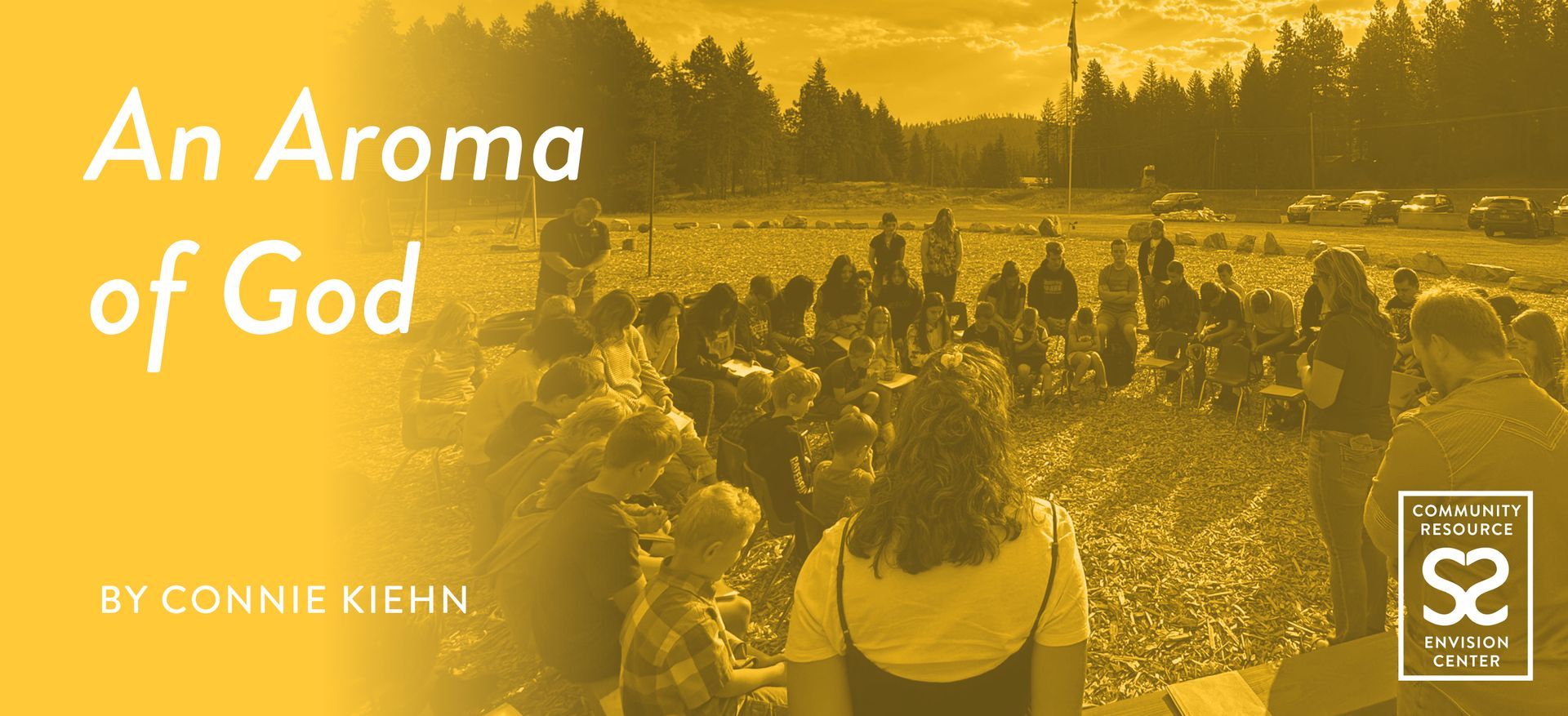
When Foundations School first opened its doors in Naples, Idaho, it didn’t look much like a school. It looked like half of a downstairs.  “We took over just the front half of the downstairs,” founder Charli Turner recalls. “And we had 18 kids in there. We outgrew it before the second semester.” Growth came quickly, not from a master expansion plan, but because the need kept showing up. They finished a back room. Charli’s husband gradually moved his shop out of the building they were using. The attic, once used to store supplies, was remodeled into classrooms. Later, they transformed a large open shop by adding a second floor, creating new classrooms. Today, the school sits on about ten acres. What used to be the parking lot is now a playground, and the parking has been pushed back toward the highway to make room for growth. “We have room to grow,” Charli says. Inside, one of the most popular spaces is called maker space. It is part workshop and part laboratory. Students take apart broken coffee makers and keyboards simply to see how they work. “They just deconstruct things and then try to put them back together,” Charli explains. “Usually they don’t go back together working, but they learn what all is there.” They have built giant catapults in teams and launched pumpkins across the property. “Oh my gosh, that was really fun,” Charli says. Hands-on projects like these are part of what draws students to Foundations School in the first place. Foundation School is a nonprofit, and tuition is set at $6,000 per year, well below the average private school cost in Idaho but accessibility is still a challenge. “It’s North Idaho,” Charli says. “We’re asking families to pay for education out of pocket. It’s already too much. Doesn’t matter what we’re charging.” Teachers are not paid what their workload might justify elsewhere. “They really do view this more as mission work,” Charli explains. If a lesson does not land, they rework it. If a student is struggling, they brainstorm new approaches. But like so many nonprofits, the program is amazing, the finances are not. At one point, Charli calculated what it would take to cover a year’s expenses. The number was the equivalent of selling 38,000 sausage dogs at the fair. “That’s kind of depressing,” Charli admits. Then she adds, “But I would sell 38,000 hot dogs if that’s what it takes.” They have hosted online auctions, calendar fundraisers, and a Great Gatsby themed gala. They are opening Nine Beans Idaho Mercantile Coffee next door in hopes of generating additional revenue. Questions about accreditation come up often. Foundations School meets Idaho state standards and issues diplomas, but it is not accredited. That choice is intentional. “Accreditation ties you to systems that are very one size fits all,” Charli says. Instead, teachers print the Idaho state standards and build curriculum directly around them. If students want to attend college, they leave with transcripts and diplomas, and universities have indicated they would accept them. The principal affectionately calls the student body a “mixed bag of nuts.” There is the athlete, the outspoken debater, the quiet student, the one with bright hair and piercings, and the one who prefers a pocket watch and suit jacket. In many larger schools, they might not interact. At Foundations School they do. High schoolers play tag with elementary students. Debate opponents still pray together at the beginning and end of the day. Each morning at 8:00, a bell rings from a bell tower the students built themselves. They gather at the flagpole, say the Pledge of Allegiance, observe a moment of silence, and say a pledge to God. They begin with a simple question. “How are you going to do better today than you did yesterday?” At the end of the day, they reverse it. “Who did you see doing good today? Who blessed you? Who worked hard?” Students name each other before the bell rings again. Not long ago, a visiting youth minister toured the campus. As he was leaving, he paused and said, “There’s an aroma of God here. You can smell it in the sweetness of what’s happening.” For Charli, that was the highest compliment they could receive. Foundations School is not polished. It is not wealthy. It is not finished growing. It is teachers stretching across multiple grade levels, students launching pumpkins across a field, and a leadership team learning fundraising in real time. It is “failing forward” and after three steady years of changing lives it’s here to stay.
By Linnis Jellinek March 11, 2026
Shakespeare’s A Midsummer Night’s Dream has been performed for centuries, but every generation finds new ways to interpret it. In an upcoming production directed by Tim Bangle for Lake Pend Oreille Repertory Theatre, the classic comedy is being reimagined with a modern setting, contemporary music, and creative staging that gives the familiar story a completely different atmosphere. Cast members Sydney Carlson, who plays Puck, and Angel Rogers, who plays Lysander, recently sat down with Tim and interviewer Connie Kiehn to talk about the production, the challenges of performing Shakespeare, and why this version of the play may surprise audiences. A Classic Story of Love, Mischief, and Chaos At its core, A Midsummer Night’s Dream is a story about love. The plot follows four young lovers whose romantic entanglements become chaotic when they wander into a magical forest. There, mischievous fairies and a group of amateur actors create confusion and comedy before everything is ultimately resolved and the lovers are united. Angel describes it as a messy love situation that quickly spirals into chaos. Tim explains, "Ultimately it’s a love story. The fairies kind of mess things up. They toil and tinker with the affairs of men and cause problems." The decision to produce A Midsummer Night’s Dream came at a time when the theatre organization needed a practical solution for its next show. Shakespeare’s works are in the public domain, meaning they do not require royalty payments. That made the play a financially sensible choice. At the same time, Tim had always wanted to direct a Shakespeare production as a creative challenge. His only previous experience performing Shakespeare was playing Theseus in high school, but he felt familiar enough with the play to take it on as a director. Setting the story in modern New York One of the biggest changes in this production is its setting. Instead of ancient Athens and an enchanted forest, the story takes place in modern-day New York City. Tim says the city provides an interesting backdrop because of its many different personalities and social layers. The fairy characters in this production take inspiration from street life in New York. Some appear as everyday city figures such as a hotel housekeeper or a person experiencing homelessness. Titania is portrayed as a news reporter, while Oberon becomes a Russian mobster. The human characters also reflect different social classes. The Athenians represent the upper class, while the mechanicals represent blue-collar workers trying to put on a play. Puck, one of the most important characters in the story, is portrayed as a mime clown who moves through the streets of the city while interacting with the audience and other characters. Music and creative staging This version of the play includes elements that go far beyond traditional Shakespeare staging. Before any of the original dialogue begins, the show opens with two musical numbers that help introduce the world of the story. A montage set to Guns N’ Roses’ “Welcome to the Jungle” is used to establish the New York setting. The production also incorporates projections, choreography, and a ballet performance created with Cocolalla Conservatory . Even the transformation of the character Bottom is handled differently than usual. Instead of using the traditional donkey head prop, the production uses shadow effects and lighting to suggest the transformation. Because the story takes place in a nighttime city environment, shadows and silhouettes help create the illusion of what the other characters believe they are seeing. Casting the community For Sydney Carlson, being cast as Puck was a major surprise. Although she had been involved in theatre since she was young, most of her experience came from children’s theatre where everyone receives a role. Auditioning for competitive productions was still new for her. When she auditioned for this show, she intentionally avoided choosing a specific role so she would not get her hopes up. After callbacks, Tim called her late at night to offer her the part of Puck. Sydney initially thought he might be joking because of how important the role is in the play. "I had a really amazing time auditioning,” Sydney recalls. “I was scared out of my mind, and then they want me to come back to callbacks, which is great. I really was not expecting a role at all." For the director, however, the choice felt clear. Sometimes when casting a show, the excitement of the actor on the other end of the phone says everything. Tim remembers hearing Sydney's surprise and joy when she realized the role was really hers. Angel Rogers faced a different surprise when the casting announcement arrived. She expected she might be cast as one of the female lovers, but instead she was given the role of Lysander, a male character. At first the role caught her off guard, especially when explaining it to friends. When people asked which part she received, she would say she got one of the lovers but it happened to be a guy. Over time she has embraced the role and the challenges that come with it. Portraying Lysander requires adjusting body language and vocal delivery to create a convincing character on stage. Even something as simple as laughter can require adjustment. Rogers says she has been practicing lowering her natural laugh to better fit the character. "For a while I was pretty taken aback, but now it's super fun and I'm really glad that I got this role,” Angel says. Target audience Shakespeare’s plays often contain adult humor and innuendo that can be interpreted in many ways. Because several of the central performers are teenagers, the creative team chose not to emphasize those elements. The production focuses instead on storytelling, humor, and creative staging while keeping the content accessible for most audiences. The show may fall around a PG to PG-13 level, but it remains largely family-friendly. For Sydney, one of the biggest revelations from this production has been realizing how flexible Shakespeare’s stories can be. "I for sure love the way Shakespeare is being interpreted,” says Sydney. “It is so much more interesting. There’s so much creative freedom that I have learned through this show." Her earlier experiences with Shakespeare mostly involved reading the plays in school. Performing the work on stage has shown her how creative interpretation can transform the material. Show details The production opens April 3rd and runs for six performances.  Show dates are April 3rd and 4th, followed by April 9th through 12th. Tickets are twenty-five dollars and can be purchased at LPORep.com or Panida.Org . With its mix of Shakespeare’s original language and modern theatrical creativity, audiences may discover a completely new way to experience a familiar classic.
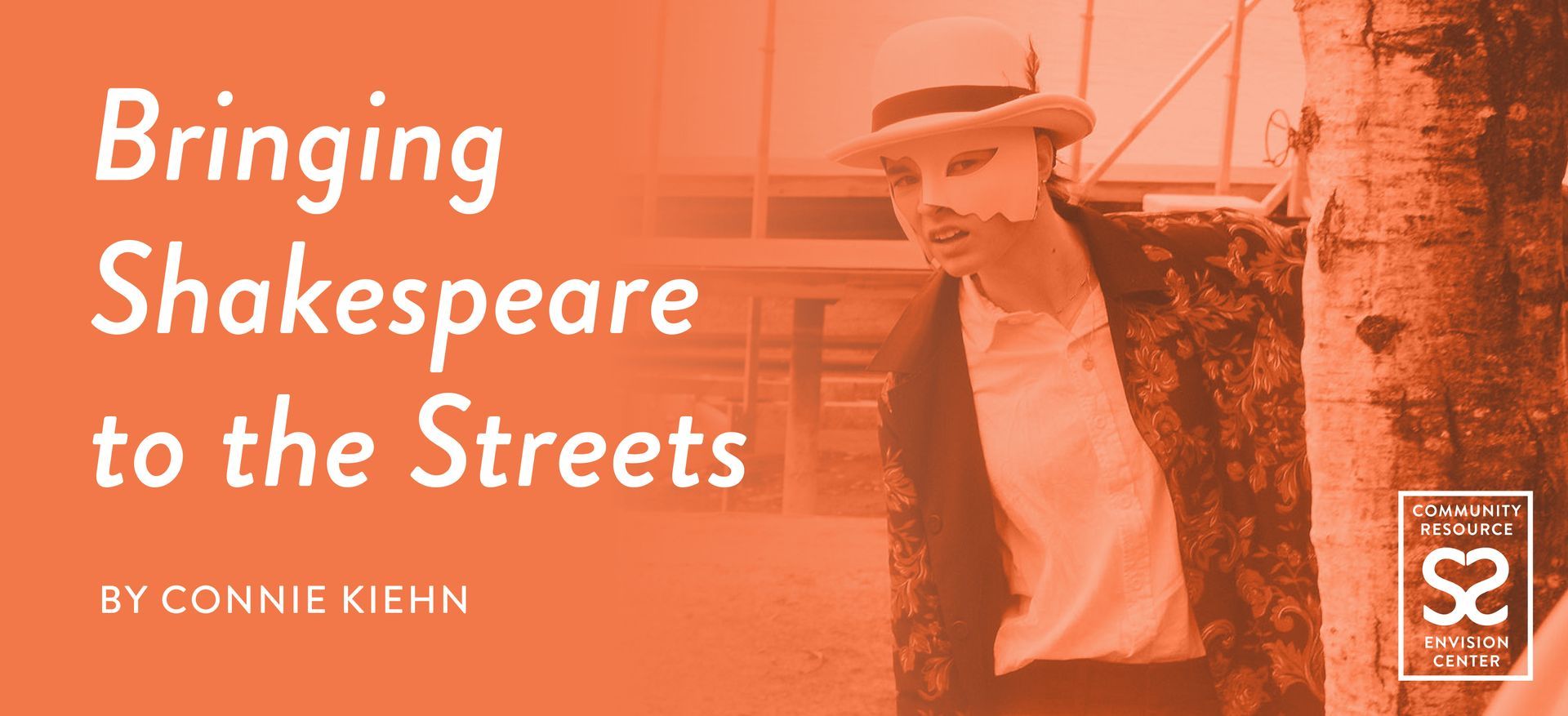
By Katie Begalke March 3, 2026
March 2026: The paces we blong Every community has places that help people feel at home. Sometimes those places are easy to recognize. A favorite coffee shop. A local event. A gathering place where familiar faces and conversations create a sense of connection. Other times, they are less obvious. They might be a classroom where a student discovers they are capable of more than they imagined. A local radio station that keeps neighbors informed and connected. A community organization that helps someone navigate a difficult chapter of life. Or a business owner who chooses to step forward when a neighbor needs help. Looking back on February, one theme surfaced again and again throughout Bonner County: belonging. We saw it in the story of a local resident whose urgent housing needs were met through the compassion and quick action of SkyRight Roofing & Gutters . What could have been viewed as simply a roofing project became a reminder that everyone deserves safety, dignity, and a community that cares. We saw it in the voices of students and alumni connected to Lake Pend Oreille Alternative High School . Their stories highlighted the importance of spaces where people feel seen, supported, and given the opportunity to succeed on their own path. We saw it in the work of KRFY , a volunteer-powered radio station that has spent years helping our community hear itself. Through local news, conversations, music, and storytelling, KRFY reminds us that belonging isn't just about having a place to live. It's about feeling connected to the people and stories around us. At its heart, community is about more than services, programs, or buildings. It's about creating places where people feel welcomed, valued, and connected to something larger than themselves. As Bonner County continues to grow and evolve, that sense of belonging becomes more important than ever. Because strong communities aren't defined by their size or resources. They're defined by whether people feel they have a place within them. And month after month, we continue to see neighbors, organizations, businesses, and volunteers working to create exactly that.
By Linnis Jellinek March 3, 2026
Dorothy Prophet was raised on Broadway so it comes as no shock that theatre and the performing arts generally are a huge part of her life. Born in New York City, her father was a firefighter, and after her parents divorced, she grew up between two very different worlds. She spent the school year in Montana with her mother and her summers in New York with her dad. Those summers shaped her life. “My dad would take me to the theater all the time,” Dorothy says. “I was just enamored with it.” After high school, Dorothy chose a somewhat unconventional path. College did not appeal to her. “To me that just seemed like a high school with ashtrays,” she says with a laugh. Instead, Dorothy auditioned for a traveling nightclub band. She got the job and spent five years on the road, singing in bars across the country. When the band eventually broke up, she settled in Seattle, one of her favorite stops along the way. Like many artists, she pieced together work to survive. She bartended, waitressed, and kept singing and performing when she could. She eventually married and had children while doing community theatre on the side when she could. Dorothy ended up in Sandpoint almost by accident. “One day my son came home from preschool and said that he had to have Nikes,” she recalls. “He said, ‘I can’t have just regular shoes. I have to have Nikes.’” That moment hit her hard. It was not really about the shoes. It was about values. She and her husband realized they did not want their children growing up in a culture where status and brand names carried so much weight. Soon after, while driving back to Seattle from a trip to Montana, they passed through Sandpoint. The kids were misbehaving, so they pulled over and ended up staying a few days. Those few days were enough. They decided to move to Sandpoint and made it happen about a year later, in 1994. She’s been here ever since. While in Sandpoint, she became involved with a long-established local company called Unicorn Players. She eventually served as vice president. As her children grew older, she shifted to directing more. “I found that I really liked directing,” she says. “Unless there was a part that I absolutely loved, I was going to volunteer to direct.” Dorothy was not interested in putting on shows simply for light entertainment. “To do a show that’s purely for the entertainment of it is a waste of time for me,” she explains. “I want something that makes people laugh, but also makes them think or makes them cry.” Dorothy’s life changed forever when her son, Cade, died in an accident. The grief was overwhelming. “When you’re steeped in that much grief, you have a couple of options,” she says. “You can shut it all down and do nothing. You can go even more inward.” Instead, Dorothy chose to create. “I thought, shutting down is not honoring his life and what he stood for and who he was,” she explains. “What can I do to honor him?” The answer was theater. She founded Cade Prophet Memorial Productions in his memory. The organization produces intimate, thoughtful plays and donates proceeds to Better Together Animal Alliance in Cade’s memory. When Dorothy’s children were young and money was tight, they would visit the animal shelter for something inexpensive to do. They read to the animals and spent time with them. Cade affectionately called the animals “the inmates.” “Up until just weeks before he passed away, whenever he would come back to Sandpoint, he’d say, ‘Hey mom, let’s go see the inmates,’” she explains. Today, her biggest challenge is not finding actors or scripts. It is finding space. Sandpoint has seen many theater groups come and go since she moved there in 1994. Venues are limited and often expensive. She dreams of a small, dedicated performance space in town, something intimate and accessible. Dorothy’s vision is not about applause or prestige. It is about connection, emotion, and honoring her son’s life in the most meaningful way she knows how. Through every script she reads and every show she stages, Dorothy is still doing what she learned to love as a child in New York. She is stepping into a theater and inviting others to feel something real.
By Linnis Jellinek March 2, 2026
How One Question Sparked a Nonprofit That’s Changing Lives in North Idaho When explaining how North Idaho Mountain Sports Education Fund (NIMSEF) came to be, Executive Director Jeff Rouleau kept circling back to one powerful idea: Can I solve that problem? That simple question is how NIMSEF was born. Years before the organization existed, Jeff was working as a ski instructor at Schweitzer Mountain. After hosting local fourth graders for a free ski day, instructors received thank-you notes from the students. One letter stopped Jeff in his tracks: “Thank you for the best day of my life ever, but I’ll probably never see you again, so goodbye.” That sentence revealed a quiet truth: for some local kids, skiing wasn’t a seasonal activity; it was a once-in-a-lifetime experience. Not long after, Jeff found himself on a chairlift making casual conversation with fellow community members. When he asked how often they had skied that season, their answer surprised him: “This is our only day. We just can’t afford to ski more than that.” These were people who lived and worked in the community, raising families and contributing every day to the place they called home. Yet access to mountain sports was still out of reach. That was the moment it clicked. “That just didn’t seem right to me. So I asked myself, ‘How do we fix this?’” Jeff reflects. Why Access Matters Jeff believes communities only function when everyone belongs. The mountain economy depends on restaurants, shops, banks, gas stations, roads, and first responders. Every role matters. So why should some kids grow up able to participate in mountain sports while others sit in school on Monday morning listening to stories they’ll never get to tell themselves? “This program isn’t just about skiing. It’s about giving kids a sense that they belong here,” says Jeff. Jeff brought the idea to Schweitzer’s leadership: a program designed to remove financial barriers and give local kids real access to skiing and snowboarding. They said yes. In its first year, NIMSEF served 22 kids. Today, the program supports roughly 90 students each season and has provided more than 1,000 scholarships to local youth. “We’ve now given out over a thousand scholarships. That’s something I’m really proud of,” says Jeff. Teaching Responsibility, Not Entitlement From the very first year, NIMSEF asks students to have skin in the game. New participants are required to earn and contribute their first $50 themselves. Parents are encouraged to have kids work for it, whether that means walking dogs, shoveling snow, mowing lawns, cutting firewood, or doing extra chores. Jeff has watched kids arrive with jars of coins earned 25 cents at a time. He’s seen kids show up still dirty from a day of hard work. “When kids work for something themselves, it means more. They value it differently,” he explains. Each year, the required contribution increases slightly, preparing students to eventually take full ownership of their participation. Kids also help by selling raffle tickets. Through NIMSEF, students receive: Eight weeks of lessons Loaner gear (skis, boards, boots, helmets, goggles) A season pass to Schweitzer Coaching, structure, and access they otherwise wouldn’t have Participant Adeo Laboy shares what the program has meant to him. He started out skiing, then discovered snowboarding and everything changed. Over the years, he progressed through multiple coaches and training levels, selling raffle tickets and working jobs to earn his contribution. Adeo recently received a scholarship to join the Snowboard Northwest competitive team. That opportunity would never have been visible without NIMSEF. Snowboarding has become more than a hobby. It’s become a passion and a dream for the future. How the Community Can Help NIMSEF relies on community support to continue its work. Donations can be made through the organization’s website via PayPal or by mailing a check. Financial support is critical; each season requires a substantial payment to Schweitzer for lift access alone. The organization also accepts: Gently used outerwear Helmets and goggles Newer equipment that meets safety and insurance requirements Each year, NIMSEF hosts a gear night at Schweitzer where students are outfitted, sometimes for the very first time, with everything they need. A Problem Worth Solving The North Idaho Mountain Sports Education Fund exists because someone noticed an unfair gap and refused to accept it as inevitable. What started with a child’s letter and a chairlift conversation became a solution that continues to change lives, one student, one family, one season at a time. Sometimes, making a difference doesn’t start with a big plan. It starts with a question: Can I solve that problem? And sometimes, the answer reshapes an entire community.
By Linnis Jellinek February 7, 2026
North Idaho has a new option for families seeking a high school that combines rigorous academics with intentional Christian formation: Valor Christian School in Sandpoint. Valor offers a learning environment designed to cultivate students’ minds while enriching their spiritual well-being, preparing them not just for a career, but for a life that seeks to glorify God in both challenging and prosperous times. Building a School from the Ground Up The idea for Valor began with a simple and obvious observation: the area lacked a local Christian high school. After founders Luke Patterson and his wife, Kiersten decided to pursue filling the gap, the next question was whether to start from scratch or build on an existing curriculum or school model. They decided to build from scratch. Starting from scratch allowed the founders to design the school intentionally. “We really wanted to take our time to evaluate what it is that we were going to build. Classical education is a big part of our focus, as well as worldview formation,” Luke explains. Dusty Smith, who joined Valor as principal at the beginning of its second year, was impressed by the attention to detail in a young school. “When I read through the website and some of the school documents, I was very impressed with the amount of detail that existed for a school less than a year old,” he says. Name and Mission: Why “Valor”? The name Valor was chosen deliberately. “Valor points first and foremost to courage. But it’s also about conflict. The conflict of values, vision, and purpose in our culture. We want to prepare students to live well in that conflict on behalf of truth, goodness, and beauty. That’s why forming habits of thought, communication, and moral character is so crucial,” Luke explains. Valor emphasizes that Christian values are not abstract or optional; they are anchored in Christ as the source of wisdom and knowledge. “Our students are learning that values are attributes of a person, not floating ideas. At Valor, we encourage students to submit to the Lord Jesus Christ in every area. That takes courage, self-sacrifice, and commitment,” Luke says. Community and Culture Though Sandpoint is a small town, Valor has found a strong base of support. Probably unsurprisingly to most, there is a larger demand here compared to other communities of similar size for an education that doesn’t follow the traditional public school model. “North Idaho families tend to be independent thinkers. Many feel a personal responsibility for their children’s education and want a school that aligns with their values and goals,” Luke says. The school even attracts families from outside the immediate area, including students commuting from just over the Montana border. Education with a Purpose At Valor, academics are inseparable from purpose. Luke emphasizes that the school’s Christian worldview shapes everything. “What is the purpose of life at all? That’s the core foundation piece. We believe the end goal of life is to glorify God and enjoy Him. Everything else is built on that,” he says. While college and career preparation are part of the picture, they are not Valor’s sole aim. College can be a noble goal, but the mission of Valor is not limited to, or even prioritizing college prep. The school seeks to impact other aspects of life that are equally, if not more, meaningful than earning a college degree. Dusty notes that this broader perspective is part of Valor’s appeal to parents. Families in this area often come from a homeschooling background and are looking to transition their students into a school where the teachers know their child, are teaching in a biblical worldview, and provide academic expertise in subjects that may be more challenging for a home educator. What Is Classical Education? A hallmark of Valor is its classical education approach, which emphasizes wisdom, critical thinking, and deep engagement with ideas. Valor staff place great value on the lessons of the past. In a culture that often seeks to disconnect from history, Valor intentionally leans into the wisdom of civilization’s foundations, drawing from original philosophers, early church fathers, and forefathers across disciplines. Students engage directly with the source material, reading original texts in full rather than summaries. “Classical education helps students learn how to learn. The content is a tool for teaching thinking skills: reading, writing, debating, and connecting ideas across subjects. Students learn to evaluate knowledge, consider different perspectives, and think critically about what they read,” explains Dusty. This approach aims to build not only knowledge but also the ability to reason, communicate, and engage thoughtfully with the world. Valor sees itself as an extension of the family and church, partnering with parents in the spiritual and moral formation of their children. They view themselves as a tool in the hands of parents. The idea being that a student can’t be fully transformed just by what they’re learning at school. School lessons need to mirror what they’re being told at home and at church. Valor wants to partner with parents who share the same goals for their students. Valor’s enrollment window opens each February, starting with returning families. The process includes an online application followed by an interview with the principal. Prospective students may even spend a day in classes to experience the school firsthand. Tuition rates for the 2026/27 school year will be published in February, and scholarships are available to make the school accessible to more families.  Valor Christian School isn’t just a high school. It’s a vision for a community of learners who are intellectually curious, morally grounded, and prepared to engage the world with courage and wisdom. Families interested in enrollment, scholarships, or visiting the campus can find more information on Valor’s website .
By Linnis Jellinek February 7, 2026
The Pend Oreille Arts Council (POAC) has long been a hub for creativity, connecting artists, students, and the wider community through exhibitions, performances, and educational programs. Whether you’re an aspiring artist, an art lover, or just curious, POAC offers a wide range of opportunities to engage with the arts. Supporting Artists at Every Stage POAC supports artists at every stage of their journey. Even those who may be hesitant to share their work will find support and encouragement. “Artists can drop off their work and leave. We’ll hang it, handle promotion, and just trust the process together,” explains Arts Coordinator Claire Lutz. This philosophy removes the pressure from the creative process, allowing artists to focus on what they do best: creating. Whether it’s a single piece in a group show or a solo exhibition, POAC provides a platform for local talent to shine. POAC’s commitment to the arts goes beyond visual media. The council also sponsors performing arts events, bringing music, theater, and interactive performances to venues like the Panida Theater and The Hive. These events are often tied to educational programs, allowing students and community members to experience live performance in an accessible way. Bringing Art to Kids Education and community outreach are at the heart of POAC’s mission. Through the Kaleidoscope program, volunteers visit 5-6 local elementary schools each month, teaching art lessons to students who might not otherwise have access to creative instruction. Claire notes, “Volunteers don’t have to be professional artists; they just need to care about art and working with kids.” By providing supplies, curriculum, and training, POAC empowers volunteers to make a meaningful impact while inspiring a new generation of young artists. These lessons are often the only formal art instruction the students receive, making the program a vital part of their educational experience. We’ve written about their Kaleidoscope art program that you can read about here. A Class for Every Interest For adults and youth, POAC offers a diverse range of classes and workshops. From oil painting and sculpture to creative, multi-medium sessions, there’s an opportunity for everyone to explore and develop their skills. “You can do a one-off project or commit to a longer-term class to really develop your skills,” Claire says, highlighting the flexibility that allows everyone to find a class that fits their interests and schedule. For newcomers and long-time residents alike, POAC is more than a gallery or performance venue. It’s a space where community and creativity meet. With exhibitions, performances, classes, and outreach programs, the Pend Oreille Arts Council continues to make a meaningful impact on the community, bringing art to life, inspiring creativity, and fostering a thriving cultural landscape.
By Katie Begalke February 3, 2026
January 2026: A Community Built by Participation Every strong community has something in common. People who care enough to get involved. As we reflected on the start of 2026, one theme emerged again and again throughout Bonner County: participation. Not just showing up when there's a problem to solve, but choosing to invest time, energy, ideas, and resources into building something better together. We saw it in Priest Lake, where a classroom project grew into a remarkable act of community giving. What started as a gingerbread house fundraiser ultimately raised thousands of dollars, honoring the legacy of a beloved library volunteer while demonstrating the power of collective action. Small acts, multiplied by many people, created an impact far greater than anyone expected. Read more > We saw it in the formation of the Pend Oreille Trade Cooperative, a grassroots effort working to create new opportunities for students, strengthen the local workforce, and preserve valuable trades for future generations. Rather than waiting for someone else to solve a growing challenge, community members began building a solution themselves. Learn More > We saw it in nonprofit leaders, service providers, and community partners coming together through SPIN to share ideas, address challenges, and strengthen the network of support available to local residents. We saw it in volunteers who continue to give their time and talents to causes they care about. These stories may seem unrelated on the surface, but they all point to the same truth: strong communities aren't built by institutions alone. They're built by people who choose to participate. Whether through volunteering, giving, mentoring, serving on a board, attending community events, supporting local organizations, or simply lending a helping hand, every person has the ability to shape the future of the place they call home. The question isn't whether our community will continue to grow and change. The question is whether we'll choose to be part of that story. Fortunately, Bonner County continues to answer with a resounding yes! 
EnVision Center News with Cherie Warber and Joyce Price from the Community Assistant League
By Linnis Jellinek January 16, 2026
For more than 45 years, Community Assistance League has quietly strengthened Bonner County through grants, scholarships, and volunteer-powered generosity—led by members who serve with heart.
A Lifeline for Caregivers in Priest River Bobbie Moss & Traci Conrad from Priest River Senior Center
By Linnis Jellinek January 16, 2026
In Priest River, two dedicated women are strengthening community through the local senior center—creating connection, meals, and vital caregiver support in a town where belonging matters.
By Katie Begalke January 1, 2026
January 2026: Honoring Legacy, Celebrating Community As one year comes to a close and another begins, it's natural to reflect on the people, organizations, and moments that helped shape our community. December is often a season of giving, but it's also a season of legacy. It's a time to consider what we leave behind through our actions, our generosity, and the ways we choose to invest in one another. Throughout 2025, we witnessed countless examples of that spirit across Bonner County. Volunteers gave their time. Donors supported causes they care about. Nonprofits worked together to meet community needs. Businesses stepped forward to strengthen the place they call home. Neighbors helped neighbors through difficult seasons. These acts may seem small in the moment, but together they create something lasting. At the Community Resource EnVision Center, we have the privilege of seeing that impact firsthand. We see it in the organizations working tirelessly behind the scenes. We see it in the community members who share their expertise, resources, and compassion. And we see it in the individuals and families whose lives are changed because someone cared enough to get involved. One of the greatest gifts of living in a community like ours is the understanding that none of us build a stronger future alone. Every trail maintained, every student mentored, every family supported, every community event hosted, and every nonprofit sustained is part of a much larger story. It's the story of people choosing to leave things better than they found them. As we look ahead to a new year, we're grateful for everyone who has been part of that story. The challenges facing our community are real, but so is the generosity, creativity, and commitment of the people who call this place home. The future of Bonner County will not be shaped by any one organization, project, or individual. It will be shaped by all of us, working together to build a community where people can connect, belong, and thrive. That's a legacy worth celebrating.
Jody Azevedo from Numerica Credit Union
By Linnis Jellinek December 30, 2025
A lifelong Sandpoint local, Jody Azevedo shares her 22-year journey at Numerica and how purpose-driven corporate giving is investing millions into kids, literacy, and community impact across North Idaho
By Linnis Jellinek December 30, 2025
From hospice care to last wishes, Tiffinay Vargas founded One More Time to help adults facing life-limiting conditions create meaningful moments of joy, connection, and legacy across North Idaho.
2025 Bonner County Community Needs Recap
By Linnis Jellinek December 30, 2025
What We're Seeing in Our Community A snapshot of the challenges our neighbors are facing and why coordinated, compassionate support matters now more than ever. Every day, neighbors walk through our doors carrying more than one challenge. Housing instability often sits at the center of what we see, touching everything from utilities and food access to health and employment. Seniors make up a significant portion of those seeking support, many living on fixed incomes while trying to navigate rising costs and complicated systems without family nearby. At the same time, more working individuals and families are reaching out. They are employed, yet still struggling to keep up as wages fall behind the cost of living. What makes these situations especially difficult is not just a lack of resources, but the complexity of navigating them. Most people are not facing a single issue. They are juggling multiple, overlapping challenges at once. Phone calls go unanswered. Paperwork is confusing. Eligibility rules change. This is where in-person, relational support matters most. Someone to listen, help untangle systems, and walk alongside a neighbor until solutions are found. The growing number of people we serve reflects both rising need and growing trust. More neighbors know they can come here and be met with dignity, care, and coordination. These patterns reinforce why shared space, collaboration, and accessible support are essential, and why we are working toward a future where services are easier to find, less fragmented, and more human.
By Linnis Jellinek December 10, 2025
Sandpoint is a beautiful place. Charming, clean, and quite prosperous on the surface. But behind those postcard views, many families are quietly struggling. Housing costs have soared. Service wages have not kept pace. Dozens of children live in motels or RVs. Others stay with relatives or couch surf with friends. The poverty here is often hidden, but the hunger is real. Food For Our Children (FFOC) was created to make sure local kids do not fall through the cracks. For more than a decade, this volunteer-powered nonprofit has made sure children across Bonner County have enough to eat, both on school days and during the weekends when school meals are unavailable. Jamie Schlehuber is a retired junior high and high school teacher who moved to Sandpoint full-time after retiring. Looking for a meaningful way to give back, she connected with FFOC through a friend on the board. Today she coordinates directly with schools, manages the weekly food bag program, organizes volunteers, and keeps track of individual school needs. "I really understand the value of kids getting food and what a difference it makes for the kids and how they're able to learn,” says Jamie. Judge Barbara Buchanan is a longtime Sandpoint resident and recently retired district judge who continues to serve as a senior judge for part of the year. When she retired, she knew she wanted to spend more time giving back. She joined the board early on and has helped guide the organization ever since. Is Hunger Really That Big of a Problem Here? Yes. It is simply less visible than in other places. Many families live in older motels, RV parks, small apartments, or unstable housing situations. A two-bedroom apartment in Sandpoint often costs $1,500 a month or more. The middle class is shrinking, and many working families are caught between high costs and limited income. Kids who appear fine at school may be facing food insecurity at home. “When I talk to friends and different people out in the community, they have no idea that there's this need. I think that's a part of it is just trying to get the word out that there is a need here,” says Jamie. What Food For Our Children Does Many people assume the group simply provides food for kids, but the scope is much larger. The mission is carried out through three major programs. 1. Weekend Food Bags Every Wednesday morning, about 10 to 15 volunteers gather at the Bonner County Food Bank to assemble weekend food bags. The group delivers over 550 bags across the school district. Some weeks, it is slightly fewer, but the trend continues to rise. Each bag contains two breakfasts, two dinners, two apples and additional nutritious items that children can prepare safely on their own. No child has to prove they qualify. If a student wants a bag, the school gives it to them discreetly. Delivering these bags requires its own team of volunteers. Farmin Stidwell Elementary alone receives 177 bags each week. 2. Weekday Snacks for Classrooms There was a time when teachers were paying out of pocket for snacks because hungry kids could not focus or learn effectively. After learning about this, FFOC began supplying schools with nutritious snack options so teachers no longer have to cover the cost themselves. “Kids can’t learn when they’re hungry,” says Barbara. 3. School Meal Subsidies This is the fastest growing part of their mission. After COVID ended and Idaho went back to traditional federal meal qualifications, many families found themselves earning slightly too much to qualify for free or reduced meals, but not enough to stay ahead of rising costs. Food For Our Children created a subsidy program to fill that gap. In the first year, they supported families in the Lake Pend Oreille School District who were within 10 percent above the income threshold. Last year they increased it to 20 percent, where it remains this school year. Next year, FFOC hopes to increase that amount to 50 percent due to a historic partnership with the Kinderhaven Foundation and the Lake Pend Oreille School District. Within days of recording this podcast, the Kinderhaven Foundation announced that it was awarding FFOC a two-year grant totaling $372,000 to help pay for school meals. Food For Our Children is now embarking on a campaign to raise enough money to match Kinderhaven's grant with the goal of providing affordable school meals for students from the lowest 50 percent of household incomes in the school district. Why They Do Not Accept Food Donations All the food that FFOC delivers comes through Second Harvest , a large nonprofit distributor that supplies USDA approved, shelf stable food bags. The bags have remained five dollars each, a remarkable achievement considering rising food and shipping costs. Food For Our Children adds apples to ensure every child receives something fresh. Because of safety and nutrition requirements, FFOC cannot accept food donations from the public. Food For Our Children also takes into consideration the age of the child receiving the bag of food. Everything must be safe for young children and easy to prepare without the risk of burns or injury. Older students receive XL bags with items that need to be prepared on a stove such as chili mac and pasta. How the Organization Is Funded Food For Our Children is completely independent from the food bank. Funding comes from individual donors, grants, the annual wine gala and auction, business partners, and school sponsorships. A major point of pride is that 100 percent of public donations go directly to feeding children. The eight-person board covers all overhead costs themselves, including supplies and administrative needs. “We have a working board. So, everybody does a little bit of everything,” says Jamie. Donors can choose what their gift supports. They can give to the weekend bag program, classroom snacks, meal subsidies, or adopt a specific school. Several businesses and individuals have already adopted schools, though Farmin Stidwell, being the largest, still needs a sponsor. How to Help Weekly bag packing happens every Wednesday at 9:30 a.m. and takes about an hour. People show up when they can. Delivery drivers are always needed, especially for larger schools. Volunteers also assist with the annual gala by helping with food service, pouring wine, and providing safe rides home. The board is a working board. Members take on significant tasks such as grant writing, bookkeeping, fundraising, coordination, and event planning. You can donate, volunteer, adopt a school, or simply help spread the word. Visit: foodforourchildren.org Even sharing the story helps people understand a need that is often invisible in our community.
Jacci and Jake Humble from Humble Hillside Farm Maternity Home
By Linnis Jellinek December 9, 2025
Discover how Jacci and Jake Humble turned heartbreak into purpose, creating Humble Hillside Farm Maternity Home to provide safety, support, and hope for pregnant women in crisis.
Jennifer Owens of Choice Armor Insurance supports seniors.
By Linnis Jellinek December 9, 2025
Meet Jennifer Owens of Choice Armor Insurance, whose faith-driven service supports seniors across North Idaho with compassion, advocacy, and hands-on help.
By Linnis Jellinek November 22, 2025
Brittany Clapp-Abdella helps people find purpose in their lives, but first she had to find hers. She’s now in a job she hadn’t expected, but once she discovered it, she knew it was the right fit. Her story is a reminder that our answer to the question “What do you want to be when you grow up?” should carry little weight in a world that’s always changing and in lives that are always growing and evolving. Brittany’s path to this work wasn’t linear. It was guided by a sense that she was made for more. Originally from Massachusetts, she found her way to Idaho by way of family roots and an openness to start over. “It wasn’t part of some big plan,” Brittany says with a smile. “I just knew it was time to move, and I followed where I felt led.” When she first arrived in Idaho, Brittany started out as a private caregiver, then became a personal administrative assistant for a friend who ran a roofing company out of San Francisco. She handled operations, managing crews and logistics. What she didn’t expect was how profoundly that experience would shape her future. “It wasn’t the job title that changed me,” she says. “It was the person I worked for.” Her boss modeled integrity, kindness, and a work ethic that pushed her to grow. He saw her potential before she did and helped her see herself differently. She recalled one small but meaningful moment when she and her boss were formulating a plan to get some chairs upholstered: a simple meeting where they were planning and bouncing ideas off each other. But it was during that meeting that a lightbulb went off for Brittany. “Something clicked,” she says. “I realized I was sitting across from someone who thought like me: articulate, creative, analytical, and kind. For the first time, I saw a reflection of myself in someone I admired.” Eventually, that boss gave her the kind of advice that is both terrifying and liberating. “You’ve worked yourself out of a job,” he told her. “Who you are and what you’re capable of is too big for what I can offer you. You need to go do something greater.” And so she did. Brittany took a position as an accounts manager for a roofing company. She worked hard but didn’t realize how unhappy she was. The job was unstable, offered no benefits, and the stress affected both her and her son. Brittany eventually left that job and was unemployed for about a month and a half before finding what she calls her ‘purpose work.’ It was a posting for an Outreach and Engagement Specialist with Equus Workforce Solutions (EWS). “At first I thought it was a scam,” Brittany says. “It just sounded too good to be true.” But when she researched the organization and found it to be a legitimate, nationally recognized career development company, she knew she had to apply. Within 24 hours of her first interview, she was invited to meet with the regional director for the state of Idaho. During that conversation, she was asked a question that stopped her in her tracks: “When you think about this position, how do you see yourself within it?” “I saw this image in my head, a glowing neon sign that lit up with the words Hope Dealer. I saw it flash not once but twice. At first I thought, ‘I probably shouldn’t say that.’ But then I did. I said, ‘I can see myself in this position as a hope dealer.’” The director smiled and said, “That’s exactly it.” That phrase, hope dealer , has become Brittany’s mantra. “Being a hope dealer means holding out a light for someone who’s standing in the dark,” she explains. “It means saying, ‘I’ve been where you are, and I believe you can make it too.’” That belief guides everything she does at EWS. The organization helps people remove barriers to employment and build meaningful, sustainable careers. Participants include veterans, individuals reentering the community after incarceration, people who have been laid off, single parents, and others trying to find their footing again. Sometimes the obstacles are educational, like needing a GED to qualify for better jobs. EWS covers testing fees and even offers financial incentives for every test passed. Other times, the barriers are financial or practical, like paying for a commercial driver’s license or buying work gear. And the support doesn’t stop there. Participants can also get help preparing for interviews, or writing resumes. By working with other organizations such as Idaho Launch , tuition, testing, books, and supplies are often fully covered. “When a person gets a job that fits them, it changes everything. It changes their sense of self, their family, their community,” says Brittany. She’s quick to add that she’s walked many of the same paths her participants are on. “I know what it feels like to start over, to wonder if you’re enough, to need someone to say, ‘You can do this,’” Brittany says. “And that’s exactly what we do every single day.” Take the first step. Visit equusidaho.com and click “Apply Now. ” It only takes a few minutes to get connected with a career coach who can help you move forward. Not looking yourself? Pass it on. Empowered people empower people.
By Linnis Jellinek November 22, 2025
The EnVision Center supports and networks with many nonprofits working to solve all kinds of problems in the community. It’s a privilege to be part of that network, and while we aren’t supposed to pick favorites, when thinking about organizations our county couldn’t do without, Panhandle Special Needs Inc (PSNI) in Sandpoint comes to mind. A nonprofit that has been helping people with disabilities live, work, and thrive independently for nearly 50 years. Finding a Place to Belong When Andrew’s parents first discovered PSNI back in 2012, they were searching for a space where he could grow socially and continue learning after school. “My mom and dad were looking for somewhere for me to go to be more social,” Andrew recalls. “We couldn’t find anything at first, but eventually we stumbled upon PSNI.” Through PSNI, Andrew started taking classes, joined activities, and quickly became part of the community. Over the years, Andrew has taken classes in budgeting, cooking, housekeeping, grocery shopping, and laundry, all designed to strengthen independence. What makes PSNI unique is how responsive it is to the people it serves. “When Andrew asked to learn about online dating, we made a class for it,” PSNI Job Coach Sierra Nicholson explains. “When he wanted to learn sewing, we found a teacher. The clients help shape their own program.” Every participant meets with staff once a year to plan goals and classes for the coming months. PSNI also matches staff with clients based on their expertise. “I worked in restaurants for years,” Sierra explains. “So I teach cooking classes. We all bring something different.” The Journey Home Andrew’s testimony goes beyond highlighting what PSNI can do for a client but also what happens when PSNI is taken away from a client. In 2022, Andrew briefly moved to Arizona with family and quickly realized how special his hometown program was. “I couldn’t get services, couldn’t get a job, couldn’t find an apartment,” he says. “There wasn’t a PSNI down there.” After a few tough months, Andrew called Triny Nicholson, PSNI’s longtime director who helped him return home. “They helped me plan, find somewhere to stay, and get back into services,” Andrew says. “They’ve always been there for me.” 50 Years of Service and Heart PSNI was founded in 1975 by Pat Rocco who realized that people with disabilities in Sandpoint had few opportunities to learn or work. Trinity Nicolson was introduced to PSNI in 1984 while in high school. She went to college and returned to PSNI, and she has been the director for 24 years. Sierra is her daughter. PSNI is the only adult developmental disability agency in Bonner or Boundary county. “When my mom started she had just 25 clients,” Sierra says. “Now we serve over 200, but the heart hasn’t changed. We’re still about connection, dignity, and independence.” PSNI now offers programs in employment services, adult day classes, life skills, a greenhouse and thrift store, ACE cardboard recycling, housing assistance, and statewide advocacy through the A-Team Idaho . “Our services touch almost every part of life,” Sierra says. “If someone needs help with work, housing, or just a sense of belonging, we’re there.” Employment and Community Partnerships One of PSNI’s strongest areas is job development. Clients start by learning work skills in structured classes and then transition into local jobs with support from job coaches. Andrew now works part-time at Safeway. “I’m a courtesy clerk,” he says proudly. “I push carts, clean bathrooms, sweep floors, pretty much everything under the sun.” Local employers have embraced the partnership. In addition to Safeway, businesses like Di Luna’s, Nieman’s, Better Together Animal Alliance, Winter Ridge, the Food Bank, Sandpoint High School, and Carter Country Farm & Feed all employ or collaborate with PSNI clients. Others such as Evans Brothers and Matchwood Brewing also host events and fundraisers. “I think we’ve touched a little bit of everybody in the community,” Sierra says. “Sandpoint really wraps its arms around us.” Celebrating the Holidays, PIS-Style The holidays are a busy and joyful time for PSNI. They participate in the EnVision Center’s Festival of Trees. This year their tree’s theme is ‘Bare Necessities.’ “We wanted to highlight simple joys, like Yogi Bear’s picnic basket,” Sierra says with a laugh. “Honey treats, berry goodies, and hand-carved wood items.” The PSNI tree will be displayed at Burlwood Dreams downtown, with raffle tickets available for purchase. On November 28, visitors can attend Sandpoint’s annual tree lighting ceremony, take photos with Santa Bear and lumberjack (played by Andrew) and try a themed drink from Roxy’s. After the festival, PSNI will host its Christmas Market, transforming its greenhouse into a winter wonderland full of local vendors and handmade goods. Guests can also pick up the 2025 Local Treasures Calendar, featuring photos of PSNI clients and the local businesses that champion their mission. Then in February, sports fans can join the Game Day Giveaway at Sweet Lou’s, a massive raffle featuring prizes like a signed Seattle Mariners baseball, Seahawks stadium Get Involved with Panhandle Special Needs Volunteer your time or skills, shop local at their markets and greenhouse, hire inclusively through PSNI employment services, or donate to support programs that build independence and belonging. Together, Sandpoint is proving what’s possible when a community opens its arms and its heart to everyone.
By Linnis Jellinek November 6, 2025
After years of addiction, arrests, and heartbreak, Tess thought her story was over. But hitting rock bottom became the beginning of her transformation. Through accountability, faith, and hard work, she rebuilt her life — not just for herself, but for others walking the same road. Today, Tess leads 208 Recovery.
How Creations Became an Unexpected Sandpoint Treasure
By Linnis Jellinek October 10, 2025
Discover how Creations became a beloved Sandpoint treasure—offering kids a free, hands-on space to play, learn, and connect through community support.
Saftey Net Inland NW
By Linnis Jellinek October 10, 2025
Safety Net Inland NW helps foster youth transition to adulthood with dignity—providing essentials, support, and life skills when the system falls short.
Fighting Cancer with Vacations
By Linnis Jellinek September 13, 2025
Discover how Send Me On Vacation empowers breast cancer survivors with healing retreats, community, and hope—one life-changing trip at a time.”
Meaningful to Many Sandpoint Alliance for Equity (SAFE
August 28, 2025
Sandpoint Alliance for Equity (SAFE) is more than just the organizer of the Sandpoint Pride Festival — it’s a year-round movement creating safe spaces, community programming, and healing-centered activism. From bike rides to hikes to game nights, SAFE’s most meaningful initiatives begin with passionate volunteers...
By Linnis Jellinek August 25, 2025
Benjamin Franklin once famously wrote, “ In this world nothing can be said to be certain, except death and taxes.” At a minimum, all of us end up paying at least sales tax. I’m not sure what kind of nonprofit support exists to offset that reality, but when it comes to the other certainty, end-of-life care, there is relief out there for families. Especially for those walking the long road of caregiving for someone at the end of their earthly journey. The brand new Friendship Station in Sandpoint is designed to offer respite, connection, and meaningful support. Friendship Station is more than a respite homebase; it's also a kind of movement. It’s a practical, local response to one of the most pressing challenges most of us end up facing: caring for loved ones with dementia, brain changes, or complex cognitive needs. Friendship Station emerged following the closure of the Daybreak Center, Sandpoint’s only adult respite program in May 2024, a loss that left a significant gap for dozens of local families. In response, two caregivers with direct, personal experience, in both receiving and providing respite and end-of-life care stepped forward: Elissabeth DeFreitas and Denise “Deni” Williamson. They are on a mission to fill that gap. This initiative is built not just on research or passion, but on lived experience. These women didn’t learn about caregiving from a book, they lived it for years. Deni spent years caring for her highly intelligent husband as she witnessed his mental decline, ultimately supporting him through a dignified end-of-life journey. “I never wanted this gift,” Deni laughs. “But now I want to share it. I cared for my husband for 10 years. He went from a brilliant, capable teacher and pastor to someone who couldn’t be left alone for even a minute, day or night.” Friendship Station is a local expression of the national Respite for All movement. The intention being to support caregivers, many of whom are unpaid, unsupported, and carrying enormous emotional and physical burdens alone. Friendship Station is hosted at Sandpoint United Methodist Church, but it’s not a religious program, it’s a community initiative with a spiritual heart. It’s a social model, not a medical one, no doctors or diagnoses required. And here’s the beauty: no one wears a label. You may not even know who’s a volunteer and who’s a participant. Everyone contributes something. Everyone receives something. Friendship Station is a safe, welcoming space where caregivers and care partners can reserve four hours of meaningful respite. This is not a drop-off program—instead, it's a scheduled time where loved ones engage in connection, fellowship, and fun in a nurturing environment. While their loved one enjoys enriching activities at Sandpoint Friendship Station, caregivers have the opportunity to rest, run errands, or simply take a moment for themselves. “There are over 73,000 unpaid caregivers in Idaho,” Elissabeth shares. “Many don’t know where to turn. Some don’t even identify as caregivers. They’re just doing what needs to be done.” Friendship Station wants to change that. The team has partnered with Jan Griffith, a local caregiving coach who leads dementia caregiver support groups every first and third Thursday at 1 PM at Marigold Café. What makes Friendship Station so effective is that it focuses on relationship over routine. It doesn’t ask, “What can’t you do?” but rather, “What lights you up?” Everyone, caregivers, volunteers, friends, benefits from the simplicity of being present. “It’s a place where we don’t fix, we just are. That alone is healing,” says Elissabeth. Friendship Station hopes to open its doors in mid to late September. Meals will be provided through a partnership with the Sandpoint Senior Center, and programming will run once a week to start. “I used to think my caregiving years were distractions, from my career, my calling, my purpose. But now I know: they’ve been the most important parts of my life,” reflects Deni. That’s what Friendship Station is about: dignity, purpose, love. For the one who needs care. For the one who gives it. And for the community that surrounds them all. Caregiving isn’t something that happens over there. It’s happening all around us. And together, we can build a community where no one walks it alone.
By Linnis Jellinek August 5, 2025
At just 16, Adaline is using her voice and her art to spark change. As part of her Girl Scout Gold Award project, she's creating SHOES, a self-illustrated comic book aimed at addressing the quiet, often unseen forms of bullying in schools. With a mission rooted in empathy and storytelling...
By Linnis Jellinek July 31, 2025
When Julie Bruceri first walked into Priest River Ministries Advocates for Women, she wasn’t applying for a job—she just wanted to volunteer. But the then-executive director immediately saw something in her, and by the end of her visit, Julie essentially had a job. “I just had to check with my husband,” she laughs. “It had been years since I’d worked full-time.” Julie’s background was in water resources—not exactly the path most people associate with crisis intervention or nonprofit work. But her heart had always been in advocacy. Over the years, she volunteered to help homeless women and those affected by trafficking. So when she and her husband moved to Priest River during the pandemic, her desire to serve followed her across state lines. Now, Julie leads the organization as its executive director, helping hundreds of women and families in crisis each year. Not Just Priest River At its core, Priest River Ministries Advocates for Women supports women experiencing domestic violence, sexual assault, trafficking, or other trauma-related crises. And while it’s named for the town where it began, its impact reaches far beyond. “We’ve had women come in from Clark Fork, Kootenai County, even from other states,” Julie says. “We serve everyone who needs help, not just people in Priest River.” Their emergency shelters are fully owned and operated by the organization. They provide safe, private housing for women and families in urgent need. There’s a special space for moms with kids, and advocates work hard to ensure children feel safe and supported, too. “We’re really sensitive to how shelter environments can impact kids. So we do everything we can to make the space feel private, calm, and accommodating,” Julie explains. Advocates not Enforcers Julie and her team are trained to be advocates, not enforcers. That means they support women regardless of their choices, even when those choices are difficult to watch. “You can’t just say, ‘Don’t go back.’ It’s not our job to direct someone’s life; it’s to give them information, space, and support to make informed decisions.” Advocates assist with everything from civil protection orders, custody paperwork, and job referrals to simply being a safe, nonjudgmental person to talk to. Their approach emphasizes trauma-informed care, helping women move from survival mode into a place of clarity and safety. Recently, the team moved their Sandpoint office into the Community Resource Envision Center, joining a growing hub of nonprofits all working under one roof. The move has already improved collaboration, increased confidentiality, and strengthened cross-referral pathways. “Now when someone pulls up, nobody knows exactly why they’re there. It’s helped protect privacy even more,” says Julie. Expanding Resources and Reach But that’s just the beginning. Julie is now leading the charge to develop a resource center in Priest River, one modeled after the Envision Center. They’ve already secured the building and are strategizing and recruiting organizations to fill it—organizations that serve the broader community. Think crisis pregnancy centers, WIC services, legal resources, and more. “A lot of people in our community can’t afford to drive to Sandpoint regularly. We want to bring resources to them, instead of asking them to travel for help,” says Julie. The project is slated to open in 2026 and is actively seeking aligned partners. If the name Priest River Ministries made you think they only serve that one small town, you’re not alone. That’s why the organization is preparing for a name change, dropping the geographic tie to better reflect its regional mission. In Sandpoint alone, they tracked 24 intakes last month, and that’s with staff on site fewer than five days a week. Across all locations, they field over 100 service calls every month, not counting the walk-ins and follow-ups that often go untracked. “It might surprise people, especially in Sandpoint, where there’s a perception of affluence,” Julie says. “But domestic violence, trauma, and abuse don’t discriminate based on income or zip code.” Like many grassroots nonprofits, the team wears many hats, sometimes quite literally. “I’d love for my advocates to focus on advocacy work, but some days we’re out there weed-whacking or painting trim,” Julie laughs. That’s why they’re putting out a call for skilled volunteers, especially in trades like painting, light repair, and grounds maintenance. Here are their top needs right now: gently used kids’ clothing (especially toddler sizes), paralegal or legal assistance (even limited pro bono work helps), skilled volunteers to help with small building projects, and financial donations to support the shelter and expansion projects. They also welcome conversations with nonprofits or service providers who share their vision and who might want to join the Priest River resource hub in 2026. The organization may have started as a small weekly support group for women impacted by domestic violence and sexual assault in Priest River, but its vision has grown. If you or someone you know needs help, or if you're looking to get involved, visit the team at the Envision Center in Sandpoint or reach out online. Your time, resources, or support could help change the course of someone’s life.
=
By Linnis Jellinek July 17, 2025
Youth theatre returns! LPO Rep & Panida host a 3-week camp for kids 8–17 to shine on stage or backstage. Limited spots—sign up now at panida.org!
By Linnis Jellinek July 14, 2025
When Dawn Merha moved to Sandpoint, Idaho in 1994, she came to open a Veterinarian hospital with her husband. She loved it here and planned to raise her family in relative peace. But years later, an unexpected crisis within her own family would change the course of her life. Dawn’s son was a 19-year-old hockey player when he experienced a sudden and severe psychotic break while living in Canada. Like many families who end up dealing with mental illness, Dawn and her husband didn’t immediately recognize what was happening. “We didn’t have the knowledge or the resources to navigate it,” Dawn says. “It was terrifying. And it took too long to get him the help he needed.” That delay in treatment had long-lasting effects on her son’s recovery. But in the process, Dawn and her family were introduced to NAMI—the National Alliance on Mental Illness —and its local support groups. It gave them something they desperately needed: community, tools, and hope. She got involved, and eventually became the president of NAMI Far North , which serves both Bonner and Boundary Counties. Through her work with NAMI, Dawn began to see an even deeper gap in the mental health system—one that potentially affects thousands of people in the region. While people living with serious mental illness might eventually get medication or therapy, there were no services focused on helping them actually rebuild their lives. From Crisis to Advocacy “One in twenty people live with a serious mental illness that affects their ability to work, live independently, or maintain relationships,” she says. “And yet once they’re discharged or stabilized, they’re often just left to figure out the rest on their own.” That realization led to the founding of Sand Creek Connections , Idaho’s first mental health clubhouse, which opened in November 2024. Based on a successful global model used in over 400 communities, the clubhouse is a non-clinical, community-run space where adults living with mental illness can connect with others, find purpose, and regain the confidence to move forward. It’s not a treatment center or therapy clinic. Members don’t have to meet a formal diagnosis to join, and membership is free and lifelong. The only requirement is a mental health challenge that’s impacting their life—and a desire to be connected with others. Rebuilding Lives Beyond Treatment Inside the clubhouse, members help run the space themselves. From preparing lunch and managing bills to organizing social events and learning new skills, everything is done collaboratively, without a hierarchy between staff and members. Some are working toward rejoining the workforce, while others are simply looking for routine, connection, or a safe place to spend their day. “We try to model what life looks like outside these walls,” Dawn says. “You work during the day, you contribute to something, and then you have community and recreation. It’s simple, but incredibly powerful.” For Dawn, this work is personal. “We were the clubhouse for our kid. We didn’t have the training or structure, but we did the best we could. Had something like this existed back then, who knows how different things might have been.” The need is clear. In Bonner and Boundary Counties alone, up to 3,000 people may be living with mental illness. As the first of its kind in Idaho, Sand Creek Connections is just scratching the surface. The biggest hurdle now is sustainability. Because Idaho doesn’t currently allow Medicaid reimbursement for clubhouse programs—despite there being a Medicaid code for it nationally—Sand Creek Connections relies entirely on grants and donations. A Call for Support and Sustainability “Funding is the hardest part,” Dawn says. “If you break a leg, you get a cast and rehab. But if you injure your brain, you might get medication and then nothing. It’s maddening. It’s discriminatory.” That’s why she’s hoping to rally more community support—not just for funding, but for volunteers, board members, and professional advisors who want to make a difference. NAMI Far North is currently seeking a new treasurer for its board, as well as additional members with backgrounds in finance, advocacy, or mental health. The clubhouse also welcomes volunteers during the day and advisors from all fields—art, computers, music, food service—anything that can offer members purpose, skills, and inspiration. Support group leaders for families are also needed, and training is provided. This fall, the community will have a chance to come together for NAMIWalks, a major fundraising and awareness event happening Saturday, October 4 at Matchwood Brewing. There will be speakers, resource tables, and a community walk, all part of a week of mental health events that includes guest speakers, panels, and collaborations with local businesses and organizations. “There are so many people in our community who need a place to go during the day, to connect, to feel useful. That’s what Sand Creek Connections is. And I’m proud of what we’ve built.”
By Linnis Jellinek July 9, 2025
What do a sturgeon-nosed canoe, a traditional Chinese bracelet, and 1930s timber equipment have in common? They’re all part of the living story of Bonner County — one told, preserved, and celebrated by the Bonner County Historical Society and Museum. Hannah Combs, a former costume designer and the museum’s executive director and curator, sat down with us to share how the museum celebrates and preserves our community’s rich history for everyone to enjoy. Originally from Ohio, Hannah studied costume design and worked in theater before a visit to Sandpoint changed everything. “I thought I’d end up in a big city,” she says. “Instead, I found myself here — and it just felt like home.” Hannah made the move to Sandpoint and found a natural fit in a role at the Pend Oreille Arts Council. Although the transition to becoming Bonner County Museum’s head curator might not seem obvious at first, it was a perfect match for Hannah. Costume design requires detailed historical research, a skill directly applicable to museum work. Now, more than five years into her tenure, Hannah brings the same creativity she once used on stage to the museum’s exhibits, educational programs, and community engagement initiatives. As she puts it, “Costumes were always about storytelling — and history is the best story there is.” While often considered a Sandpoint institution, the museum’s mission covers all of Bonner County. In fact, it was originally founded with board members and contributions from every corner of the region. “That’s something we’re really working to revive,” Hannah explains. “We want to reconnect with places like Priest River, Clark Fork, Hope, and beyond. The history here belongs to all of us — not just one town.” That’s why this summer’s big event, the Pioneer Picnic, will be as much about bringing people together as it is about celebrating the past. Back in 1923, locals gathered to celebrate the rediscovery of the Kullyspell House chimney stones, remnants of the first permanent building in what is now Idaho. That first picnic brought people together to honor the past and share in community pride — and the museum is bringing that spirit back this July. The picnic will take place Sunday, July 20 from 1 to 4 p.m. in Lakeview Park and will feature old-fashioned carnival games like ring toss, watermelon seed spitting, and tug-of-war, as well as hand-churned ice cream, a pioneer kids’ station with grain grinding and butter churning, and tours of the historic cabin and museum. Visitors are encouraged to bring a picnic blanket and dress in pioneer attire, if they feel inspired. Yes, Hannah plans to be in costume herself. The event also represents a renewed effort to bring all of Bonner County back into the museum's orbit. “Over the years, the society’s focus has become more centered around Sandpoint, but we’re working hard to bring in the outlying communities again,” says Hannah. To that end, local granges, civic groups, and town representatives will host each carnival booth, each sharing stories from their area. Admission to Pioneer Picnic is free but attendees are encouraged to become members of the Bonner County Historical Society if they aren’t already. Membership includes free museum admission year-round, discounts on research services and photo orders, and a monthly newsletter. The museum itself is far more than meets the eye. Though only 15% of the collection is on display at any time, behind-the-scenes efforts include rotating temporary exhibits, digitizing archives, and offering custom education experiences. Teachers can arrange field trips tailored to niche topics like architecture or photography, and homeschoolers can check out “Traveling Trunks” — hands-on learning kits filled with curated activities and materials. The museum also regularly puts out calls for specific artifacts, like missing yearbooks or rare publications, and is always open to temporary loans for exhibits, even if donors want to keep the object in the family. “Most people are honored when we ask,” says Hannah. “It’s pretty cool to have your family’s story told in the museum — even if just for a little while.” Volunteers are a critical part of the process, with around 60 currently helping with events, education, and collections. “You don’t need to be a historian to get involved — just someone who cares about our stories,” says Hannah. And there are plenty of stories to explore. Visitors are often stunned by the quality of the exhibits and the sheer depth of content packed into the small space. “We’ve had people from New York City say this is the best small museum they’ve ever visited,” says Hannah. “It’s artistic, immersive, and every corner tells a story.” If it’s been a while since you’ve stopped in — or you’ve never visited — maybe the Pioneer Picnic will be your gateway. But don’t wait for a special event to explore the museum. With rotating exhibits, hands-on history experiences, and a collection that’s far more expansive than most realize, there’s always something new to discover. Stop in, bring a friend or out-of-town guest, and connect with the stories that have shaped Bonner County. “What I love most,” says Hannah, “is that the more I learn about the history here, the more I feel like I belong. And I think that’s something everyone can take away from this place.”
By Linnis Jellinek June 24, 2025
Prepare Thyself for Merriment If you’ve never attended a Renaissance faire, your imagination might go straight to knights, jesters, and oversized turkey legs—and that’s not wrong. But for the people behind the Sandpoint Renaissance Faire , it’s about something much deeper: community, creativity, and connection. Tanya Anderson, one of the founding organizers (and Queen Elizabeth I herself at the event), brings to life the rich heart and history of the faire—and shows us why it’s become a most beloved local tradition in northern Idaho. The Sandpoint Renaissance Faire began as an inspired conversation in 2016 after faire director Anita Pew attended a local Comic-Con and had a lightbulb moment: why not a Renaissance faire? By the next year, that idea had turned into a full event at the Woods Rock Quarry with 1,500 attendees. It’s grown every year since, now held at the Bonner County Fairgrounds, drawing over 6,000 people annually and becoming a cornerstone of the community calendar. One of the most unique things about the Sandpoint Ren Faire is its welcoming, inclusive spirit. “You’ll see families where half are in full costume and half aren’t,” Tanya says. “It’s about comfort and self-expression. Some want to immerse fully in costume, others want to enjoy the atmosphere in shorts and t-shirts. And all are welcome.” This ethos goes beyond clothing—it’s about creating a sensory, all-ages experience. You smell the roasting turkey legs, hear the music and metal clinking of chainmail, see the vibrant costumes and artisan booths, touch handmade crafts and silks, and feel the joyful immersion in another world. While historically themed, the faire embraces fantasy and beyond. “We get elves, mermaids, fairies, mushrooms, pirates—something for everyone,” explains Tanya. Entertainment, Vendors, and Atmosphere Expect music, dancing, jousting, and surprises at every turn. Entertainment includes minstrels, court jesters, belly dancers, fire performers, aerial acts, and comedic troupes like Zoupa De Zonia. The Seattle Knights, a professional jousting team, perform twice daily in the Royal Arena. Appearances by Queen Elizabeth I and her royal court are a central tradition. The joust, Tanya says, is her favorite part: “It’s high-energy, theatrical, and the bond between horse and rider is incredible to witness.” Her Majesty’s court hands out Queen’s Favors—small silk banners—to children, who wave them during the jousts. Some children are even knighted by the queen herself, especially those who’ve helped with volunteer work. “We want to show them how rewarding it is to give back,” Tanya says. Artisans and vendors must decorate their booths to contribute to the immersive experience, and applications are reviewed and limited each year to preserve quality. “We try to stick with the theme—leatherworking, metalsmithing, handmade jewelry, and costumes,” Tanya explains. “We do put a cap on vendor numbers to keep quality high and the layout manageable, so applications need to come in early.” A Faire With a Purpose What sets the Sandpoint Ren Faire apart isn’t just the fun—it’s the values behind it. Mental health and community support are core priorities. The faire’s ale house is run entirely by the local VFW Vietnam Veterans chapter. All alcohol sales go directly to supporting veterans with PTSD. Each board member chooses a nonprofit to support, with 1% of gross proceeds distributed across their selections. Past recipients include Bonner County Food Bank, Helping Hands Healing Hearts, the Music Conservatory, Panida Theater, and Sandpoint Christian school. “There’s no single direction we give to—each board member supports a cause close to them,” Tanya says. “That diversity reflects our community.” The faire runs for just two days—Saturday and Sunday, 10 AM to 6 PM, on the last weekend in June. Volunteers are always needed and welcome. Visit the website , let them know your skills, and they’ll find a place for you. For the Love of the Faire When asked about her favorite part of the experience, Tanya doesn’t hesitate. It’s the kids. “The look in a child’s eyes when they’re fully immersed in the moment, talking to the queen, being knighted—it just fills you up. That’s what it’s all about,” she gushes. Whether you’re drawn in by the sword fights, the songs, or the chance to meet Queen Elizabeth herself—there’s something for everyone at the Sandpoint Renaissance Faire. And that’s by design. 
By Linnis Jellinek June 10, 2025
From war zones to boardrooms, Aaron Guyett’s story isn’t about success—it’s about surrender. After surviving Iraq and losing everything in the 2008 crash, Aaron found peace not through control, but through Christ. Today, he’s building Leaders of Leaders: a movement to develop disciples who lead with purpose, prioritize what matters, and live what they believe. Whether it’s a rodeo camp or a men’s retreat, Aaron starts and ends with Jesus—and equips others to do the same.
By Linnis Jellinek June 4, 2025
What if education wasn’t just about performance and conformity, but about nurturing the whole child? In this heartfelt interview with the team at Sandpoint Waldorf School, we explore how Waldorf education brings learning to life through story, art, movement, and deep connection. From mud kitchens to mythology, it’s an approach where childhood is honored, and wonder is essential.
A community where no cancer journey  is faced alone.
By Linnis Jellinek May 21, 2025
What began as one couple’s response to a personal cancer journey has become a lifeline for hundreds. Cancer Can't, founded in memory of Jonathan Van Keulen and now led by his wife Becky, is redefining cancer support—especially in underserved and rural communities. From a volunteer transportation network to emergency grants and plans for patient lodging, this Spokane-based nonprofit is powered by compassion, community, and the belief that no one should face cancer alone.
More Than A Music Festival
By Linnis Jellinek May 21, 2025
The Festival at Sandpoint may be best known for its two-week summer concert series, but behind the scenes, a small nonprofit team is working year-round to make a much bigger impact. From arts education and youth scholarships to a bold vision for a permanent venue, this North Idaho gem is all about building community through music. Learn how you can get involved—from volunteering to bidding in their annual auction, now live!