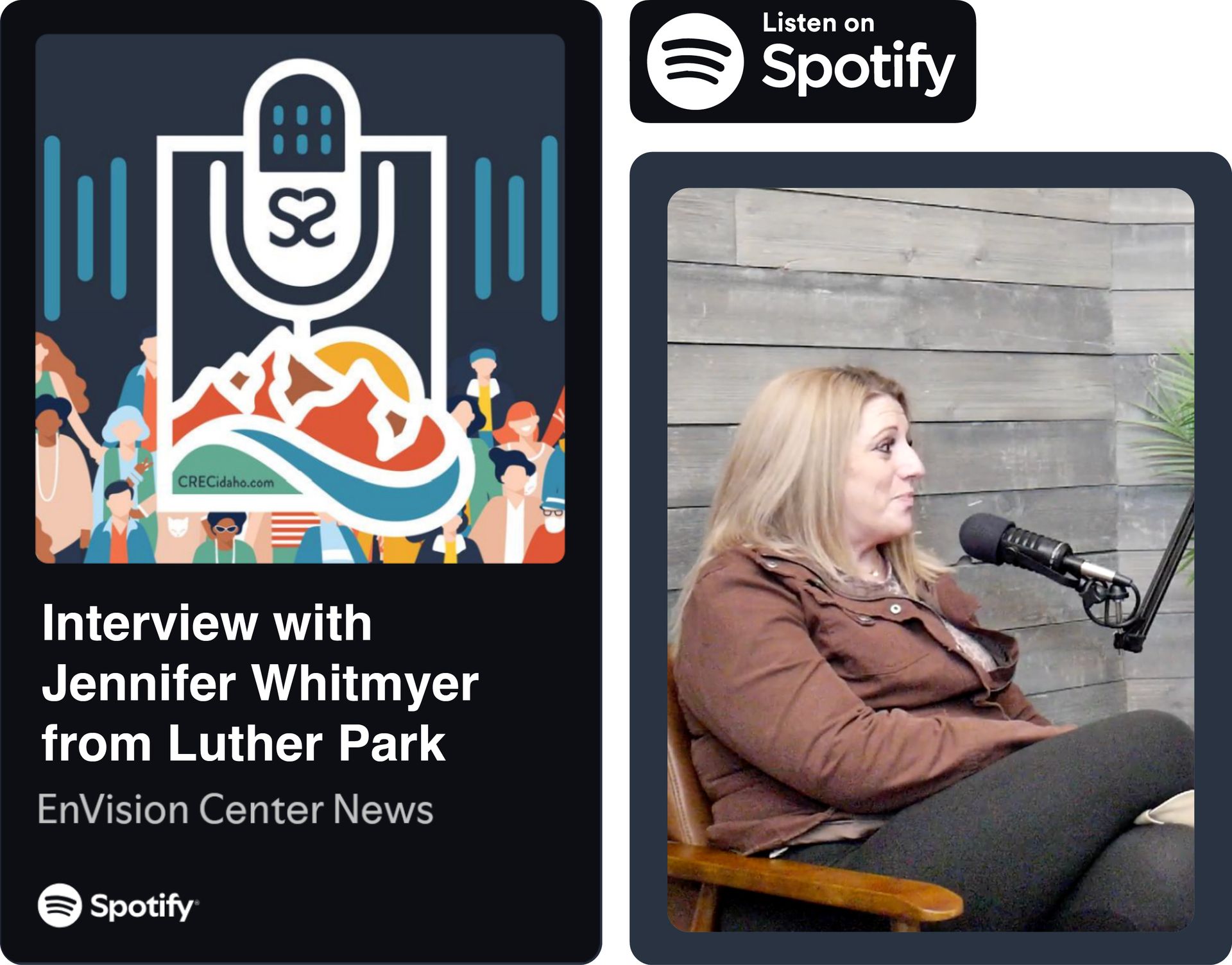

When people imagine senior living communities, many still picture the outdated image of a “nursing home.” For Jennifer Whitmyer, that stereotype couldn’t be further from the reality of modern senior living.
As the Executive Director of Luther Park in Sandpoint, Jennifer is passionate about reshaping how people think about assisted living. With more than 15 years of experience in senior care, she has dedicated her career to creating communities that feel vibrant, welcoming, and most importantly, like home.
“It’s not sterile. It’s not hospital-like. It’s a way of life,” Jennifer says.
A Career Rooted in Compassion
Jennifer’s path into senior living was somewhat happenstance. She originally came from a law enforcement family and spent time working in corrections. This exposed her to some of society’s most difficult realities. That experience made her eventual transition into senior living even more meaningful.
“When I got into the senior care field, I thought, ‘Holy cow, this is beautiful,’” she says. “You get to hear incredible life stories and spend time with people who have lived through so much.”
Jennifer’s career change was sparked by a deeply personal experience: caring for her uncle after he was diagnosed with Alzheimer’s disease in 2010. As his condition worsened, Jennifer’s family began searching for memory care facilities. After visiting nine different communities, they finally found a place where he could receive the care he needed. But Jennifer struggled with being away from him. At the time, she was preparing to work at a prison in Spokane. Instead, she walked into her uncle’s care community and asked for a job.
“I told them I’d never done caregiving before,” Jennifer recalls. “But I had taken care of my uncle, and I wanted to try.”
That decision changed the course of her life.
“The writing was on the wall,” she says. “I fell in love with the work.”
A Community Built on Relationships
Today, Jennifer leads Luther Park, a nonprofit senior living community that emphasizes connection both within the residence and with the surrounding town.
The organization has deep ties to First Lutheran Church, which helped bring the community into nonprofit ownership in 2008. The church remains closely connected to the residence, even sharing an indoor hallway that allows residents to attend services and activities without leaving the building.
“It’s wonderful for our residents,” Jennifer says. “They can just stroll down the hallway to church.”
Luther Park currently serves more than 90 residents and can accommodate up to 110. The community provides a wide range of assisted living services, allowing residents to remain in one place as their care needs change over time. Some residents require minimal assistance, such as housekeeping or occasional reminders. Others need more involved support, including medication management or mobility assistance. The goal is continuity of care, ensuring residents can remain in a familiar environment rather than moving between facilities. Jennifer believes that stability becomes especially important near the end of life.
“If someone is on hospice and nearing the end, we want to be the place that cares for them,” she says. “We want them to pass in a home-like setting where they feel comfortable and loved.”
Community involvement plays a vital role in making Luther Park feel vibrant and welcoming. Volunteers regularly visit to spend time with residents in many different ways. Some bring music, like a local pianist who performs twice a week. Schools sometimes visit to sing or interact with residents. Other volunteers simply come to sit and talk. Veterans from the community occasionally stop by to serve coffee in the mornings and chat with resident veterans. Many volunteers enjoy listening to life stories, doing puzzles, or sharing quiet conversations by the fire.
“You don’t need a special skill,” Jennifer says. “Just spending time with someone can make a huge difference.”
One-on-one visits are especially meaningful for residents who prefer quieter activities or don’t often attend larger group events.
Changing the Conversation Around Senior Living
One of Jennifer’s biggest goals is helping people understand how much senior living has evolved. For many families, outdated perceptions still shape their expectations. The term “nursing home” often brings up images of sterile environments and impersonal care. But today’s assisted living communities are designed to be lively, social, and comfortable.
“We want it to feel like home,” Jennifer says. “People don’t heal in a hospital-like environment.”
Modern senior communities focus on quality of life, creating spaces where residents can form friendships, participate in activities, and maintain their independence while receiving support. Jennifer even compares the atmosphere to something like a college campus for seniors: a place full of activity, conversation, and shared experiences.
After more than a decade and a half in senior living, Jennifer says the most rewarding part of her work remains the same: the residents themselves. Every person who walks through the doors carries a lifetime of experiences and stories.
“These generations are incredible,” she says. “We’re lucky to hear their stories.”
For Jennifer, helping preserve those stories and creating a community where seniors feel valued is what makes the work worthwhile. Because at Luther Park, senior living isn’t about institutions or facilities. It’s about creating a place where people belong. A place that feels like home.