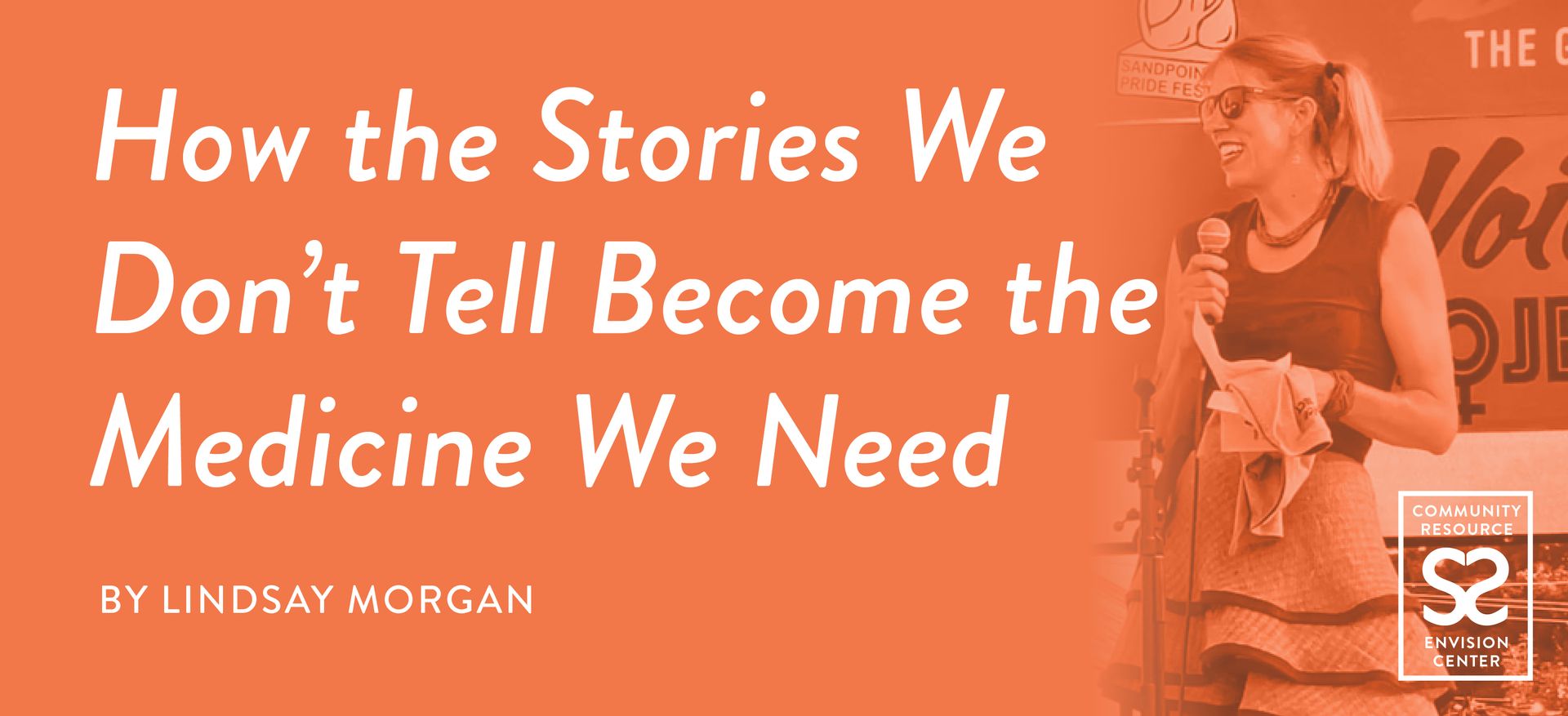
How the Stories We Don't Tell Become the Medicine We Need
Storytelling is one of the oldest and most powerful tools we have for building community. It is disarming in a way that debate rarely is. A personal story cannot be refuted. As Jen Jackson Quintano with the Pro-Voice Project put it on a recent episode of A Little Birdie Told Me, when someone shares their experience with vulnerability and honesty, it tends to open doors instead of close them.
That is the foundation of the Pro-Voice Project. Jen, its founder and executive director, joined me to talk about the work she has been building right here in Sandpoint. The Pro-Voice Project uses storytelling and community conversation to help people share experiences that have often felt unspeakable, centering reproductive health care, and to build connection and understanding across what can feel like very wide divides.
Jen's journey to founding the Pro-Voice Project is one of those stories that reminds you that the most meaningful work often finds us when we least expect it. Her background is in writing and storytelling, and before all of this she was an arborist in Sandpoint, running a chainsaw and feeding trees into a chipper. She is quick to point out that you do not need a special degree or an impressive resume to do this kind of work. What you need is passion, a willingness to be vulnerable, and the belief that listening to one another matters.
The organization's first event was held in January of 2023 at the Heartwood Center here in Sandpoint, where 15 community members submitted stories and performers shared them from a stage. Nearly 200 people showed up. People who had held their stories for decades described feeling released. Audience members said they finally felt like they were not alone. And in the weeks that followed, Jen kept running into people at the grocery store who quietly pulled her aside to share their own stories for the first time.
Since then the Pro-Voice Project has grown in ways Jen never anticipated. They have now put on 18 stage performances across Idaho, from Boise to Moscow to communities across the state. They run writing workshops called Reproductive Writes, where people are invited to put words to their experiences in a safe and supported space. They created a traveling exhibit called Worth of a Woman, which has been displayed at locations around Sandpoint including the library, Bluebird Bakery, and Matchwood, and has since traveled throughout the state. They have produced short documentary films and host watch parties in living rooms and community spaces. And this fall they are embarking on a statewide tour of a new stage production called Good Faith Medical Judgment, which shares the stories of physicians working on the front lines of reproductive health care in Idaho.
What comes through clearly in this conversation is Jen's deep commitment to holding space for all stories and all experiences. She is not interested in curating only the most persuasive narratives or pushing people toward a particular conclusion. She wants people to connect. She has held events where the room was genuinely mixed, and has watched people come away saying things like, I still don't know if I would make the same choice, but I understand why she did. That, Jen says, is a win.
She also made a point that speaks to something much broader than any single issue. We have become very good at staying separate from one another, whether online or in real life, surrounding ourselves with people who already think like we do. Storytelling, whatever the topic, is one of the most powerful tools we have for bridging that distance. It adds complexity where we have been taught to expect simple answers. It invites empathy where we have learned to expect conflict.
A big part of what we do at the Community Resource EnVision Center is help people find the resources and the community they need, and we know firsthand that people cannot access what they need if they are carrying shame, fear, or isolation. We believe that stronger communities are built through connection and that our organizations are doing meaningful work to make people feel seen and valued. When organizations like the Pro-Voice Project create space for people to be heard and to truly hear one another, they are doing work that ripples out far beyond any single conversation.
If you would like to get involved, the Pro-Voice Project welcomes volunteers, story submissions, and donations. You can host a watch party or a community conversation in your own living room. You can submit your own story through the story submission form on their website. And you can attend one of their upcoming events, including the Good Faith Medical Judgment stage production coming to Sandpoint on September 25th and Coeur d'Alene on September 26th. A virtual webinar, Courage in the Face of Fear, is also coming up on August 20th and is open to anyone statewide.
To learn more, visit the Pro-Voice Project online and explore their story library. Jen's invitation is a simple one: read through those stories and you will understand how complex and nuanced our human experiences really are.
This post is based on a recent episode of A Little Birdie Told Me. Listen to the full conversation to hear more from Jen Jackson Quintano.
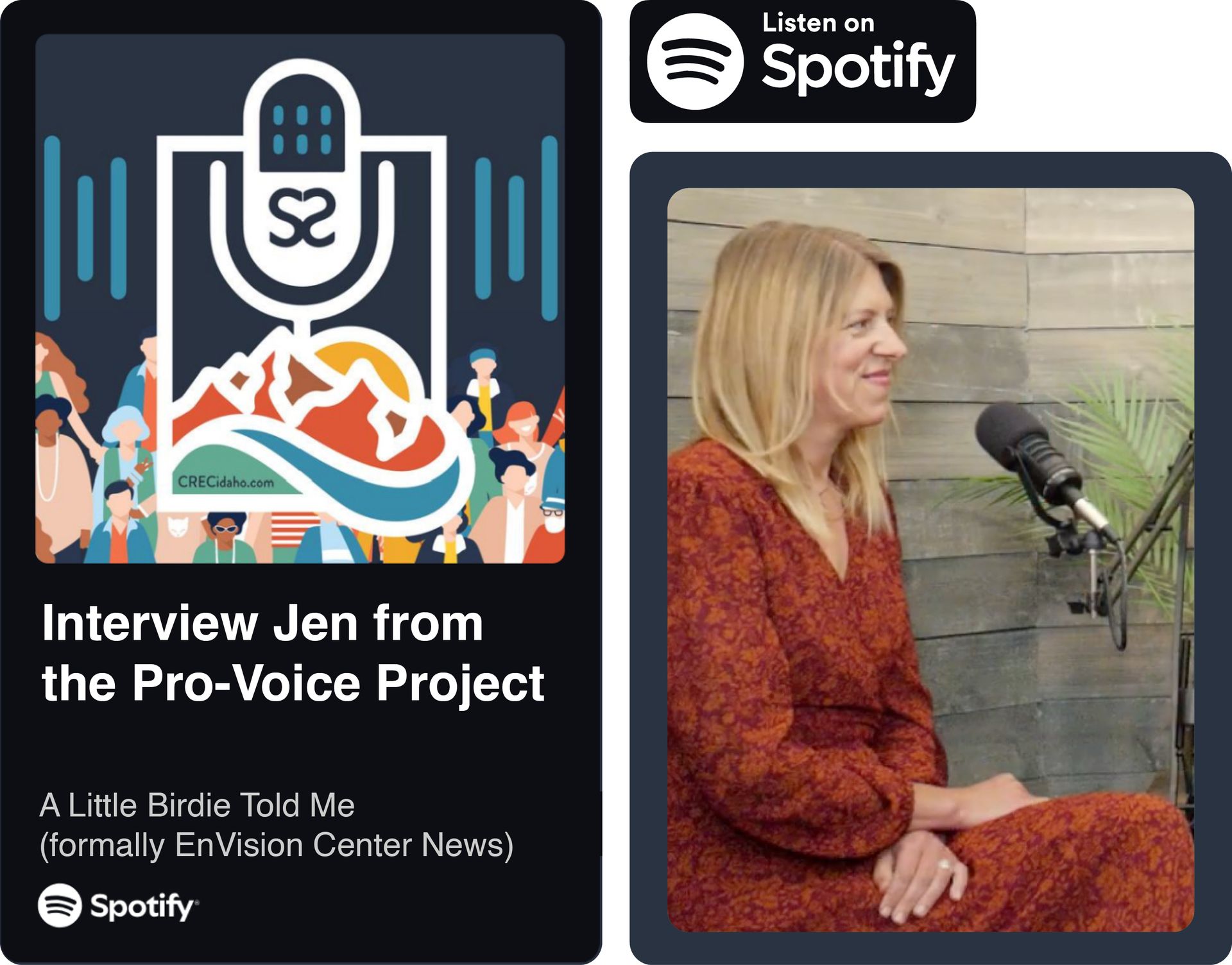
"Storytelling is disarming. It's something that can't be refuted. You have your own experience, your emotional response to what happened, and your vulnerability in sharing that. And that often tends to open doors instead of close them."
- Jen Jackson Quintano
"Vulnerability begets vulnerability. If I can open and share with you, it might inspire you to do the same, or you might see yourself in my story and feel inclined to share a bit of yours that maybe hasn't felt sharable."
- Jen Jackson Quintano
"If I can do this work, anyone can do this work... I was just feeding trees into a chipper. It can be as simple as pulling your family together instead of having it be awkward and silent at the dinner table. It's accessible to all of us."
- Jen Jackson Quintano