High School Aerospace: Where Students Build the Real Thing
In 2012, a high school junior walked up a driveway and asked a favor. Fourteen years later, that conversation has launched over 60 students into aviation careers.
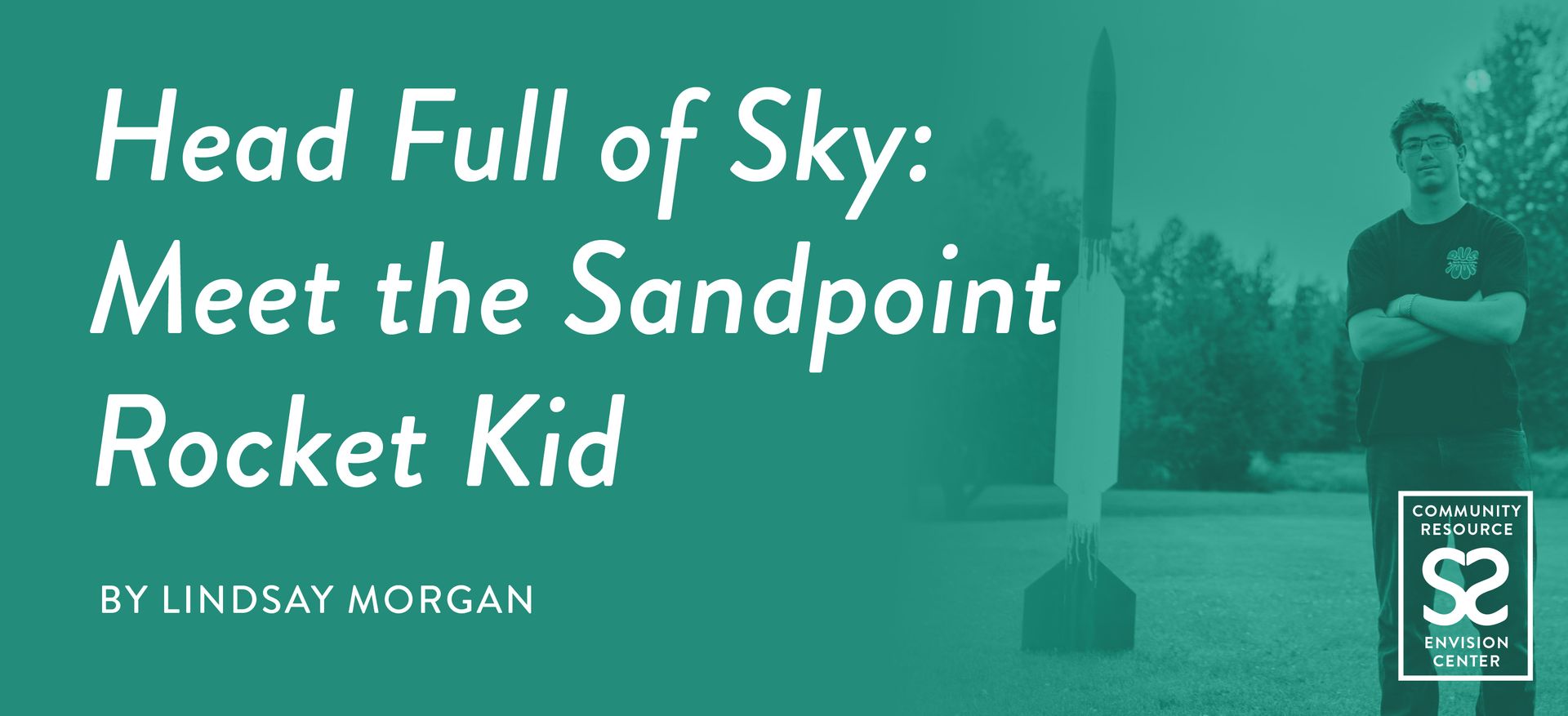
On a recent episode of A Little Birdie Told Me, I sat down with Ken Larson, founder of the North Idaho High School Aerospace Program, to talk about what has grown from that simple conversation into one of the most extraordinary youth programs in our region. Ken is quick to point out that the program was actually founded by Anna Filch, the student who showed up at his door in 2012 and asked if he would talk to a school counselor about starting an aviation program. Ken was the first person who got involved and stuck with it. Now in its 14th year, the program has sent over 60 students into aviation careers and counting.
Ken's path to this work is shaped by decades of experience in the air. After joining the Air Force to avoid the draft and training as a pilot, he went on to fly business jets for NetJets for ten years, run his own flight school at the Sandpoint Airport for another ten, and somewhere along the way went to law school, ran a fishing business in Micronesia, and worked on a World Bank project in Somalia and Djibouti. Flying, he says, is the one thing he always came back to. That love of aircraft and deep desire to share what he knows is really the fuel behind everything this program has become.
The program actually does three distinct things. First, there is an academic class at Sandpoint High School called Career Pathways Aerospace, which this year has so much demand that it is being offered in two sections. The class covers aerodynamics, weather, navigation, and weight and balance, but what makes it special is its focus on career pathways. Ken likes to tell his students that he does not think they can name something in normal society that is not somehow related to aviation. Over 24 guest speakers come through the class each year, from engineers to pilots to industry professionals, bringing the world of aerospace to life for students who may never have considered it before.
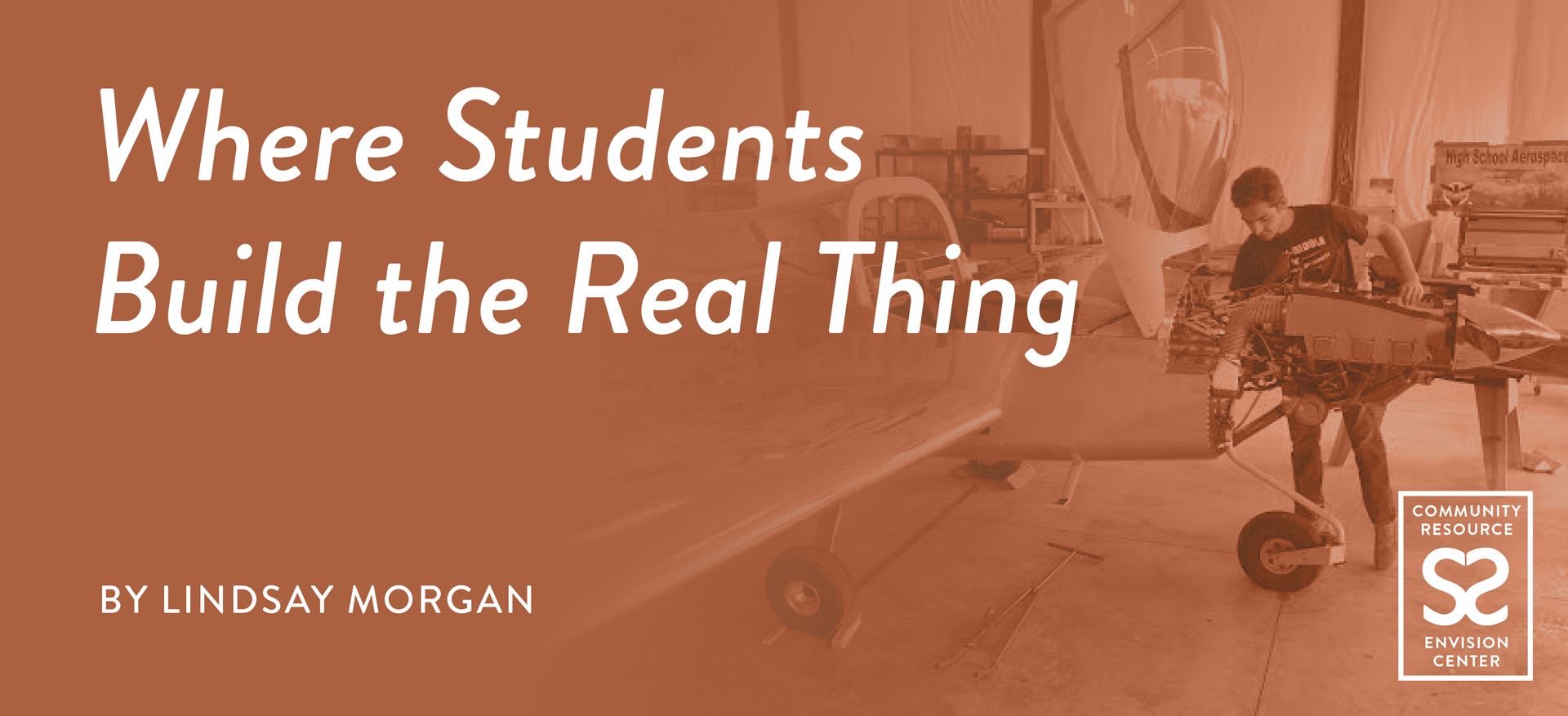
Second, there is the ACES program — Aviation Center of Excellence Sandpoint — a hands-on airplane building workshop that meets every Saturday from 9 a.m. to 1 p.m. at the Sandpoint Airport. It costs nothing to participate, pizza is provided, and any student aged 12 and up is welcome to show up. Right now, a group of students is working on a Jabiru, a four-seat Australian-built kit airplane made of composite materials. A $29,000 engine for that plane arrived just last week, funded by a grant from the Whittier Trust's Confidence Foundation, the same organization whose $30,000 gift years ago was the seed money that got the whole program growing. Students on the ACES program learn to read blueprints, work with tools, wire instrument panels, shape composite materials, and work in teams on multiple projects simultaneously. As Ken put it, those are skills that apply to any career, no matter what.
Third, the program works to help students access flight training through scholarships and connections to local resources.
The student success stories Ken shared are remarkable. The very first class of 12 students that started building airplanes together — six of them are still in aviation today, mostly as commercial pilots. Anna Filch, who started it all, went on to study airport management and then got into aviation firefighting. Maggie Kirchherr trained with Ken's flight school, became an airline pilot with Republic Airlines and then NetJets, and eventually came back as a flight instructor at the school where she first learned to fly. One student who insisted he had no interest in flying became an aircraft mechanic, got his dream job in New York living near his sister, and recently emailed Ken to say he is almost finished with his commercial pilot's license. And Eric Gray, who started building one of the kit planes as a student, went on to become the program's test pilot — completing the circle by flying the very first test flights of the airplane he helped build.
This October marks a milestone. Two airplanes the students built received their FAA airworthiness certificates, with the examining official noting they were among the best he had ever seen for construction quality and attention to detail. Both flew their first flights in October of 2025.
What makes all of this possible is volunteers. Retired engineers, experienced mechanics, pilots, and businesspeople who give up every Saturday to work alongside these students. Some of them have been doing it for six or seven years. Ken is genuinely humble about his own role, pointing to the volunteers as the real reason the program works.
At the Community Resource EnVision Center, we love seeing programs like this one that connect young people to real skills, real mentors, and real futures. The aerospace program is proof that when a community shows up for its youth, extraordinary things happen.
If you have a student between the ages of 12 and 18 who is curious, the ACES workshop is open every Saturday at the Sandpoint Airport. Just show up. The academic class at Sandpoint High School is also open to students from other schools and homeschool families — talk to the counselor to find out how. And if you want to support the program through volunteering, expertise, or donations, reach out at highschoolaerospace@gmail.com or visit their website at highschoolaerospace.org. They are also always looking for people in the aviation or engineering community to come and visit, share their career, and make the work feel real for the next generation.
As Ken said, there is one rule: follow instructions. If you are not sure what to do, do not do anything. Everything else is an adventure.
This post is based on a recent episode of A Little Birdie Told Me. Listen to the full conversation to hear more from Ken Larson.
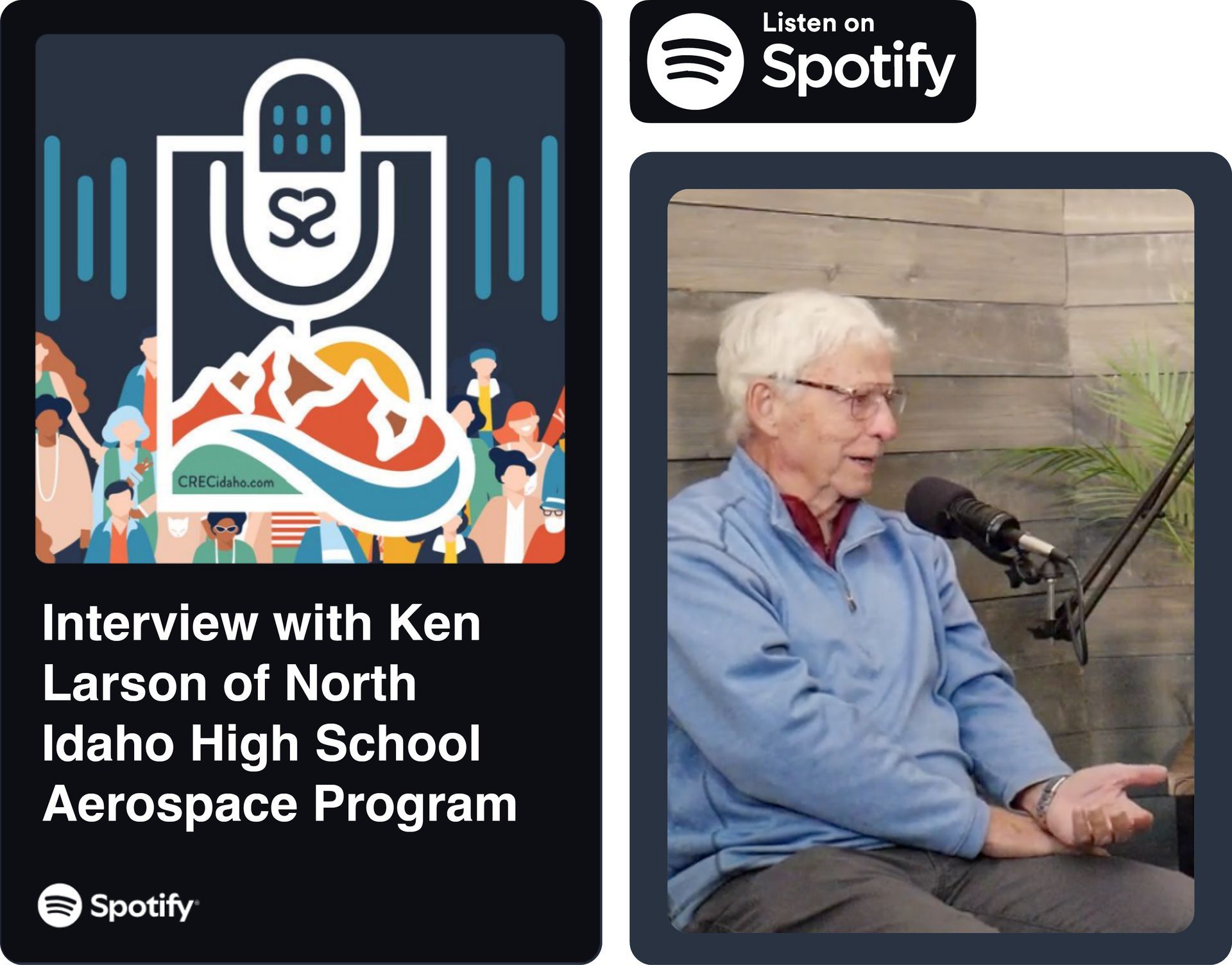
“Within those little teams, you can start seeing leadership and teamwork, cooperation, and those are skills that will apply to any career no matter what.” — Ken Larson
“So that was one of our other success stories, is the circle was completed with Eric. He started building that plane and then got to be the test pilot.” — Ken Larson

“It really brings it to life. It makes it real when they can meet somebody who is a pilot, or is working on manufacturing at Daher, or has become an aircraft mechanic.” — Ken Larson