Consider donating what you don’t need as you declutter this spring.
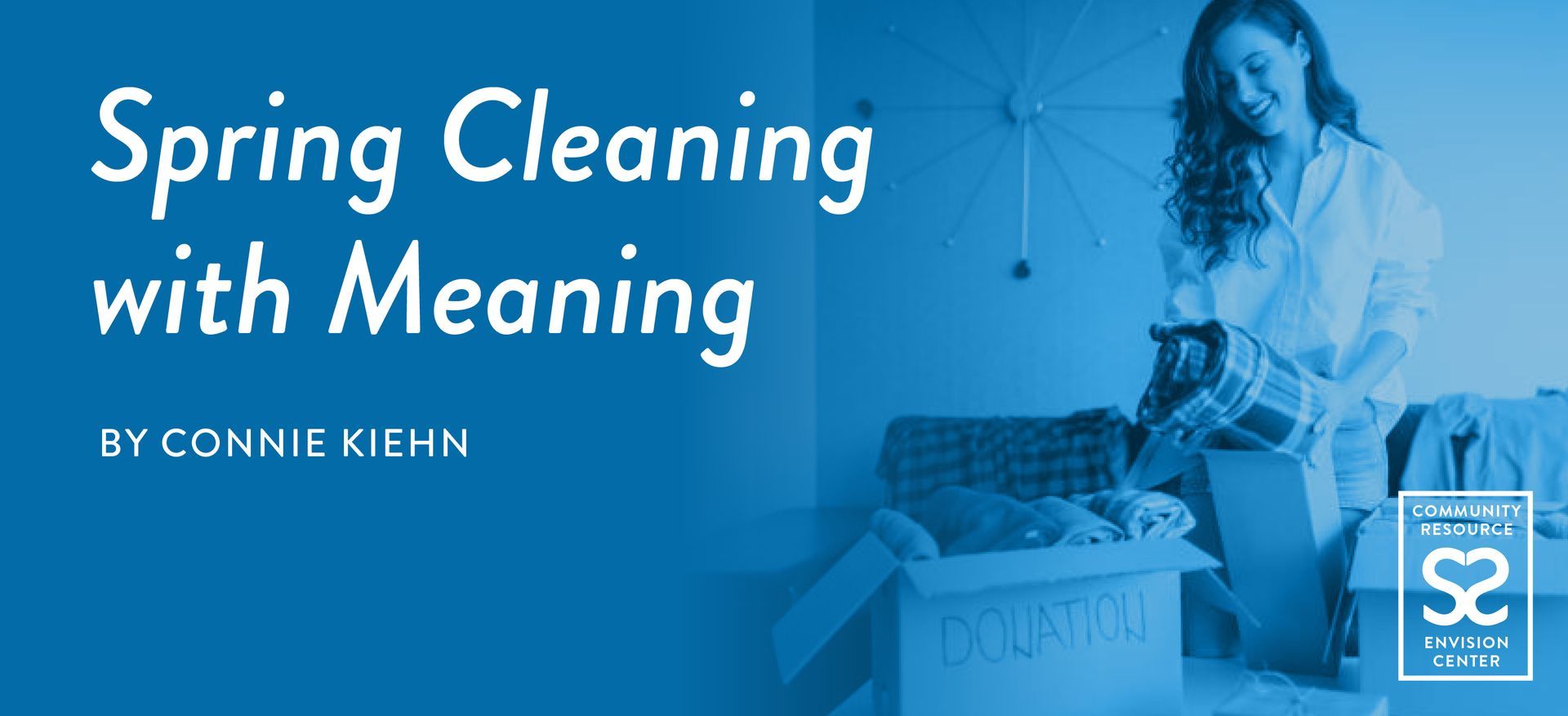
 

If you are in a season of life where volunteering or financially donating to noble causes isn't feasible, there are still ways to give back to your community as you go about your daily life. Consider donating what you don’t need to Priest River Ministries (PRM) and/or Helping Hands Healing Hearts (HHHH) as you declutter this spring.


No one quite knows where the idea of ‘Spring cleaning’ comes from. Some think it has to do with cultural traditions that view spring as a time of renewal and the act of cleaning the home as one of purification. Others say it was a historical necessity. As the weather warmed up, homes needed to air out. Accumulated soot, dust, and other debris trapped inside homes sealed during the winter required deliberate removal. Whatever the reason, spring cleaning is an American pastime. Many are quick to donate unwanted items to places like Goodwill or local food banks, which are excellent options. However, don’t forget there are other local organizations in the greater Bonner County area that could also benefit from your donations.


Priest River Ministries is on a mission to offer hope to women and children who are victims of domestic violence and/or trafficking. They offer counseling, food, basic items, emergency shelter, paralegal assistance, support groups, employment services and more free of charge. Similarly, HHHH provides clothing and food while also offering financial relief in the form of vouchers, direct payments and gift cards to anyone (male or female) who needs it.


Terms like 'support,' 'advocacy,' and 'empowerment' may seem like nonprofit clichés but they are fundamental concepts at PRM. These action-oriented buzzwords are fully embodied by PRM as they come alongside women in their time of need, offering a comprehensive roadmap to productive independence. Last year, PRM housed 120 people in emergency shelters. This includes children and those rescued from sex trafficking.


“People don’t believe trafficking is happening here, they are wrong,” said freshly appointed executive director of PRM Julie Bruceri.


Both PRM and HHHH are faith-based organizations. Both come alongside individuals when they may be at the lowest point in their lives. While PRM specializes in helping female abuse victims, HHHH assists anyone who finds themselves in need whether due to abuse or not. The HHHH store is free of charge and individuals can shop once a month for whatever they need. Additionally, HHHH provides financial support up to $150 a year by way of rent assistance, shower vouchers, bus tickets and more. When HHHH can’t meet a financial need, they network with other groups such as St. Joseph's Catholic Church and the Salvation Army to meet said need. Clients of HHHH are never given cash. Rent or utility assistance is paid directly to the biller by HHHH.


Chryl McCarty is also newly appointed as executive director of HHHH. She says they see the need for resources like those that HHHH and PRM provide rising every day. Helping Hands Healing Hearts is responding to the need with a big dream: The Samaritan Village. With the land already purchased, they hope to break ground on a new HHHH center and a variety of temporary housing, including duplexes and triplexes through building phases. The homeless population continues to rise in Sandpoint and Section 8 housing in Idaho has a waitlist of one year. McCarty is also the executive director of Bonner Partners in Care , another nonprofit that provides health care financial assistance. In 2023, HHHH assisted 125 homeless individuals, 20% of whom were children.


Both organizations rely on community donations to stock their free-of-charge storefronts. The Helping Hands Healing Hearts storefront is open on Tuesdays from 1:30 p.m. to 6 p.m. and Wednesdays and Thursdays from 1:30 p.m. to 4:30 p.m. Lydia’s, located in Priest River and operated as part of Priest River Ministries, is open Tuesday through Thursday, 10 a.m. to 3 p.m. Lydia’s offers free clothing and supplies to community members once a month, with no income or address check required for access. Additionally, PRM has an outreach program in Spirit Lake.


As you embark on spring cleaning, consider making a donation to one of our locally run and operated charities doing so much to help the Bonner and Boundary County regions. If you know someone in need, point them to PRM or HHHH. Both Bruceri and McCarty said one of their biggest problems is simply getting the word out that they exist. The next step being getting those who need the help to be unafraid to seek it. Priest River Ministries even has resources for the individual wanting to come alongside someone else who has been a victim of abuse. There can be a lot of undeserved shame associated with using any of the services provided by either organization.


McCarty told a story of a woman who was at HHHH and said she felt guilty for shopping since there were “probably others who needed the help more.” A sentiment heard often.


"Well, you need it. We help fill the gap. It’s ok,” McCarty told the shopper.


When you donate to HHHH or PRM, you help fill that gap. We encourage you to take the time to intentionally sort through your belongings this spring cleaning season and to give generously. If you really don’t have extra stuff you can part with...they take checks too.


Giving Guide


Please Donate


PRM: Children’s swimsuits, Snacks for kids, New underwear, Tampons, Socks (adult and child), Kids clothing in 4T - 14/16, Pajamas, Cases of water


HHHH: Summer clothing, Shelf stable food


Please Do NOT Donate


PRM: Toys, Adult Diapers


HHHH: High end clothing, Business Clothing


Both: Moldy clothes, clothes with mothballs and/or ripped and stained clothing. Believe it or not people frequently donate clothing in terrible shape. If you have been storing the clothes in a dark spot, damp space or somewhere bugs or rodents could get to it, check it before you drop it off. If you wouldn’t wear it in public, don’t donate.


How to Donate


PRM: Donations preferred at Priest River location


HHHH: Can donate clothing and non perishable food any time during open hours or in the wooden donation box when closed


Know you need to get decluttering but lack the motivation? Read our blog about what donating does for you.
 

By Linnis Jellinek December 10, 2025
Sandpoint is a beautiful place. Charming, clean, and quite prosperous on the surface. But behind those postcard views, many families are quietly struggling. Housing costs have soared. Service wages have not kept pace. Dozens of children live in motels or RVs. Others stay with relatives or couch surf with friends. The poverty here is often hidden, but the hunger is real. Food For Our Children (FFOC) was created to make sure local kids do not fall through the cracks. For more than a decade, this volunteer-powered nonprofit has made sure children across Bonner County have enough to eat, both on school days and during the weekends when school meals are unavailable. Jamie Schlehuber is a retired junior high and high school teacher who moved to Sandpoint full-time after retiring. Looking for a meaningful way to give back, she connected with FFOC through a friend on the board. Today she coordinates directly with schools, manages the weekly food bag program, organizes volunteers, and keeps track of individual school needs. "I really understand the value of kids getting food and what a difference it makes for the kids and how they're able to learn,” says Jamie. Judge Barbara Buchanan is a longtime Sandpoint resident and recently retired district judge who continues to serve as a senior judge for part of the year. When she retired, she knew she wanted to spend more time giving back. She joined the board early on and has helped guide the organization ever since. Is Hunger Really That Big of a Problem Here? Yes. It is simply less visible than in other places. Many families live in older motels, RV parks, small apartments, or unstable housing situations. A two-bedroom apartment in Sandpoint often costs $1,500 a month or more. The middle class is shrinking, and many working families are caught between high costs and limited income. Kids who appear fine at school may be facing food insecurity at home. “When I talk to friends and different people out in the community, they have no idea that there's this need. I think that's a part of it is just trying to get the word out that there is a need here,” says Jamie. What Food For Our Children Does Many people assume the group simply provides food for kids, but the scope is much larger. The mission is carried out through three major programs. 1. Weekend Food Bags Every Wednesday morning, about 10 to 15 volunteers gather at the Bonner County Food Bank to assemble weekend food bags. The group delivers over 550 bags across the school district. Some weeks, it is slightly fewer, but the trend continues to rise. Each bag contains two breakfasts, two dinners, two apples and additional nutritious items that children can prepare safely on their own. No child has to prove they qualify. If a student wants a bag, the school gives it to them discreetly. Delivering these bags requires its own team of volunteers. Farmin Stidwell Elementary alone receives 177 bags each week. 2. Weekday Snacks for Classrooms There was a time when teachers were paying out of pocket for snacks because hungry kids could not focus or learn effectively. After learning about this, FFOC began supplying schools with nutritious snack options so teachers no longer have to cover the cost themselves. “Kids can’t learn when they’re hungry,” says Barbara. 3. School Meal Subsidies This is the fastest growing part of their mission. After COVID ended and Idaho went back to traditional federal meal qualifications, many families found themselves earning slightly too much to qualify for free or reduced meals, but not enough to stay ahead of rising costs. Food For Our Children created a subsidy program to fill that gap. In the first year, they supported families in the Lake Pend Oreille School District who were within 10 percent above the income threshold. Last year they increased it to 20 percent, where it remains this school year. Next year, FFOC hopes to increase that amount to 50 percent due to a historic partnership with the Kinderhaven Foundation and the Lake Pend Oreille School District. Within days of recording this podcast, the Kinderhaven Foundation announced that it was awarding FFOC a two-year grant totaling $372,000 to help pay for school meals. Food For Our Children is now embarking on a campaign to raise enough money to match Kinderhaven's grant with the goal of providing affordable school meals for students from the lowest 50 percent of household incomes in the school district. Why They Do Not Accept Food Donations All the food that FFOC delivers comes through Second Harvest , a large nonprofit distributor that supplies USDA approved, shelf stable food bags. The bags have remained five dollars each, a remarkable achievement considering rising food and shipping costs. Food For Our Children adds apples to ensure every child receives something fresh. Because of safety and nutrition requirements, FFOC cannot accept food donations from the public. Food For Our Children also takes into consideration the age of the child receiving the bag of food. Everything must be safe for young children and easy to prepare without the risk of burns or injury. Older students receive XL bags with items that need to be prepared on a stove such as chili mac and pasta. How the Organization Is Funded Food For Our Children is completely independent from the food bank. Funding comes from individual donors, grants, the annual wine gala and auction, business partners, and school sponsorships. A major point of pride is that 100 percent of public donations go directly to feeding children. The eight-person board covers all overhead costs themselves, including supplies and administrative needs. “We have a working board. So, everybody does a little bit of everything,” says Jamie. Donors can choose what their gift supports. They can give to the weekend bag program, classroom snacks, meal subsidies, or adopt a specific school. Several businesses and individuals have already adopted schools, though Farmin Stidwell, being the largest, still needs a sponsor. How to Help Weekly bag packing happens every Wednesday at 9:30 a.m. and takes about an hour. People show up when they can. Delivery drivers are always needed, especially for larger schools. Volunteers also assist with the annual gala by helping with food service, pouring wine, and providing safe rides home. The board is a working board. Members take on significant tasks such as grant writing, bookkeeping, fundraising, coordination, and event planning. You can donate, volunteer, adopt a school, or simply help spread the word. Visit: foodforourchildren.org Even sharing the story helps people understand a need that is often invisible in our community.
Jacci and Jake Humble from Humble Hillside Farm Maternity Home
By Linnis Jellinek December 9, 2025
Discover how Jacci and Jake Humble turned heartbreak into purpose, creating Humble Hillside Farm Maternity Home to provide safety, support, and hope for pregnant women in crisis.
Jennifer Owens of Choice Armor Insurance supports seniors.
By Linnis Jellinek December 9, 2025
Meet Jennifer Owens of Choice Armor Insurance, whose faith-driven service supports seniors across North Idaho with compassion, advocacy, and hands-on help.
By Linnis Jellinek November 22, 2025
Brittany Clapp-Abdella helps people find purpose in their lives, but first she had to find hers. She’s now in a job she hadn’t expected, but once she discovered it, she knew it was the right fit. Her story is a reminder that our answer to the question “What do you want to be when you grow up?” should carry little weight in a world that’s always changing and in lives that are always growing and evolving. Brittany’s path to this work wasn’t linear. It was guided by a sense that she was made for more. Originally from Massachusetts, she found her way to Idaho by way of family roots and an openness to start over. “It wasn’t part of some big plan,” Brittany says with a smile. “I just knew it was time to move, and I followed where I felt led.” When she first arrived in Idaho, Brittany started out as a private caregiver, then became a personal administrative assistant for a friend who ran a roofing company out of San Francisco. She handled operations, managing crews and logistics. What she didn’t expect was how profoundly that experience would shape her future. “It wasn’t the job title that changed me,” she says. “It was the person I worked for.” Her boss modeled integrity, kindness, and a work ethic that pushed her to grow. He saw her potential before she did and helped her see herself differently. She recalled one small but meaningful moment when she and her boss were formulating a plan to get some chairs upholstered: a simple meeting where they were planning and bouncing ideas off each other. But it was during that meeting that a lightbulb went off for Brittany. “Something clicked,” she says. “I realized I was sitting across from someone who thought like me: articulate, creative, analytical, and kind. For the first time, I saw a reflection of myself in someone I admired.” Eventually, that boss gave her the kind of advice that is both terrifying and liberating. “You’ve worked yourself out of a job,” he told her. “Who you are and what you’re capable of is too big for what I can offer you. You need to go do something greater.” And so she did. Brittany took a position as an accounts manager for a roofing company. She worked hard but didn’t realize how unhappy she was. The job was unstable, offered no benefits, and the stress affected both her and her son. Brittany eventually left that job and was unemployed for about a month and a half before finding what she calls her ‘purpose work.’ It was a posting for an Outreach and Engagement Specialist with Equus Workforce Solutions (EWS). “At first I thought it was a scam,” Brittany says. “It just sounded too good to be true.” But when she researched the organization and found it to be a legitimate, nationally recognized career development company, she knew she had to apply. Within 24 hours of her first interview, she was invited to meet with the regional director for the state of Idaho. During that conversation, she was asked a question that stopped her in her tracks: “When you think about this position, how do you see yourself within it?” “I saw this image in my head, a glowing neon sign that lit up with the words Hope Dealer. I saw it flash not once but twice. At first I thought, ‘I probably shouldn’t say that.’ But then I did. I said, ‘I can see myself in this position as a hope dealer.’” The director smiled and said, “That’s exactly it.” That phrase, hope dealer , has become Brittany’s mantra. “Being a hope dealer means holding out a light for someone who’s standing in the dark,” she explains. “It means saying, ‘I’ve been where you are, and I believe you can make it too.’” That belief guides everything she does at EWS. The organization helps people remove barriers to employment and build meaningful, sustainable careers. Participants include veterans, individuals reentering the community after incarceration, people who have been laid off, single parents, and others trying to find their footing again. Sometimes the obstacles are educational, like needing a GED to qualify for better jobs. EWS covers testing fees and even offers financial incentives for every test passed. Other times, the barriers are financial or practical, like paying for a commercial driver’s license or buying work gear. And the support doesn’t stop there. Participants can also get help preparing for interviews, or writing resumes. By working with other organizations such as Idaho Launch , tuition, testing, books, and supplies are often fully covered. “When a person gets a job that fits them, it changes everything. It changes their sense of self, their family, their community,” says Brittany. She’s quick to add that she’s walked many of the same paths her participants are on. “I know what it feels like to start over, to wonder if you’re enough, to need someone to say, ‘You can do this,’” Brittany says. “And that’s exactly what we do every single day.” Take the first step. Visit equusidaho.com and click “Apply Now. ” It only takes a few minutes to get connected with a career coach who can help you move forward. Not looking yourself? Pass it on. Empowered people empower people.
By Linnis Jellinek November 22, 2025
The EnVision Center supports and networks with many nonprofits working to solve all kinds of problems in the community. It’s a privilege to be part of that network, and while we aren’t supposed to pick favorites, when thinking about organizations our county couldn’t do without, Panhandle Special Needs Inc (PSNI) in Sandpoint comes to mind. A nonprofit that has been helping people with disabilities live, work, and thrive independently for nearly 50 years. Finding a Place to Belong When Andrew’s parents first discovered PSNI back in 2012, they were searching for a space where he could grow socially and continue learning after school. “My mom and dad were looking for somewhere for me to go to be more social,” Andrew recalls. “We couldn’t find anything at first, but eventually we stumbled upon PSNI.” Through PSNI, Andrew started taking classes, joined activities, and quickly became part of the community. Over the years, Andrew has taken classes in budgeting, cooking, housekeeping, grocery shopping, and laundry, all designed to strengthen independence. What makes PSNI unique is how responsive it is to the people it serves. “When Andrew asked to learn about online dating, we made a class for it,” PSNI Job Coach Sierra Nicholson explains. “When he wanted to learn sewing, we found a teacher. The clients help shape their own program.” Every participant meets with staff once a year to plan goals and classes for the coming months. PSNI also matches staff with clients based on their expertise. “I worked in restaurants for years,” Sierra explains. “So I teach cooking classes. We all bring something different.” The Journey Home Andrew’s testimony goes beyond highlighting what PSNI can do for a client but also what happens when PSNI is taken away from a client. In 2022, Andrew briefly moved to Arizona with family and quickly realized how special his hometown program was. “I couldn’t get services, couldn’t get a job, couldn’t find an apartment,” he says. “There wasn’t a PSNI down there.” After a few tough months, Andrew called Triny Nicholson, PSNI’s longtime director who helped him return home. “They helped me plan, find somewhere to stay, and get back into services,” Andrew says. “They’ve always been there for me.” 50 Years of Service and Heart PSNI was founded in 1975 by Pat Rocco who realized that people with disabilities in Sandpoint had few opportunities to learn or work. Trinity Nicolson was introduced to PSNI in 1984 while in high school. She went to college and returned to PSNI, and she has been the director for 24 years. Sierra is her daughter. PSNI is the only adult developmental disability agency in Bonner or Boundary county. “When my mom started she had just 25 clients,” Sierra says. “Now we serve over 200, but the heart hasn’t changed. We’re still about connection, dignity, and independence.” PSNI now offers programs in employment services, adult day classes, life skills, a greenhouse and thrift store, ACE cardboard recycling, housing assistance, and statewide advocacy through the A-Team Idaho . “Our services touch almost every part of life,” Sierra says. “If someone needs help with work, housing, or just a sense of belonging, we’re there.” Employment and Community Partnerships One of PSNI’s strongest areas is job development. Clients start by learning work skills in structured classes and then transition into local jobs with support from job coaches. Andrew now works part-time at Safeway. “I’m a courtesy clerk,” he says proudly. “I push carts, clean bathrooms, sweep floors, pretty much everything under the sun.” Local employers have embraced the partnership. In addition to Safeway, businesses like Di Luna’s, Nieman’s, Better Together Animal Alliance, Winter Ridge, the Food Bank, Sandpoint High School, and Carter Country Farm & Feed all employ or collaborate with PSNI clients. Others such as Evans Brothers and Matchwood Brewing also host events and fundraisers. “I think we’ve touched a little bit of everybody in the community,” Sierra says. “Sandpoint really wraps its arms around us.” Celebrating the Holidays, PIS-Style The holidays are a busy and joyful time for PSNI. They participate in the EnVision Center’s Festival of Trees. This year their tree’s theme is ‘Bare Necessities.’ “We wanted to highlight simple joys, like Yogi Bear’s picnic basket,” Sierra says with a laugh. “Honey treats, berry goodies, and hand-carved wood items.” The PSNI tree will be displayed at Burlwood Dreams downtown, with raffle tickets available for purchase. On November 28, visitors can attend Sandpoint’s annual tree lighting ceremony, take photos with Santa Bear and lumberjack (played by Andrew) and try a themed drink from Roxy’s. After the festival, PSNI will host its Christmas Market, transforming its greenhouse into a winter wonderland full of local vendors and handmade goods. Guests can also pick up the 2025 Local Treasures Calendar, featuring photos of PSNI clients and the local businesses that champion their mission. Then in February, sports fans can join the Game Day Giveaway at Sweet Lou’s, a massive raffle featuring prizes like a signed Seattle Mariners baseball, Seahawks stadium Get Involved with Panhandle Special Needs Volunteer your time or skills, shop local at their markets and greenhouse, hire inclusively through PSNI employment services, or donate to support programs that build independence and belonging. Together, Sandpoint is proving what’s possible when a community opens its arms and its heart to everyone.
By Linnis Jellinek November 6, 2025
After years of addiction, arrests, and heartbreak, Tess thought her story was over. But hitting rock bottom became the beginning of her transformation. Through accountability, faith, and hard work, she rebuilt her life — not just for herself, but for others walking the same road. Today, Tess leads 208 Recovery.
How Creations Became an Unexpected Sandpoint Treasure
By Linnis Jellinek October 10, 2025
Discover how Creations became a beloved Sandpoint treasure—offering kids a free, hands-on space to play, learn, and connect through community support.
Saftey Net Inland NW
By Linnis Jellinek October 10, 2025
Safety Net Inland NW helps foster youth transition to adulthood with dignity—providing essentials, support, and life skills when the system falls short.
Fighting Cancer with Vacations
By Linnis Jellinek September 13, 2025
Discover how Send Me On Vacation empowers breast cancer survivors with healing retreats, community, and hope—one life-changing trip at a time.”
Meaningful to Many Sandpoint Alliance for Equity (SAFE
August 28, 2025
Sandpoint Alliance for Equity (SAFE) is more than just the organizer of the Sandpoint Pride Festival — it’s a year-round movement creating safe spaces, community programming, and healing-centered activism. From bike rides to hikes to game nights, SAFE’s most meaningful initiatives begin with passionate volunteers...